
The Pool in the Desert
Autor Sara Jeannette Duncan Editat de The Perfect Libraryen Limba Engleză Paperback
Preț: 99.48 lei
Puncte Express: 149
Carte disponibilă
Livrare economică 17 noiembrie-01 decembrie
Livrare prin curier în România Termenul estimat este afișat lângă disponibilitate.
Transport gratuit de la 400.00 lei Plată online sau ramburs, în funcție de opțiunile comenzii.
Retur gratuit în 14 zile Comandă securizată și suport în română.
Specificații
ISBN-13: 9781511854481
ISBN-10: 1511854480
Pagini: 146
Dimensiuni: 152 x 229 x 8 mm
Greutate: 0.2 kg
Editura: CREATESPACE
ISBN-10: 1511854480
Pagini: 146
Dimensiuni: 152 x 229 x 8 mm
Greutate: 0.2 kg
Editura: CREATESPACE
V-ar putea interesa
-
 -19%Preț: 311.54 lei386.52 lei
 -
 9/11 Fiction, Empathy, and OthernessTim Gauthier-18%Preț: 730.54 lei890.90 lei
 -
 The Literary Haunted HouseRebecca JanickerPreț: 228.33 lei
 -
 Robert Frost's Poetry of Rural LifeGeorge MonteiroPreț: 233.81 lei
 -
 Unbuttoning AmericaArdis CameronPreț: 140.53 lei
 -
 Suicide and Contemporary Science FictionCarlos Gutierrez-Jones-14%Preț: 731.58 lei850.67 lei
 -
 News from the VillageGerald BullettPreț: 144.69 lei
 -
 Preț: 404.31 lei
 -
 -18%Preț: 1462.77 lei1783.87 lei
 -
 His Honour, and a Lady (Illustrated Edition)Sara Jeannette DuncanPreț: 85.45 lei
 -
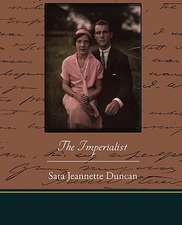 The ImperialistSara Jeannette DuncanPreț: 172.07 lei
 -
 -17%Preț: 320.04 lei383.33 lei
 -
 Autism in Young Adult Novels: An Annotated BibliographyMarilyn Irwin-33%Preț: 589.92 lei876.30 lei
 -
 Reading Václav HavelDavid S Danaher-29%Preț: 381.32 lei537.17 lei
 -
 The Story of Sonny SahibSara Jeannette DuncanPreț: 35.01 lei
 -
 Set in AuthoritySara Jeannette Duncan-21%Preț: 241.98 lei307.20 lei
 -
 Translation of the Letters of a Hindoo RajahElizabeth Hamilton-20%Preț: 212.63 lei266.46 lei
 -
 A Daughter of TodaySara Jeannette DuncanPreț: 119.68 lei
 -
 Preț: 180.16 lei
 -
 Henry Miller: New PerspectivesJames M. Decker-38%Preț: 835.40 lei1337.25 lei
 -
 Preț: 102.91 lei
 -
 Charles Darwin's Looking GlassDominika OramusPreț: 458.26 lei
Recenzii
In The Pool in the Desert, first published in 1903, Sara Jeannette Duncan explores the impact of isolation on the small British communities of Victorian India. In the four stories collected here—“The Pool in the Desert,” “A Mother in India,” “An Impossible Ideal,” and “The Hesitation of Miss Anderson”—Duncan’s women have certain freedoms living amidst the reaches of Empire, but they also must negotiate their way through a landscape dominated by the constraints of small military societies. The stories that result combine a delicacy of manners and movement that recalls Henry James, with a wit and sharp eye for small town foibles that bring Stephen Leacock to mind.
“Readers who enjoy Sara Jeannette Duncan’s artful insights into the manners, coterie culture, and presumptuous biases of Anglo-India will delight in the ironies of these stories. Duncan’s ‘English,’ wrapped up in their institutions and their pride, consider themselves above the ordinary here; while her watchful narrators think they can stand apart from the social emptiness and moral failings they observe, they discover, to their discomfort, that they are part of what they see—as eager for happiness, as susceptible to humiliation, as open to both judgment and understanding” — W.H. New, University of British Columbia
“The Pool in the Desert represents the climate of desire that defined the New Woman, and that animated Sara Jeannette Duncan in her striving for personal and professional achievement. This new edition includes valuable background information which situates the book within the discourses of imperial-colonial politics and of feminist resistance, and as part of the vibrant international context of Canadian writing at the turn of the century.” — Misao Dean, University of Victoria
“Readers who enjoy Sara Jeannette Duncan’s artful insights into the manners, coterie culture, and presumptuous biases of Anglo-India will delight in the ironies of these stories. Duncan’s ‘English,’ wrapped up in their institutions and their pride, consider themselves above the ordinary here; while her watchful narrators think they can stand apart from the social emptiness and moral failings they observe, they discover, to their discomfort, that they are part of what they see—as eager for happiness, as susceptible to humiliation, as open to both judgment and understanding” — W.H. New, University of British Columbia
“The Pool in the Desert represents the climate of desire that defined the New Woman, and that animated Sara Jeannette Duncan in her striving for personal and professional achievement. This new edition includes valuable background information which situates the book within the discourses of imperial-colonial politics and of feminist resistance, and as part of the vibrant international context of Canadian writing at the turn of the century.” — Misao Dean, University of Victoria
Descriere
Descriere de la o altă ediție sau format:
In The Pool in the Desert, first published in 1903, Sara Jeannette Duncan explores the impact of isolation on the small British communities of Victorian India. In the four stories collected here—“The Pool in the Desert,” “A Mother in India,” “An Impossible Ideal,” and “The Hesitation of Miss Anderson”—Duncan’s women have certain freedoms living amidst the reaches of Empire, but they also must negotiate their way through a landscape dominated by the constraints of small military societies. The stories that result combine a delicacy of manners and movement that recalls Henry James, with a wit and sharp eye for small town foibles that bring Stephen Leacock to mind.
In The Pool in the Desert, first published in 1903, Sara Jeannette Duncan explores the impact of isolation on the small British communities of Victorian India. In the four stories collected here—“The Pool in the Desert,” “A Mother in India,” “An Impossible Ideal,” and “The Hesitation of Miss Anderson”—Duncan’s women have certain freedoms living amidst the reaches of Empire, but they also must negotiate their way through a landscape dominated by the constraints of small military societies. The stories that result combine a delicacy of manners and movement that recalls Henry James, with a wit and sharp eye for small town foibles that bring Stephen Leacock to mind.
Cuprins
Acknowledgements
Abbreviations
Introduction (by Rosemary Sullivan)
Sara Jeannette Duncan: A Brief Chronology
A Note on the Text
The Pool in the Desert
Appendix B: Excerpts from The Crow’s Nest
Appendix C: “The Flippancy of Anglo-India”
Appendix D: Contemporary Reviews
Abbreviations
Introduction (by Rosemary Sullivan)
Sara Jeannette Duncan: A Brief Chronology
A Note on the Text
The Pool in the Desert
- The Pool in the Desert
A Mother in India
An Impossible Ideal
The Hesitation of Miss Anderson
Appendix B: Excerpts from The Crow’s Nest
Appendix C: “The Flippancy of Anglo-India”
Appendix D: Contemporary Reviews
- Times Literary Supplement (October 2, 1903)
- The Spectator (October 31, 1903)
- The Critic
- The Athenceum (November 7, 1903)
- New York Times (October 31,1903)
- The Academy and Literature (October 3, 1903)