
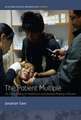
The Patient Multiple: WYSE Series in Social Anthropology, cartea 4
Autor Jonathan Taeeen Limba Engleză Hardback – 2017
Din seria WYSE Series in Social Anthropology
-
 Preț: 261.93 lei
-
 Preț: 254.68 lei
-
 Preț: 223.91 lei
-
 Preț: 251.46 lei
- 18%
 Preț: 696.15 lei
- 23%
 Preț: 758.62 lei
- 23%
 Preț: 779.69 lei
- 23%
 Preț: 864.06 lei
- 23%
 Preț: 845.65 lei
- 23%
 Preț: 774.85 lei
- 23%
 Preț: 760.64 lei
-
 Preț: 263.17 lei
-
 Preț: 264.02 lei
-
 Preț: 265.32 lei
-
 Preț: 199.93 lei
-
 Preț: 260.85 lei
-
 Preț: 263.90 lei
- 23%
 Preț: 758.62 lei
Preț: 760.37 lei
Preț vechi: 987.50 lei
-23%
Puncte Express: 1141
Carte tipărită la comandă
Livrare economică 07-21 decembrie
Livrare prin curier în România Termenul estimat este afișat lângă disponibilitate.
Transport gratuit pentru acest produs Plată online sau ramburs, în funcție de opțiunile comenzii.
Retur gratuit în 14 zile Comandă securizată și suport în română.
Specificații
ISBN-13: 9781785333941
ISBN-10: 1785333941
Pagini: 244
Ilustrații: 30 illustrations
Dimensiuni: 157 x 235 x 18 mm
Greutate: 0.51 kg
Editura: BERGHAHN BOOKS
Colecția WYSE Series in Social Anthropology
Seria WYSE Series in Social Anthropology
ISBN-10: 1785333941
Pagini: 244
Ilustrații: 30 illustrations
Dimensiuni: 157 x 235 x 18 mm
Greutate: 0.51 kg
Editura: BERGHAHN BOOKS
Colecția WYSE Series in Social Anthropology
Seria WYSE Series in Social Anthropology
V-ar putea interesa

Notă biografică
Jonathan Taee holds a PhD in Social Anthropology from the University of Cambridge. He has conducted ethnographic research and worked in Tibet, Peru, Nepal, India, the USA and Bhutan.
Cuprins
List of Figures
Acronyms
Notes on Language
Dzongkha Reference Guide
Acknowledgements
Map
Introduction
Chapter 1. The Patient Multiple: Cures, Healths and Bodies
Chapter 2. Modernising Traditional Medicine: A Two-Option Healthcare Service
Chapter 3. An Ethnography of Decision-Making
Chapter 4. Alternative Practices and the Removal of Ja Né
Chapter 5. Patients and Healing Materials: Relations and Dependency
Conclusion: Assembling Patient Multiples and Complementary Logics of Care
Bibliography
Index