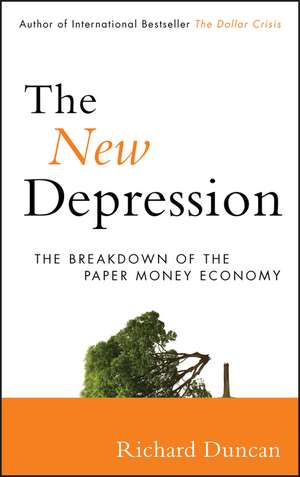
The New Depression
Autor Richard Duncanen Limba Engleză Hardback – 3 apr 2012
Ca și G. Leigh Skene în Cycles of Inflation and Deflation, autorul Richard Duncan distilează experiență reală în principii acționabile, oferind o perspectivă lucidă asupra vulnerabilităților sistemului monetar actual. În volumul The New Depression, publicat de Wiley, Duncan depășește simpla diagnoză a crizelor trecute și propune un cadru analitic novator: Teoria Cantitativă a Creditului. Subliniem faptul că această lucrare nu este doar o cronică a declinului, ci un ghid strategic pentru înțelegerea mecanismelor care guvernează economia globală după anul 1968, momentul în care dolarul a încetat să mai fie susținut de aur. Analizăm, prin intermediul textului, modul în care paradigma economică s-a deplasat de la investiții bazate pe capital către un model alimentat exclusiv de expansiunea creditului și consum. Considerăm că argumentația lui Duncan este esențială pentru profesioniștii din domeniul financiar, deoarece explică de ce creșterea economică a devenit dependentă de datoria publică și privată. Spre deosebire de alte analize pur teoretice, autorul utilizează experiența sa documentată în The Dollar Crisis pentru a anticipa cum vor evolua prețurile activelor și portofoliile de investiții în contextul unei posibile contracții severe a creditului. Recomandăm această lectură pentru rigoarea cu care tratează riscul unei „Noi Mari Depresiuni”. Stilul este autoritar și orientat spre rezultate, oferind cititorului instrumentele necesare pentru a naviga într-un peisaj unde solvabilitatea guvernelor se deteriorează rapid. Este o examinare critică a sistemului post-Bretton Woods care forțează cititorul să înțeleagă de ce status quo-ul actual este nesustenabil fără o intervenție strategică majoră.
Preț: 214.93 lei
Carte disponibilă
Livrare economică 02-16 noiembrie
Specificații
ISBN-10: 1118157796
Pagini: 179
Dimensiuni: 157 x 235 x 15 mm
Greutate: 0.44 kg
Ediția:1
Editura: Wiley
Locul publicării:Singapore, Singapore
V-ar putea interesa
-
 Preț: 262.71 lei
 -
 -26%Preț: 80.42 lei108.58 lei
 -
 End This Depression Now!Paul KrugmanPreț: 86.29 lei
 -
 The End of AlchemyMervyn KingPreț: 118.68 lei
 -
 -24%Preț: 150.15 lei198.30 lei
 -
 The Death of MoneyJames Rickards-31%Preț: 63.50 lei92.05 lei
 -
 Paper PromisesPhilip Coggan-20%Preț: 62.40 lei78.11 lei
 -
 The Great DevaluationAdam BarattaPreț: 135.45 lei
 -
 Preț: 154.99 lei
 -
 Three Days at Camp DavidJeffrey E. GartenPreț: 144.07 lei
 -
 -15%Preț: 199.51 lei233.42 lei
 -
 -26%Preț: 74.71 lei100.42 lei
 -
 Money: A Story of HumanityDavid McWilliams-17%Preț: 67.11 lei80.94 lei
 -
 The Collapse of Global LiberalismPhilip PilkingtonPreț: 115.00 lei
 -
 Rich Dad's Increase Your Financial IQRobert T KiyosakiPreț: 96.24 lei
 -
 Rich Dad's Increase your financial IQRobert KiyosakiPreț: 47.29 lei
 -
 Rich Dad's Conspiracy of the RichRobert KiyosakiPreț: 77.66 lei
 -
 Doom LoopEswar S. PrasadPreț: 185.03 lei
 -
 The Return of Depression EconomicsPaul Krugman-32%Preț: 62.97 lei92.20 lei
 -
 Lords of FinanceLiaquat Ahamed-37%Preț: 69.89 lei110.32 lei
Public țintă
Professionals economists, policy makers, researchers, students, general readers.De ce să citești această carte
Recomandăm această carte economiștilor și investitorilor care doresc să înțeleagă mecanismele profunde ale crizei datoriilor. Veți învăța cum să aplicați Teoria Cantitativă a Creditului pentru a prognoza mișcările pieței și veți câștiga o perspectivă clară asupra riscurilor geopolitice iminente. Este un instrument indispensabil pentru cei care vor să anticipeze direcția economiei globale într-o eră a banilor de hârtie fără acoperire.