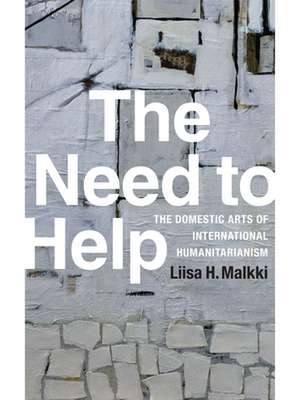
The Need to Help
Autor Liisa H. Malkkien Limba Engleză Hardback – 11 sep 2015
În volumul The Need to Help, descoperim o perspectivă antropologică neconvențională asupra intervenției umanitare, care mută reflectorul de la beneficiarii asistenței către psihologia și nevoile celor care oferă ajutorul. Liisa H. Malkki analizează capitolul dedicat „umanitarismului de casă” și obiectelor simbolice, precum jucăriile croșetate pentru copiii aflați în dificultate, demonstrând cum actul de a dărui devine o formă de îngrijire de sine și o metodă de a combate izolarea socială. Apreciem modul în care autoarea integrează zece ani de cercetare în cadrul Crucii Roșii Finlandeze pentru a explora dorința de a fi parte din „lumea vie” și dintr-un proiect mai amplu decât propria existență. Structura cărții urmărește o progresie de la motivațiile profesionale și solidaritatea ocupațională, către analize subtile despre „umanizarea” păcii și utilizarea animalelor de pluș ca instrumente ale imaginației umanitare. Cartea acoperă aceeași arie tematică precum Disquieting Gifts de Erica Bornstein, însă The Need to Help oferă o abordare mai centrată pe intersecția dintre spațiul domestic și cel internațional, arătând cum gesturile mici, aparent triviale, complică noțiunea de muncă politică reală. În contextul operei sale, această lucrare continuă preocuparea pentru construcția identității începută în Purity and Exile, dar înlocuiește analiza traumei refugiaților cu explorarea impulsurilor etice ale voluntarilor. De asemenea, spre deosebire de Improvising Theory, unde accentul cade pe metoda etnografică, aici Malkki se concentrează pe dimensiunea afectivă și pe impasurile emoționale ale celor care lucrează în zone de conflict sau dezastru.
Preț: 647.12 lei
Preț vechi: 761.32 lei
-15%
Carte tipărită la comandă
Livrare economică 13-27 iulie
Specificații
ISBN-10: 082235912X
Pagini: 296
Dimensiuni: 157 x 234 x 20 mm
Greutate: 0.48 kg
Editura: Duke University Press
V-ar putea interesa
-
 We Are All Cannibals – And Other EssaysClaude Lévi–strauss-23%Preț: 452.36 lei587.48 lei
 -
 Preț: 164.56 lei
 -
 Preț: 452.26 lei
 -
 The Logic of PracticePierre BourdieuPreț: 201.98 lei
 -
 Global Culture IndustryScott LashPreț: 198.31 lei
 -
 Techniques of PleasureMargot WeissPreț: 205.88 lei
 -
 JapanoiseDavid NovakPreț: 206.16 lei
 -
 The Soul of AnimeIan CondryPreț: 142.02 lei
 -
 Speculative Markets – Drug Circuits and Derivative Life in NigeriaKristin PetersonPreț: 236.85 lei
 -
 Preț: 241.50 lei
 -
 Blood-Brotherhood and Other Rites of Male AllianceNathan MillerPreț: 86.89 lei
 -
 A Companion to the Anthropology of Environmental HealthMerrill Singer-9%Preț: 1189.11 lei1306.71 lei
 -
 Companion to Anthro of ReligioJanice BoddyPreț: 405.74 lei
 -
 -21%Preț: 249.18 lei315.44 lei
De ce să citești această carte
Această carte este esențială pentru studenții și profesioniștii din sociologie, antropologie și studii umanitare. Cititorul câștigă o înțelegere profundă a motivelor psihologice din spatele altruismului, dincolo de retorica oficială. Este o recomandare valoroasă pentru cei care vor să înțeleagă cum munca umanitară servește nu doar beneficiarilor, ci și nevoii de sens și apartenență a voluntarilor înșiși, transformând un act caritabil într-o formă de politică a imaginației.
Despre autor
Liisa H. Malkki este profesoară asociată de antropologie culturală la Universitatea Stanford, fiind recunoscută pentru cercetările sale asupra refugiaților și politicilor umanitare. Lucrarea sa anterioară, Purity and Exile, a stabilit noi standarde în studiul identității și violenței în contextul exilului hutu din Tanzania. În The Need to Help, Malkki își aplică rigoarea etnografică asupra propriului context cultural, explorând instituții precum Crucea Roșie. Expertiza sa combină teoria socială cu observația participativă, oferind analize critice asupra modului în care conceptele de umanitate și ajutor sunt construite și practicate în lumea contemporană.
Descriere scurtă
Cuprins
Introduction. Need, Imagination, and the Care of the Self 1
1. Professionals Abroad: Occupational Solidarity and International Desire as Humanitarian Motives 23
2. Impossible Situations: Affective Impasses and Their Afterlives in Humanitarian and Ethnographic Fieldwork 53
3. Figurations of the Human: Children, Humanity, and the Infantilization of Peace 77
4. Bear Humanity: Children, Animals, and Other Power Objects of the Humanitarian Imagination 105
5. Homemade Humanitarianism: Knitting and Loneliness 133
6. A Zealous Humanism and Its Limits: Sacrifice and the Hazards of Neutrality 165
Conclusion. The Power of the Mere: Humanitarianism as Domestic Art and Imaginative Politics 199
Notes 209
References 235
Index 267