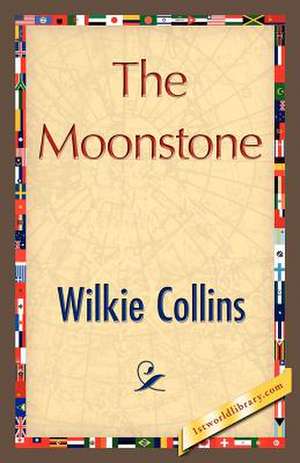
The Moonstone
Autor Wilkie Collins, Wilkie Collins Editat de 1stworld Libraryen Limba Engleză Paperback
O bijuterie sacră furată. O familie bântuită de un blestem străvechi. O dispariție imposibilă dintr-o cameră încuiată. Reținem aici miza psihologică zdrobitoare: onoarea unei tinere, Rachel Verinder, este pusă în pericol când diamantul primit la a optsprezecea aniversare dispare fără urmă. Tensiunea se instalează brusc. Descoperim o structură narativă ingenioasă, unde adevărul este fragmentat în relatări subiective, obligându-ne să jucăm rolul detectivului. Ritmul este dictat de urgența personajelor de a-și spăla numele, totul sub amenințarea celor trei păzitori brahmani care nu se vor opri de la nimic pentru a recupera piatra. Stilul are ceva din proza lui Charles Dickens, mentorul lui Collins, fără să fie o imitație — Collins elimină sentimentalismul victorian în favoarea unei precizii clinice în investigație. Remarcăm cum autorul rafinează temele identității și ale secretelor întunecate explorate anterior în The Woman in White. Spre deosebire de acea lucrare, aici accentul cade pe procedura detectivistică pură, prefigurând genul polițist modern. Organizarea volumului în ediția Collins Classics este remarcabilă: după narațiunea principală, cititorul găsește anexe fascinante care fac legătura între ficțiune și realitatea sângeroasă a epocii, precum cazul crimei de la Road-house din 1860.
Preț: 318.19 lei
Carte tipărită la comandă
Livrare economică 24-30 noiembrie
Specificații
ISBN-10: 1421827700
Pagini: 700
Dimensiuni: 140 x 216 x 39 mm
Greutate: 0.88 kg
Editura: 1st World Library
V-ar putea interesa
-
 Lady Chatterley's LoverD. H. LawrencePreț: 28.01 lei
 -
 The House of MirthEdith Wharton-32%Preț: 49.26 lei72.86 lei
 -
 The Way We Live NowAnthony Trollope-32%Preț: 65.65 lei97.14 lei
 -
 Dr. Wortle''s SchoolAnthony Trollope-20%Preț: 62.57 lei78.06 lei
 -
 North and SouthElizabeth Gaskell-31%Preț: 51.13 lei73.96 lei
 -
 The Tenant of Wildfell HallAnne Brontë-23%Preț: 62.58 lei81.26 lei
 -
 Wives and DaughtersElizabeth Gaskell-15%Preț: 69.95 lei82.42 lei
 -
 The IliadHomerPreț: 81.29 lei
 -
 American Supernatural TalesS T Joshi-23%Preț: 170.96 lei223.39 lei
 -
 The ItalianAnn RadcliffePreț: 61.09 lei
 -
 Green Tea: and Other Weird StoriesJ. Sheridan Le FanuPreț: 73.38 lei
 -
 Daisy Miller and Other StoriesHenry JamesPreț: 45.93 lei
 -
 Barchester Towers: The Chronicles of BarsetshireAnthony Trollope-15%Preț: 56.73 lei67.13 lei
 -
 Home for a BunnyMargaret Wise Brown-18%Preț: 29.50 lei36.10 lei
 -
 The Conquering Sword of ConanRobert E. HowardPreț: 125.55 lei
 -
 Narrative of the Life of Frederick DouglassFrederick Douglass-19%Preț: 23.42 lei28.76 lei
 -
 DraculaBram Stoker-15%Preț: 38.13 lei44.92 lei
 -
 The Scarlet PimpernelEmmuska OrczyPreț: 36.11 lei
 -
 Lud-In-The-MistHope Mirrlees-25%Preț: 59.57 lei79.82 lei
 -
 Witchfinder Omnibus Volume 1Mike MignolaPreț: 280.56 lei
 -
 The Complete Richard Hannay StoriesJohn BuchanPreț: 28.01 lei
 -
 Les MiserablesVictor HugoPreț: 199.49 lei
 -
 The Illustrated & Complete Brigadier GerardArthur Conan DoylePreț: 218.19 lei
 -
 Great ExpectationsCharles DickensPreț: 57.35 lei
 -
 Sign of the Four, TheArthur DoylePreț: 57.53 lei
De ce să citești această carte
Recomandăm acest volum oricărui pasionat de mistere care dorește să descopere „originea speciilor” în literatura polițistă. Veți câștiga nu doar o lectură tensionată, ci și o perspectivă critică asupra epocii victoriene. Este ediția definitivă pentru colecționari, oferind context istoric și analize care transformă lectura într-o experiență completă de investigație literară.
Despre autor
Wilkie Collins (1824–1889) a fost un romancier și dramaturg englez de un succes răsunător în epoca sa, devenind la un moment dat cel mai bine plătit scriitor victorian. Prieten apropiat și colaborator al lui Charles Dickens, Collins a revoluționat literatura prin crearea „romanului de senzație”. Deși s-a luptat cu dependența de opiu cauzată de gută, creativitatea sa a lăsat moștenire structuri narative complexe și personaje memorabile. Este recunoscut universal ca părintele romanului polițist englez modern, reușind să îmbine critica socială cu suspansul psihologic într-o manieră care rămâne relevantă și astăzi.
Descriere scurtă
Notă biografică
Descriere
Who, in the name of wonder, had taken the Moonstone out of Miss Rachel's drawer?A celebrated Indian yellow diamond is first stolen from India, then vanishes from a Yorkshire country house. Who took it? And where is it now? A dramatist as well as a novelist, Wilkie Collins gives to each of his narratorsa household servant, a detective, a lawyer, a cloth-eared Evangelical, a dying medical manvibrant identities as they separately tell the part of the story that concerns themselves.One of the great triumphs of nineteenth-century sensation fiction, The Moonstone tells of a mystery that for page after page becomes more, not less inexplicable. Collins's novel of addictions is itself addictive, moving through a sequence of startling revelations towards the final disclosure of the truth. Entranced with double lives, with men and women who only know part of the story, Collins weaves their narratives into a web of suspense. The Moonstone is a text that grows imaginatively out of the secrets that the unconventional Collins was obliged to keep as he wrote the novel.
Recenzii
Collins’s story revolves around a diamond stolen from a Hindu holy place. On her eighteenth birthday, Rachel Verinder receives the diamond, but by the following morning the stone has been stolen again. As the story unravels through multiple eyewitness accounts, the elderly Sergeant Cuff—with a face “sharp as a hatchet”—looks for the culprit.
One of Collins’s best-loved novels, with an exciting plot moved along by deftly-drawn characters and elegant pacing, The Moonstone was also turned into a play by Collins; the play appears as an appendix to this edition.
“This superbly edited and richly documented edition of what T.S. Eliot described as ‘the first and greatest of English detective novels’ is the definitive and indispensible edition of The Moonstone.” — William Baker, Northern Illinois University
“The Moonstone, one of Wilkie Collins’s most popular and successful novels, has never been out of print since its first publication in 1868. Is another edition needed? The answer, in the case of Professor Farmer’s scholarly and impeccably edited text, must be a resounding yes. Invaluable for his survey of past and present reactions to the story, and for his own insights, the edition also includes historical and background material and a well-chosen collection of relevant contemporary documents—always an important feature of Broadview Literary Texts. This Moonstone will surely prove another winner for Broadview’s list.” — Catherine Peters, author of The King of Inventors: A Life of Wilkie Collins
“Steve Farmer’s Broadview edition will undoubtedly become the definitive edition of The Moonstone. [It] deserves a five star rating.” — The Wilkie Collins Society Journal
“Here is a book which anyone with an interest in either Collins or Victorian literature in general will want to buy. The chief reason for this is Broadview’s exceptionally generous editorial policy in its series of Literary Texts, and the very good use that Steve Farmer has made of this generosity. In this edition, for a reasonable price, we are given not only a beautifully printed and error-free annotated text of the novel, but also a full introduction and over 150 pages of appendices. … This is the first time that Collins’ dramatic adaptation of the novel has been reprinted and this text alone is well worth the price of the book.” — Adrian J. Pinnington, Waseda University, Wilkie Collins Society Journal
Cuprins
Introduction
William Wilkie Collins: A Brief Chronology
A Note on the Text
The Moonstone
Appendix A: Early Reviews of The Moonstone
- Geraldine Jewsbury, The Athenaeum (July 25, 1868)
- The Spectator (July 25, 1868)
- Nation (September 17, 1868)
- The Times (October 3, 1868)
- Harper’s New Monthly Magazine (October 1868)
- Lippincott’s Magazine (December 1868)
- The Times (July 3, 1860 to October 2, 1865)
- The Sommerset and Wilts Journal (July 21, 1860)
- The Times (July 13, 1861 to July 26, 1861)
- “A Sermon for Sepoys.” From Charles Dickens’s Household Words: A Weekly Journal (February 27, 1858)
Appendix F: The Moonstone (the Play)
Appendix G: Reviews of the Olympic Theatre Performance of Collins’s The Moonstone
- The Times (September 21, 1877)
- The Illustrated London News (September 22, 1877)
- The Athenaeum (September 22, 1877)
- The Spirit of the Times, New York (October 6, 1877)