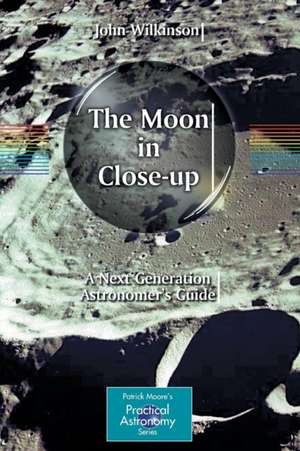
The Moon in Close-up: The Patrick Moore Practical Astronomy Series
Autor John Wilkinsonen Limba Engleză Paperback – 4 ian 2011
Această ediție a lucrării The Moon in Close-up marchează o tranziție necesară în literatura de specialitate, integrând fluxul masiv de informații colectate de sondele spațiale lansate recent de agențiile din SUA, Europa (ESA), Japonia, China și India. Remarcăm o actualizare fundamentală a înțelegerii geologiei lunare, oferind date care depășesc cadrul istoric stabilit de misiunile Apollo. Descoperim aici o structură organizată pentru progresia învățării, debutând cu istoricul geologic și metodele de observație, culminând cu cel mai extins capitol al cărții, dedicat celor 17 arii de studiu. Aceste secțiuni ghidează cititorul prin regiuni specifice, precum Mare Crisium sau Oceanus Procellarum, utilizând hărți fotografice etichetate care facilitează identificarea topografică. Cititorii familiarizați cu Observing the Moon de Peter T. Wlasuk vor aprecia în acest volum abordarea „Next Generation”, care pune un accent mai mare pe corelarea observației vizuale directe cu noile realități științifice despre compoziția scoarței. În comparație cu 21st Century Atlas of the Moon, care servește ca referință cartografică pură, lucrarea de față funcționează ca un manual de teren, oferind context geologic pentru fiecare crater sau munte observat. Găsim în acest volum aceeași rigoare analitică pe care autorul John Wilkinson a demonstrat-o în The Solar System in Close-Up, menținând un echilibru între precizia academică și accesibilitatea necesară unui astronom amator. Tonul este unul informativ și aplicat, transformând volumul într-un instrument esențial pentru curriculumul de astronomie practică.
Din seria The Patrick Moore Practical Astronomy Series
-
 Preț: 273.10 lei
 -
 Preț: 405.61 lei
 -
 Preț: 291.13 lei
 -
 Preț: 221.60 lei
 -
 Preț: 282.88 lei
 -
 Preț: 214.14 lei
 -
 Preț: 213.41 lei
 -
 Preț: 436.11 lei
 -
 Preț: 224.90 lei
 -
 Preț: 272.03 lei
 -
 Preț: 224.06 lei
 -
 Preț: 329.73 lei
 -
 Preț: 304.67 lei
 -
 Preț: 314.71 lei
 -
 Preț: 272.38 lei
 -
 Preț: 299.60 lei
 -
 Preț: 230.13 lei
 -
 Preț: 327.23 lei
 -
 Preț: 348.71 lei
 -
 Preț: 252.09 lei
 -
 Preț: 181.15 lei
 -
 Preț: 375.55 lei
 -
 Preț: 261.18 lei
 -
 Preț: 206.17 lei
 -
 Preț: 210.79 lei
 -
 Preț: 215.71 lei
 -
 Preț: 255.50 lei
 -
 Preț: 300.59 lei
 -
 Preț: 192.70 lei
 -
 Preț: 215.80 lei
 -
 Preț: 326.80 lei
 -
 Preț: 207.33 lei
 -
 Preț: 329.33 lei
 -
 Preț: 304.01 lei
 - 15%
 Preț: 676.73 lei
 -
 Preț: 208.50 lei
 -
 Preț: 349.34 lei
 -
 Preț: 242.32 lei
 -
 Preț: 302.01 lei
 -
 Preț: 150.27 lei
 -
 Preț: 267.37 lei
 -
 Preț: 280.62 lei
 -
 Preț: 254.09 lei
 -
 Preț: 317.82 lei
 -
 Preț: 284.03 lei
 -
 Preț: 304.84 lei
 -
 Preț: 213.61 lei
 -
 Preț: 326.80 lei
 -
 Preț: 284.87 lei
 -
 Preț: 321.91 lei
Preț: 257.79 lei
Carte disponibilă
Livrare economică 13-27 noiembrie
Specificații
ISBN-10: 3642148042
Pagini: 324
Ilustrații: XI, 310 p. 57 illus. in color.
Dimensiuni: 155 x 235 x 18 mm
Greutate: 0.49 kg
Ediția:2011
Editura: Springer
Colecția The Patrick Moore Practical Astronomy Series
Seria The Patrick Moore Practical Astronomy Series
Locul publicării:Berlin, Heidelberg, Germany
V-ar putea interesa
-
 -13%Preț: 135.06 lei154.55 lei
 -
 CreationBarry R. ParkerPreț: 374.38 lei
 -
 The First Men on the MoonDavid M. HarlandPreț: 350.67 lei
 -
 Fair Trade: The Challenges of Transforming GlobalizationLaura T. Raynolds-18%Preț: 1255.17 lei1530.69 lei
 -
 Fair Trade: The Challenges of Transforming GlobalizationLaura T. RaynoldsPreț: 465.41 lei
 -
 -18%Preț: 1116.57 lei1361.67 lei
 -
 Preț: 189.14 lei
 -
 Solar SystemMarcus ChownPreț: 247.54 lei
 -
 Strategy GamesJohn WilkinsonPreț: 128.37 lei
 -
 Planetary SciencesImke De Pater-8%Preț: 638.37 lei693.88 lei
 -
 Preț: 205.21 lei
 -
 Pulsating StarsF. G. SmithPreț: 368.78 lei
 -
 The Solar SystemRobert Harvey-14%Preț: 130.38 lei150.98 lei
 -
 The Lyric TouchJohn WilkinsonPreț: 135.15 lei
 -
 Confederate Blockade RunnerJohn WilkinsonPreț: 213.15 lei
 -
 Schedule of UnrestJohn WilkinsonPreț: 102.55 lei
 -
 The Solar System in Close-UpJohn WilkinsonPreț: 257.58 lei
 -
 Planetary SystemsMarc Ollivier-18%Preț: 1039.20 lei1267.32 lei
 -
 Galaxies and CosmologyFrancoise Combes-19%Preț: 557.25 lei687.97 lei
 -
 Space-Time Reference SystemsMichael SoffelPreț: 392.97 lei
 -
 Untersuchungen über die Auriga-DunkelwolkeGeorg HartwigPreț: 394.22 lei
 -
 Preț: 408.80 lei
 -
 -15%Preț: 423.98 lei498.79 lei
 -
 StellarastronomieH. KoboldPreț: 398.66 lei
 -
 Einführung in die HimmelsmechanikForest Ray Moulton-15%Preț: 434.17 lei510.78 lei
 -
 Astronomische Chronologie: Ein Hülfsbuch für Historiker, Archäologen und AstronomenDr. Walter F. Wislicenus-15%Preț: 418.78 lei492.68 lei
 -
 Preț: 366.41 lei
 -
 Creation and MetaphysicsHerve J ThibaultPreț: 391.62 lei
 -
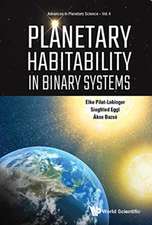 PLANETARY HABITABILITY IN BINARY SYSTEMSPilat-Lohinger Elke-15%Preț: 536.81 lei631.53 lei
Public țintă
Popular/generalDe ce să citești această carte
Recomandăm această carte oricărui pasionat de astronomie care dorește să înțeleagă ce vede prin telescop, nu doar să admire peisajul lunar. Câștigați acces la date geologice moderne, explicate prin prisma celor 17 zone de studiu. Este un instrument practic ce transformă observația nocturnă într-o sesiune de cercetare informată, fiind ideal atât pentru studenți, cât și pentru educatori.
Despre autor
John Wilkinson este un autor cu o expertiză vastă în comunicarea științei, fiind recunoscut pentru capacitatea de a sintetiza descoperirile complexe ale misiunilor spațiale contemporane. În portofoliul său de lucrări științifice se regăsește și volumul The Solar System in Close-Up, unde explorează dinamica planetelor și a obiectelor mici din sistemul solar. Wilkinson deține o capacitate rară de a activa în domenii diverse, fiind totodată un poet englez apreciat și profesor la Universitatea din Chicago. În The Moon in Close-up, el își folosește rigurozitatea analitică pentru a oferi comunității astronomice un ghid actualizat, ancorat în cele mai noi date furnizate de explorarea spațială internațională.
Descriere scurtă
Cuprins
Recenzii
“The book is in paperback and is very well presented with many illustration in colour as well as black and white. … contains six chapters but the last chapter is divided into 17 sections. … Overall I recommend this book as one of the most useful for amateur astronomers. … book is a practical guide to observing the moon. It is most useful for people wanting information on the latest findings.” (Jenny Ball, IceInSpace, May, 2011)
“Divided into six chapters, there’s something for everyone interested in our natural satellite here. Chapter one discusses the Moon’s orbit, libration, phases and topography. The following two chapters cover space missions and geological history. Occultations, eclipses and observing complete the first half of the book, which together make a great beginner’s introduction. Chapter six studies individual features in great detail … .” (Steve Richards, Sky at Night Magazine, September, 2011)
“Science instructor/writer Wilkinson does a good job of making the moon accessible to amateur astronomers and beginners … . The index and glossary are well done, and most of the figures are good … . Overall, this book might be useful for nonscience undergraduate students taking an introductory astronomy class. Summing Up … Lower-division undergraduates and general readers.” (J. R. Kraus, Choice, Vol. 49 (3), November, 2011)