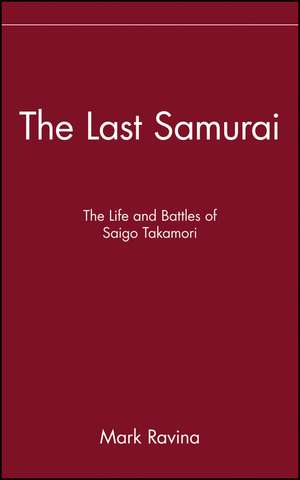
The Last Samurai
Autor Mark Ravinaen Limba Engleză Hardback – 24 noi 2003
Analizăm cu interes această lucrare semnată de Mark Ravina, care debutează prin examinarea conflictului sângeros din 24 septembrie 1877, momentul simbolic al morții lui Saigō Takamori și al dispariției clasei samurailor. Autorul propune o demistificare a acestui personaj enigmatic, urmărind transformarea sa dintr-un loialist exilat într-un lider de stat și, ulterior, în arhitectul unei rebeliuni împotriva guvernului pe care el însuși l-a ajutat să se instaleze. Structura narativă este construită pe tensiunea dintre necesitatea modernizării de tip occidental și conservarea onoarei feudale, oferind studii de caz asupra modului în care abolirea dreptului de a purta sabie a declanșat o criză identitară națională. Recomandăm acest volum deoarece extinde cadrul propus de Saigo Takamori - The Man Behind the Myth de Charles L. Yates cu date noi extrase din arhivele politice ale perioadei Meiji timpurii, reușind să explice de ce cel mai mare războinic al Japoniei a ales să conducă o armată de rebeli împotriva propriului împărat. În contextul operei sale, The Last Samurai continuă cercetările din Land and Lordship in Early Modern Japan, unde Mark Ravina a explorat adaptarea sistemului de domenii (daimyo) la pacea din perioada Tokugawa, oferind acum concluzia dramatică a acelui proces de evoluție socială. Față de lucrări mai generale precum Samurai de John Man, textul de față se distinge printr-o rigoare academică aplicată asupra mecanismelor de putere din spatele mitului, transformând biografia într-o analiză a nașterii statului japonez modern.
Preț: 230.71 lei
Carte disponibilă
Livrare economică 13-27 noiembrie
Livrare express 30 octombrie-05 noiembrie pentru 41.14 lei
Specificații
ISBN-10: 0471089702
Pagini: 288
Dimensiuni: 157 x 235 x 22 mm
Greutate: 0.59 kg
Editura: Wiley
Locul publicării:Hoboken, United States
V-ar putea interesa
-
 -19%Preț: 307.85 lei380.64 lei
 -
 -27%Preț: 776.46 lei1063.64 lei
 -
 Preț: 313.16 lei
 -
 What We Did in Bed: A Horizontal HistoryBrian FaganPreț: 187.97 lei
 -
 Patently FemaleEthlie Ann VarePreț: 225.19 lei
 -
 Preț: 203.64 lei
 -
 Blood and WhiskeyPeter KrassPreț: 222.99 lei
 -
 Crazy HorseMike SajnaPreț: 140.74 lei
 -
 Yellow JackJohn R Pierce-5%Preț: 157.21 lei165.48 lei
 -
 Portrait of WarPeter KrassPreț: 211.27 lei
 -
 Battle for EuropeCharles SpencerPreț: 250.60 lei
 -
 Lady on the HillHoward E CovingtonPreț: 197.69 lei
 -
 -13%Preț: 418.95 lei481.55 lei
 -
 Animal City – The Domestication of AmericaAndrew A. RobichaudPreț: 322.87 lei
 -
 Land and Lordship in Early Modern JapanMark RavinaPreț: 487.17 lei
 -
 Charles II and His Court: A Critical StudyA. C. A. BrettPreț: 256.28 lei
 -
 The Greatest Search and Rescue Stories Ever ToldTom McCarthyPreț: 118.12 lei
 -
 The Book of Five RingsMiyamoto MusashiPreț: 49.95 lei
 -
 Bushido, the Soul of JapanInazô NitobePreț: 73.04 lei
Public țintă
1. Readers who enjoy Japanese history.2. Fans of books and movies set in Japan or other Asian countries at the dawn of their modern age.
3. Lovers of Asian cultures, including the thousands of Americans who have spent time in Japan.
4. Martial arts practitioners interested in Bushido or works such as The Book of Five Rings.
De ce să citești această carte
Pentru cititorii pasionați de istoria Japoniei și practicanții de arte marțiale interesați de codul Bushido, această carte oferă o perspectivă documentată asupra sfârșitului epocii feudale. Veți câștiga o înțelegere profundă a tranziției de la sabie la artilerie și a modului în care onoarea tradițională a fost integrată în identitatea națională modernă. Este resursa ideală pentru a separa realitatea istorică de legendele cinematografice.
Despre autor
Mark Ravina este profesor asociat de istorie japoneză la Universitatea Emory și director al Programului de Studii Est-Asiatice. Expertiza sa se concentrează pe evoluția politică și socială a Japoniei în perioadele Tokugawa și Meiji. Prin lucrări precum To Stand with the Nations of the World, Ravina s-a impus ca un specialist în analizarea modului în care elitele japoneze au navigat între xenofobie și modernizare rapidă. În The Last Samurai, el folosește această vastă cunoaștere pentru a oferi cea mai detaliată biografie în limba engleză a lui Saigō Takamori.
Descriere scurtă
Now an acting member of a modernizing Meiji government, Saigõ was given command of the new Imperial Guard, Japan's first national army in nearly a millennium. Saigõ supported many of the government's Western-style reforms, but he was torn by the sense that he was betraying his most stalwart supporters. Deeply ambivalent about the government he had helped create, Saigõ sought to end his career with a final dramatic gesture: he sought to go as imperial envoy to Korea, where he would insist that the Korean king recognize the Meiji emperor. When his plan was denounced as reckless, Saigõ resigned from government, returned to his native Satsuma, and opened a military academy for former samurai warriors. His group of disgruntled students resented the rapid modernization of Japan even more than did Saigõ. They set forth to slow the hand of change with their swords, making Saigõ the reluctant leader of their uprising. Old Japan and New Japan met in battle-blades against artillery-and old Japan lost. Saigõ died in battle from a bullet wound, but legend still has it that he died by his own sword, upholding samurai honor to the end.
In life, Saigõ had represented all that was commendable in the samurai estate. In death, Saigõ's legend grew even greater. The Last Samurai deftly traces the rise, fall, and rise again of Saigõ's life, his legend, and his dedication to all he believed in: tradition, honor, and glory. This compelling book provides a fascinating glimpse into the final days of Japanese feudal society, the blood-swept path of Saigõ's career, and his lasting impact on the nation to which he gave his life.