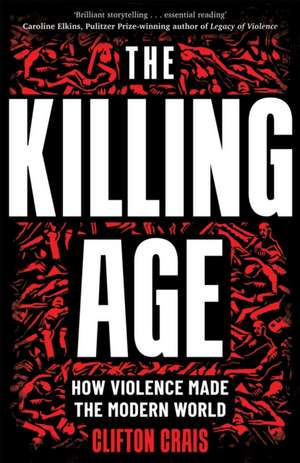
The Killing Age
Autor Clifton Craisen Limba Engleză Paperback – 13 noi 2025 – vârsta de la 18 ani
Bazându-ne pe datele furnizate de Pan Macmillan și pe cercetările extinse ale lui Clifton Crais, găsim în The Killing Age o reinterpretare radicală a modernității. În timp ce discursul istoric convențional se concentrează pe Iluminism și Revoluția Industrială ca piloni ai progresului, Crais propune termenul de „Mortocen” pentru a descrie perioada 1750-1914. Recomandăm această lucrare pentru curajul de a plasa violența organizată și prădarea resurselor în centrul dezvoltării capitalismului global. Structura volumului este monumentală, fiind împărțită în șase secțiuni ce urmăresc „afacerea morții”. De la finanțarea conflictelor și tehnologia armelor de foc, până la „holocausturile africane” și genocidurile din marile câmpii americane, autorul demonstrează cum uciderea pe scară largă a devenit un motor economic. Lucrarea completează perspectiva oferită de To Govern the Globe de Alfred W McCoy, adăugând o analiză profundă a modului în care masacrarea faunei sălbatice și sclavia au modelat nu doar economia, ci și ecosistemul planetar. Spre deosebire de abordările pur economice, Crais integrează dimensiunea ecologică, oferind anexe statistice despre pierderile umane și animale care fundamentează argumentația sa. În contextul operei sale, The Killing Age reprezintă punctul culminant al temelor explorate în Poverty, War, and Violence in South Africa sau The Politics of Evil. Dacă în lucrările anterioare se concentra pe mecanismele puterii și rezistenței în Africa de Sud, aici Crais extinde cadrul de analiză la nivel global. Tonul este sobru și analitic, transformând ceea ce numim adesea Antropocen într-o cronică a distrugerii sistematice care a unit lumea prin teroare și profit.
Preț: 142.17 lei
Carte disponibilă
Livrare economică 05-19 noiembrie
Livrare express 22-28 octombrie pentru 48.32 lei
Specificații
ISBN-10: 1035013428
Pagini: 736
Dimensiuni: 152 x 234 x 46 mm
Greutate: 0.82 kg
Ediția:Air Iri OME
Editura: Pan Macmillan
Colecția Picador
V-ar putea interesa
-
 ApocalypseLizzie WadePreț: 143.12 lei
 -
 Legacy of ViolenceCaroline Elkins-15%Preț: 107.71 lei127.16 lei
 -
 The War of the WorldNiall Ferguson-21%Preț: 115.71 lei146.39 lei
 -
 The Better Angels of Our NatureSteven Pinker-20%Preț: 115.76 lei145.49 lei
 -
 Empire of CottonSven Beckert-27%Preț: 90.83 lei123.62 lei
 -
 The New Age of EmpireKehinde Andrews-31%Preț: 64.22 lei92.93 lei
 -
 Preț: 144.09 lei
 -
 Preț: 190.55 lei
 -
 Preț: 122.97 lei
 -
 CapitalismSven BeckertPreț: 349.29 lei
 -
 Empires of Violence: Massacre in a Revolutionary AgePhilip DwyerPreț: 155.32 lei
 -
 Mafia: A Global HistoryRyan Gingeras-17%Preț: 103.17 lei124.52 lei
 -
 -26%Preț: 99.39 lei135.09 lei
 -
 Violent Saviours: The West, the Rest, and Capitalism Without ConsentWilliam Easterly-25%Preț: 101.94 lei136.36 lei
 -
 A History of Modern Britain in Twenty MurdersDavid Wilson-25%Preț: 92.00 lei122.69 lei
 -
 The Nutmeg's Curse: Parables for a Planet in CrisisAmitav Ghosh-26%Preț: 68.72 lei93.36 lei
 -
 To Govern the GlobeAlfred W McCoyPreț: 133.54 lei
 -
 -23%Preț: 62.33 lei81.06 lei
 -
 We Are Green and TremblingGabriela Cabezón CámaraPreț: 135.73 lei
 -
 War & Peace & WarAndrew NorthPreț: 92.04 lei
De ce să citești această carte
Recomandăm această carte cititorilor pasionați de istorie globală și sociologie care doresc să înțeleagă rădăcinile violente ale lumii moderne. Veți câștiga o perspectivă nouă asupra modului în care capitalismul și criza de mediu sunt legate de secole de imperialism. Este o lectură densă, susținută de date statistice riguroase, esențială pentru a descifra mecanismele puterii care guvernează prezentul nostru precar.
Despre autor
Clifton Crais este profesor de istorie și director al Institutului de Studii Africane din cadrul Universității Emory. Recunoscut pentru expertiza sa în istoria Africii de Sud și a colonialismului, Crais a publicat peste o sută de lucrări care explorează intersecția dintre putere, violență și imaginație politică. Printre volumele sale de referință se numără biografia Sarei Baartman și studii fundamentale despre formarea ordinii coloniale. În The Killing Age, autorul își folosește vasta experiență academică pentru a sintetiza surse din întreaga lume într-o istorie universală a violenței moderne, consolidându-și poziția de cercetător critic al structurilor imperiale.
Descriere
Notă biografică
Cuprins
Note on Language, Place-Names, and Measures
Dramatis Personae
Chronology
Preface
Introduction
Part One | The Business of Death
1: Guns
2: Financing the Mortecene
Part Two | African Holocausts
3: Lands of the Dead
4: Gods of War
5: Amerikani
Part Three | Pirates, Indians, and Gentlemen Warlords
6: Asian Waters
7: “Going after the Flesh”
Part Four | The American Ways of Killing
8: Deepwater Genocides
9: Extinguishing Nature
10: Death on the Great Plains
Part Five | Lands of the Dead
11: American Slavery
12: Castes of Another Name
13: Farming War
Part Six | Empire: Twilight of the Warlords
14: Conquering Africa, Part One
15: Conquering Africa, Part Two
16: Savageries of the New Imperialism in India
17: The Terrors of Free Trade in China
18: New World Empires
19: The Great Lands of the Dead
Epilogue: The Modern Age
Acknowledgments
Appendix 1: Weapons, 1700–1900
Appendix 2: Human Deaths and Loss, 1750–1914
Appendix 3: Wild Animal Deaths, 1750–1900
Appendix 4: Climate in the Eighteenth and Nineteenth Centuries
Appendix 5: Global Distribution of Wealth, 1750–1900
Notes
Index
Recenzii
“Clifton Crais, a historian at Emory University, uses Thistlewood’s ghastly story—and many more like it—to illustrate a striking argument. In his view, brutality like Thistlewood’s was not merely a scar on the modern world but essential to creating it. In The Killing Age, he claims that ‘without…globalized violence, the Industrial Revolution would not have happened.’. . .The Killing Age is deeply researched and contains some fascinating passages about who killed whom and who stole what in parts of the world to which too little attention is paid, from Darfur to New Zealand.”
“[Crais] argues that rapid and decisive shifts in the propensity and capacity to kill powered capitalism, imperialism, and climate change. The Killing Age chillingly evokes how distinctions between warlords and statesmen, empires and bands of robbers, slip and blur when we consider organized robbery and mass murder.”
“This is not simply a provocative reinterpretation of modernity; it is a bracing moral reckoning. By placing organised violence at the centre of development, he does more than revise a narrative. The Mortecene is not a metaphor but a structure of history. After this book, it becomes impossible to invoke the rise of the modern world without hearing the echo of gunfire behind it.”