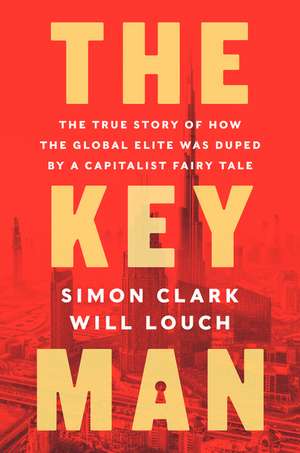
The Key Man
Autor Simon Clark, Will Louchen Limba Engleză Hardback – 6 iul 2021
Observăm în The Key Man o analiză necruțătoare a modului în care „capitalismul de impact” a fost transformat într-un paravan pentru una dintre cele mai mari fraude financiare din istoria recentă. Modelul propus de Arif Naqvi, fondatorul Abraaj, se baza pe o premisă seducătoare: obținerea profitului concomitent cu eradicarea sărăciei în piețele emergente. Subliniem faptul că autorii, Simon Clark și Will Louch, nu se rezumă la relatarea unui eșec financiar, ci demontează mecanismul prin care carisma personală și promisiunea unei lumi mai bune au orbit elitele globale, de la Bill Gates la administrația Obama. Remarcăm cum Naqvi a utilizat fluxurile opace de capital și paradisurile fiscale pentru a ascunde găuri de sute de milioane de dolari, în timp ce era prezentat drept un vizionar la Davos. Ca și Michael Lewis în Going Infinite, autorii distilează experiența reală în principii acționabile despre vigilența necesară în fața „altruismului eficient” care ascunde agende obscure. De asemenea, lucrarea completează perspectiva oferită de Brian Brivati în Icarus, oferind însă detaliile picante ale investigației jurnalistice care a dus la prăbușirea imperiului Abraaj. Această carte marchează o schimbare de registru pentru Simon Clark; dacă în alte colaborări sau lucrări precum Firmament se concentra pe istoria atmosferei sau în Sherlock Holmes's School for Detection pe ficțiune detectivistică, aici aplică rigoarea jurnalismului de investigație asupra unui caz real de criminalitate economică la nivel înalt. Rezultatul este un portret fascinant al lăcomiei mascate de filantropie.
Preț: 170.53 lei
Carte disponibilă
Livrare economică 11-25 noiembrie
Specificații
ISBN-10: 0062996215
Pagini: 352
Dimensiuni: 160 x 231 x 34 mm
Greutate: 0.51 kg
Editura: Harpercollins
V-ar putea interesa
-
 Circle of FriendsCharles GasparinoPreț: 218.14 lei
 -
 Too Big To FailAndrew Ross SorkinPreț: 137.66 lei
 -
 Built on a LieOwen Walker-19%Preț: 63.57 lei78.63 lei
 -
 Bad BloodJohn Carreyrou-36%Preț: 49.86 lei77.59 lei
 -
 MeltdownDuncan MavinPreț: 139.43 lei
 -
 The Bond KingMary ChildsPreț: 111.17 lei
 -
 Going InfiniteMichael LewisPreț: 72.56 lei
 -
 Catching Up to FtxBen ArmstrongPreț: 148.11 lei
 -
 Friends That InvestSimran KaurPreț: 123.59 lei
 -
 -6%Preț: 74.99 lei79.43 lei
 -
 Madoff: The Final WordRichard Behar-23%Preț: 148.31 lei193.18 lei
 -
 The Pentecost PapersFerdinand Mount-25%Preț: 103.43 lei138.23 lei
 -
 The Hidden GlobeAtossa Araxia Abrahamian-38%Preț: 98.61 lei159.73 lei
 -
 The FundRob Copeland-33%Preț: 52.99 lei79.43 lei
 -
 Hype Machine: Inside the Cult of CryptoJoshua OliverPreț: 78.70 lei
 -
 IcarusBrian BrivatiPreț: 144.06 lei
 -
 The Trillion Dollar ConmanBen RobinsonPreț: 142.99 lei
 -
 Billion Dollar WhaleBradley HopePreț: 93.02 lei
De ce să citești această carte
Recomandăm această carte oricărui profesionist din finanțe sau drept internațional care dorește să înțeleagă riscurile investițiilor în piețe emergente și pericolele lipsei de transparență. Veți învăța cum să identificați semnalele de alarmă în guvernanța corporativă și de ce „impactul social” nu trebuie să înlocuiască niciodată auditul riguros. Este un studiu de caz esențial despre etica în afaceri și mecanismele de control ale capitalului global.
Despre autor
Simon Clark este un jurnalist de investigație premiat, cunoscut pentru activitatea sa în cadrul Wall Street Journal, unde a acoperit subiecte legate de finanțe și corupție globală. Deși palmaresul său include și incursiuni în literatura de gen, precum The Night of the Triffids, expertiza sa în demascarea fraudelor financiare este cea care dă greutate volumului The Key Man. Alături de colegul său Will Louch, Clark a primit recunoaștere internațională pentru documentarea căderii grupului Abraaj, transformând o investigație complexă într-o narațiune accesibilă despre integritatea piețelor financiare.
Descriere scurtă
ONE OF THE ECONOMIST'S BEST BOOKS OF 2021
In this compelling story of lies, greed and tarnished idealism, two Wall Street Journal reporters investigate a man who Bill Gates, Western governments, and other investors entrusted with billions of dollars to make profits and end poverty, but who now stands accused of masterminding one of the biggest, most brazen financial frauds ever.
Arif Naqvi was charismatic, inspiring, and self-made—all the qualities of a successful business leader. The founder of Abraaj, a Dubai-based private-equity firm, Naqvi was the Key Man to the global elite searching for impact investments to make money and do good. He persuaded politicians he could help stabilize the Middle East after 9/11 by providing jobs and guided executives to opportunities in cities they struggled to find on the map. Bill Gates helped him start a $1 billion fund to improve healthcare in poor countries and the UN and Interpol appointed him to boards. As Pope Francis blessed a move to harness capitalism for the good of the poor, Naqvi won the support of Obama’s administration and investors, who compared him to Tom Cruise in Mission: Impossible.
In 2018, Simon Clark and Will Louch were contacted by an anonymous whistleblower who said Naqvi had swindled investors out of hundreds of millions of dollars and offered bribes to sustain his billionaire lifestyle. Digging into the claims, Clark and Louch uncovered hundreds of documents and exposed the wrongdoing. In April 2019—months after their exposé broke—Naqvi was arrested on charges of fraud and racketeering, and faces up to 291 years in jail.
Populated by a cast of larger-than-life characters and moving across Asia, Africa, Europe and America, The Key Man is the story of how the global elite was duped by a capitalist fairytale. Clark and Louch shine a light on efforts to clean up global capital flows even as opaque private equity firms amass trillions of dollars and offshore tax havens cast a veil of secrecy which prevents regulators, investors and citizens from understanding what’s really going on in the finance industry.
Recenzii
"An unbelievable true tale of greed, corruption, and manipulation among the world’s financial elite and how the World Bank, Bill Gates, and the governments of the US, UK, France, Germany, Norway, the Netherlands, Sweden, and Kuwait fell victim to the world’s largest private equity Ponzi scheme. This guy makes Bernie Madoff look like a saint.” — Harry Markopolos, the Bernie Madoff whistleblower
“Arif Naqvi separated billionaires and royalty from their wealth by appealing to their private conceit that they had made their billions doing God’s work. The twists and turns of the increasingly desperate effort to raise funds to protect Arif’s reputation and keep Abraaj afloat—the near misses and lucky saves—are spellbinding. You won’t want to put the book down.” — Eileen Appelbaum, coauthor of Private Equity at Work
“How do you dupe the World Bank, the World Economic Forum, the Gates Foundation, and countless financial luminaries from around the globe? Attach yourself to the latest piece of financial gibberish—philanthrocapitalism—hire a couple of McKinsey consultants, and then get the Harvard Business School to write glowing reports about you. In this page-turner, Clark and Louch serve up an emphatic indictment of the ‘expert class’—people who think agility with numbers is somehow equivalent to wisdom and morality.” — Duff McDonald, author of The Golden Passport
“The writing matches that of the best thrillers, with one huge extra bonus: you learn tons, even if you know this industry reasonably well. The rigor and colossal effort that went into this book transpires on each page. There is no dull moment. It is 300 pages of reading pleasure mixed with serious discomfort at what is being presented: the world of finance as it can be.” — Ludovic Phalippou, professor of financial economics at Saïd Business School, University of Oxford
"Simon Clark and Will Louch do us a service with their highly readable reminder of how greed and gullibility so often go together, and why we need good investigative journalism to keep reminding us that if the pitch (and the person doing the pitch) look just too good to be true, there is probably something fishy going on behind the scenes." — David Omand, former director of GCHQ and author of How Spies Think
"A rip-roaring account of one of the biggest frauds in corporate history. Through a pacey and deeply researched narrative, Clark and Louch unpick how a private equity trailblazer convinced some of the world’s richest and most sophisticated investors to part with their money—with devastating consequences. A must-read for anyone who is skeptical about the claims made by investment companies about their ethical credentials and motives." — Owen Walker, award-winning journalist and author of Built on a Lie
"A pacy and deeply reported tale." — Financial Times
"Compelling and disturbing, the book is a pointed tale of hubris, greed, and the narrow limits of so-called capitalistic ‘benevolence’ in the era of growing economic inequality. . . . Timely and provocative reading on one of the many perils of the murky private equity world." — Kirkus Reviews
"A riveting chronicle of the meteoric rise and scandalous fall of the Dubai private equity firm Abraaj and its conniving founder, Arif Naqvi. . . . This deeply reported tale captivates." — Publishers Weekly
"A meticulously researched, compelling reminder of the importance of financial oversight. It should be required reading in business schools." — Library Journal
"The Key Man is a riveting account of the intertwining of brilliance and greed. . . . The book should be a mandatory read at all schools of journalism and business schools, for it is a rare tour de force from which both can learn." — Business Standard
"Gripping . . . The account raises questions over whether 'impact investing' and 'stakeholder capitalism' are less about poverty alleviation for the world than guilt alleviation for the Davos elite." — The Guardian
"Impeccably researched and sumptuous in its detail. . . . It is a page-turner, built around a riveting portrait of the key man of the title. Mr. Naqvi comes across as a teeming mass of contradictions." — The Economist
"[Clark and Louch's] excellent book, which is more true crime than finance, describes in cinematic detail how Naqvi and his colleagues pumped up valuations, moved money between the company, its funds and their personal accounts, and lied about performance." — Reuters
"Well paced and cleverly organised. . . . Draws some devastating conclusions about our over-financialized economies; in particular the authors target the $4 trillion private-equity industry, which, if anybody has the courage to notice, should hereafter be subject to rigorous reform." — Sunday Times (London)
"A book that’s equally accessible to bank CEOs and those untutored in finance. . . . Clark and Louch have done an outstanding job in untangling the knots that usually keep the secretive world of private equity out of reach for most people. One hopes that their investigative work prompts regulators to strengthen their oversight of private equity—something that the titans of the $4 trillion industry have largely avoided so far." — Dawn (Pakistan)
"What the writers dissect marvellously is an all-too common tale of slick patter feeding off a degree of avarice and a large dollop of naivety. . . . It’s a sorry tale, one that raises important questions about our ability to deliver 'ethical' capitalism." — The National (UAE)