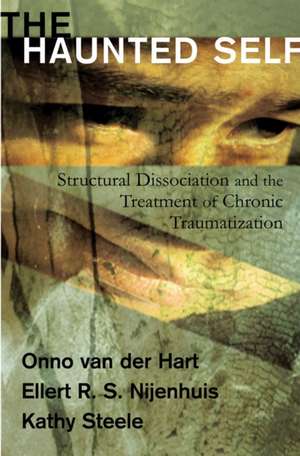
The Haunted Self
Autor Onno Van Der Hart, Ellert R S Nijenhuis, Kathy Steeleen Limba Engleză Hardback – noi 2006
În ultimele decenii, practica clinică în domeniul traumei a evoluat de la o abordare centrată pe simptom către o înțelegere profundă a fragmentării identității. Observăm cum diagnosticele clasice de comorbiditate sunt tot mai des reinterpretate prin prisma neurobiologiei interpersonale, dezvăluind că suferința pacienților cronic traumatizați nu este doar o sumă de amintiri, ci o dezorganizare structurală a sinelui. Ne-a atras atenția modul în care The Haunted Self sistematizează această complexitate, oferind un cadru teoretic și practic riguros pentru cazurile etichetate adesea ca „rezistente la tratament”. Subliniem importanța integrării psihologiei acțiunii a lui Pierre Janet cu teoria modernă a disocierii structurale. Autorii nu se limitează la descrierea fenomenelor disociative, ci propun un model de tratament tri-fazic, menit să crească capacitatea integrativă a pacientului. Acolo unde Approaches to Psychic Trauma de Bernd Huppertz oferă o privire de ansamblu asupra diverselor școli de gândire — de la psihologia egoului la terapiile prin artă —, volumul de față se concentrează specific pe mecanismele disocierii personalității și pe reabilitarea acțiunilor mentale adaptive. De asemenea, în timp ce Intimacy and Alienation de Russell Meares explorează perturbarea sinelui prin prisma atașamentului, The Haunted Self aduce o rigoare clinică sporită în gestionarea „afacerilor neterminate” ale memoriei traumatice. Această lucrare reprezintă pilonul central al cercetărilor autorilor, fiind strâns legată de edițiile internaționale precum Das verfolgte Selbst. Recomandăm acest volum ca pe o resursă fundamentală pentru clinicienii care doresc să treacă dincolo de fațada de normalitate a pacienților lor, oferind instrumente precise pentru a naviga prin labirintul conflictelor intrapsihice și al strategiilor de coping maladaptative.
Preț: 405.25 lei
Preț vechi: 426.57 lei
-5%
Carte disponibilă
Livrare economică 09-23 noiembrie
Livrare express 24-30 octombrie pentru 49.34 lei
Specificații
ISBN-10: 0393704017
Pagini: 440
Ilustrații: illustrations
Dimensiuni: 169 x 241 x 37 mm
Greutate: 0.82 kg
Editura: W. W. Norton & Company
V-ar putea interesa
-
 How to Do the WorkNicole LeperaPreț: 191.62 lei
 -
 Nowhere GirlCarla CicconePreț: 122.34 lei
 -
 A Therapeutic JourneyAlain de BottonPreț: 87.52 lei
 -
 Healing TraumaDaniel J Siegel-5%Preț: 334.34 lei351.94 lei
 -
 Trauma and the Struggle to Open UpRobert T. Muller-5%Preț: 229.45 lei241.52 lei
 -
 Trauma and RecoveryJudith Lewis Herman-5%Preț: 109.12 lei114.86 lei
 -
 -5%Preț: 600.21 lei631.80 lei
 -
 Preț: 336.61 lei
 -
 Just About CopingNatalie CawleyPreț: 79.27 lei
 -
 The Power of Self-Healing: Take action over your traumaSarah Woodhouse-24%Preț: 104.03 lei137.75 lei
 -
 Trauma and the 12 StepsJamie Marich-30%Preț: 101.04 lei144.03 lei
 -
 The uncharted selfTalal AlaliPreț: 99.33 lei
 -
 Apothecary for the Afflicted: Shadow Work for Invisible WoundsDr. Melissa Kim Corter-23%Preț: 119.28 lei155.44 leiRecomandat
 -
 On the BrinkPenelope CamplingPreț: 79.99 lei
 -
 Too Tired to FightErin Mitchell-19%Preț: 98.78 lei121.87 lei
 -
 It Didn't Start With You WorkbookMark WolynnPreț: 121.05 lei
 -
 FawningIngrid Clayton-5%Preț: 116.69 lei122.83 lei
 -
 What It Takes To HealPrentis HemphillPreț: 85.69 lei
 -
 From Trauma to HealingThe School Of LifePreț: 121.80 lei
 -
 The Workbook for Healing Developmental TraumaBrad J. KammerPreț: 119.11 lei
De ce să citești această carte
Recomandăm această carte terapeuților și studenților la psihologie clinică ce se confruntă cu cazuri complexe de traumă cronică. Cititorul câștigă un model de lucru structurat, bazat pe dovezi, care transformă confuzia diagnostică într-un plan terapeutic coerent. Este o resursă esențială pentru a înțelege cum disocierea fragmentează personalitatea și, mai ales, pentru a învăța tehnici concrete de reintegrare a sinelui într-un mod suportabil pentru pacient.
Despre autor
Echipa de autori reunește trei dintre cei mai respectați experți internaționali în domeniul disocierii. Onno Van Der Hart este profesor emerit la Universitatea Utrecht și un specialist recunoscut în psihologia lui Pierre Janet. Ellert R. S. Nijenhuis este un cercetător proeminent în domeniul somatoformelor și al disocierii, contribuind la fundamentarea teoretică a disocierii structurale. Kathy Steele aduce o vastă experiență clinică și pedagogică în tratamentul tulburărilor disociative complexe. Împreună, aceștia au sintetizat peste șase decenii de practică în acest volum de referință.