
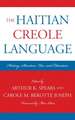
The Haitian Creole Language: History, Structure, Use, and Education: Caribbean Studies
Editat de Arthur K. Spears, Carole M. Berotte Joseph Cuvânt înainte de Marc Prou Contribuţii de Elizabeth Barrows, Yves Dejean, Nicholas Faraclas, Hugues St. Fort, Georges Fouron, Uli Locher, Serge Madhere, Marie-José Nzengou-Tayo, Mayra Cortes Piñeir, Jocelyne Trouillot-Lévy, Albert Valdman, Flore Zéphiren Limba Engleză Hardback – 22 iun 2010
Din seria Caribbean Studies
- 24%
 Preț: 321.82 lei
 - 25%
 Preț: 295.18 lei
 - 24%
 Preț: 309.57 lei
 - 26%
 Preț: 293.54 lei
 - 32%
 Preț: 384.81 lei
 - 24%
 Preț: 298.49 lei
 -
 Preț: 264.40 lei
 -
 Preț: 262.93 lei
 -
 Preț: 265.86 lei
 -
 Preț: 227.65 lei
 - 27%
 Preț: 345.03 lei
 -
 Preț: 260.52 lei
 -
 Preț: 491.13 lei
 - 23%
 Preț: 618.26 lei
 - 23%
 Preț: 628.93 lei
 -
 Preț: 267.53 lei
 -
 Preț: 451.97 lei
 - 23%
 Preț: 622.52 lei
 -
 Preț: 262.71 lei
 -
 Preț: 230.61 lei
 - 23%
 Preț: 619.55 lei
 - 23%
 Preț: 620.68 lei
 -
 Preț: 261.26 lei
 - 23%
 Preț: 618.26 lei
 - 23%
 Preț: 622.68 lei
 -
 Preț: 228.20 lei
 - 23%
 Preț: 623.65 lei
 -
 Preț: 265.86 lei
 - 27%
 Preț: 649.42 lei
 - 30%
 Preț: 330.47 lei
 -
 Preț: 488.72 lei
 - 23%
 Preț: 620.23 lei
 -
 Preț: 421.68 lei
 - 8%
 Preț: 623.71 lei
 - 23%
 Preț: 476.46 lei
 - 19%
 Preț: 404.27 lei
 - 23%
 Preț: 551.98 lei
 - 23%
 Preț: 503.67 lei
 - 7%
 Preț: 378.92 lei
Preț: 696.24 lei
Preț vechi: 1114.00 lei
-38%
Puncte Express: 1044
Carte tipărită la comandă
Livrare economică 05-19 iunie
Specificații
ISBN-13: 9780739112366
ISBN-10: 0739112368
Pagini: 297
Dimensiuni: 163 x 240 x 26 mm
Greutate: 0.64 kg
Editura: Bloomsbury Publishing
Colecția Lexington Books
Seria Caribbean Studies
Locul publicării:New York, United States
ISBN-10: 0739112368
Pagini: 297
Dimensiuni: 163 x 240 x 26 mm
Greutate: 0.64 kg
Editura: Bloomsbury Publishing
Colecția Lexington Books
Seria Caribbean Studies
Locul publicării:New York, United States
Cuprins
Foreword
Preface
A Tribute to Yves Dejean & Albert Valdman
Chapter 1. Introduction: The Haitian Creole Language
PART I: HISTORY
Chapter 2. The History of Haiti in Brief
Chapter 3. The Languages of Haitians and the History of Creole: Haiti and Its Diaspora
PART II: STRUCTURE AND USE
Chapter 4. Orthography
Chapter 5. Regional and Social Varieties of Haitian Creole
Chapter 6. Creole-English Code-Switching in New York City
Chapter 7. Creole and French in Haitian Literature
PART III: EDUCATION
Chapter 8. Education in Haiti
Chapter 9. Creole and Education in Haiti
Chapter 10. Creole in Education in Haiti: A Case Study
Chapter 11. Haitians in the U.S.: Language, Politics & Education
Chapter 12. Cultural Context, Cognitive Processes, and the Acquisition of Literacy
Chapter 13. Haitian Children's Education: Orality, Literacy & Technology
Preface
A Tribute to Yves Dejean & Albert Valdman
Chapter 1. Introduction: The Haitian Creole Language
PART I: HISTORY
Chapter 2. The History of Haiti in Brief
Chapter 3. The Languages of Haitians and the History of Creole: Haiti and Its Diaspora
PART II: STRUCTURE AND USE
Chapter 4. Orthography
Chapter 5. Regional and Social Varieties of Haitian Creole
Chapter 6. Creole-English Code-Switching in New York City
Chapter 7. Creole and French in Haitian Literature
PART III: EDUCATION
Chapter 8. Education in Haiti
Chapter 9. Creole and Education in Haiti
Chapter 10. Creole in Education in Haiti: A Case Study
Chapter 11. Haitians in the U.S.: Language, Politics & Education
Chapter 12. Cultural Context, Cognitive Processes, and the Acquisition of Literacy
Chapter 13. Haitian Children's Education: Orality, Literacy & Technology
Recenzii
This groundbreaking volume has the principal purpose of substantiating that HC [Haitian Creole] is a legitimate language that is vital in the education of HC-speaking students. . . .The strength of The Haitian Creole Language is its examination of HC through multiple lenses, providing a broad scope of the language that substantiates the legitimacy of HC. . . .With this unprecedented volume, S[pears] & J[oseph] have provided the first book to introduce readers to an extensive range of information on HC. In addition, their work more broadly contributes to the conversation and research on creole languages worldwide and on creole languages in the Caribbean in particular, benefiting a wide range of audiences, including teacher educators, researchers on Haiti, creole linguists, and even readers with a general interest in Haiti.
This book presents a rich global take on language practice in Haiti and the Haitian Diaspora, especially in North America. The contributors, most of them established Haitian scholars, present informative perspectives on the colonial and post-colonial history of Haiti (focusing on the contacts of populations and of their languages, as well as on the consequences of the gradual demise of its formal economy since the Haitian Revolution). They also explore the emergence and structures of Haitian Creole, its ethnographic status against that of French, and issues regarding its graphic system and its use in education. Linguists and non-linguists alike will appreciate having so much useful information provided in a prose that is very accessible. Spears and Joseph have set an outstanding example that can be followed for other creole vernaculars.
This book could not be more timely, when so many observers worldwide are analyzing Haiti as they assist in the rebuilding of this long beleaguered nation. As it turns out, one of the fundamental impediments in building a better Haiti for all has long been a thorough misuse of language in its education system: French is still used as the major language of instruction even though it is, in effect, a foreign language for the majority of Haitians. These chapters will instill better knowledge and respect of Haiti and Haitian Creole and will promote Haiti's national language both as an indispensable language of instruction at all levels of Haiti's education system and as an important topic of research in Haiti and beyond. Such promotion of Haitian Creole will contribute to the socioeconomic betterment of monolingual Haitian Creole speakers-the vast majority of Haitians in Haiti. Altogether the contributors to this anthology are to be commended for their exemplary use of scholarship toward progressive social change. The book's lucid analyses of the impact of neo-colonial ideology on language policy are also relevant to language-related social struggles outside of Haiti (witness, say, the "Ebonics" debate in the U.S.).
This book presents a rich global take on language practice in Haiti and the Haitian Diaspora, especially in North America. The contributors, most of them established Haitian scholars, present informative perspectives on the colonial and post-colonial history of Haiti (focusing on the contacts of populations and of their languages, as well as on the consequences of the gradual demise of its formal economy since the Haitian Revolution). They also explore the emergence and structures of Haitian Creole, its ethnographic status against that of French, and issues regarding its graphic system and its use in education. Linguists and non-linguists alike will appreciate having so much useful information provided in a prose that is very accessible. Spears and Joseph have set an outstanding example that can be followed for other creole vernaculars.
This book could not be more timely, when so many observers worldwide are analyzing Haiti as they assist in the rebuilding of this long beleaguered nation. As it turns out, one of the fundamental impediments in building a better Haiti for all has long been a thorough misuse of language in its education system: French is still used as the major language of instruction even though it is, in effect, a foreign language for the majority of Haitians. These chapters will instill better knowledge and respect of Haiti and Haitian Creole and will promote Haiti's national language both as an indispensable language of instruction at all levels of Haiti's education system and as an important topic of research in Haiti and beyond. Such promotion of Haitian Creole will contribute to the socioeconomic betterment of monolingual Haitian Creole speakers-the vast majority of Haitians in Haiti. Altogether the contributors to this anthology are to be commended for their exemplary use of scholarship toward progressive social change. The book's lucid analyses of the impact of neo-colonial ideology on language policy are also relevant to language-related social struggles outside of Haiti (witness, say, the "Ebonics" debate in the U.S.).