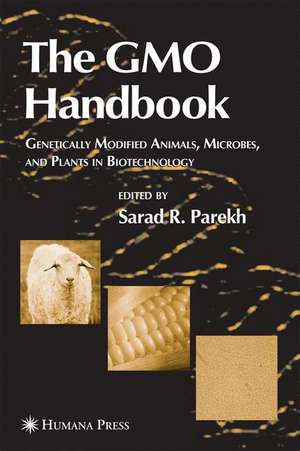
The Gmo Handbook
Editat de Sarad R Parekhen Limba Engleză Hardback – 15 mai 2004
Preț: 971.26 lei
Preț vechi: 1184.46 lei
-18%
Puncte Express: 1457
Carte tipărită la comandă
Livrare economică 30 noiembrie-14 decembrie
Livrare prin curier în România Termenul estimat este afișat lângă disponibilitate.
Transport gratuit pentru acest produs Plată online sau ramburs, în funcție de opțiunile comenzii.
Retur gratuit în 14 zile Comandă securizată și suport în română.
Specificații
ISBN-13: 9781588293077
ISBN-10: 1588293076
Pagini: 374
Ilustrații: X, 374 p.
Dimensiuni: 183 x 259 x 27 mm
Greutate: 1 kg
Ediția:2004 edition
Editura: Humana Press Inc.
Locul publicării:Totowa, NJ, United States
ISBN-10: 1588293076
Pagini: 374
Ilustrații: X, 374 p.
Dimensiuni: 183 x 259 x 27 mm
Greutate: 1 kg
Ediția:2004 edition
Editura: Humana Press Inc.
Locul publicării:Totowa, NJ, United States
V-ar putea interesa
-
 Introduction to BiotechnologyWilliam J. Thieman-23%Preț: 1101.51 lei1430.52 lei
 -
 Into the Clear Blue SkyRob JacksonPreț: 79.10 lei
 -
 Adventures in FermentationJohnny DrainPreț: 166.76 lei
 -
 -16%Preț: 80.13 lei95.94 lei
 -
 -31%Preț: 840.65 lei1218.05 lei
 -
 -23%Preț: 2038.47 lei2647.36 lei
 -
 Decoding the WorldPo Bronson-26%Preț: 57.45 lei78.14 lei
 -
 Synthetic Biology: Prospects & ImplicationsRoger E Hamilton-27%Preț: 1601.04 lei2184.11 lei
 -
 Microbial, Plant & Animal ResearchR. K. Gaur-27%Preț: 1329.61 lei1812.33 lei
 -
 On ExtinctionMelanie ChallengerPreț: 109.95 lei
 -
 Handbook of Research on Food Science and Technology: Volume 2: Food Biotechnology and MicrobiologyMonica Lizeth Chavez-Gonzalez-15%Preț: 581.47 lei684.09 lei
 -
 FermentTim Spector-5%Preț: 116.95 lei123.10 lei
 -
 Good Enough to Eat?Ian D GodwinPreț: 234.72 lei
 -
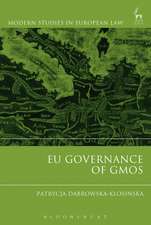 EU Governance of GMOsPatrycja Dabrowska-Klosinska-17%Preț: 391.32 lei471.38 lei
 -
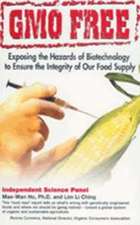 GMO FreeMae-Wan HoPreț: 73.13 lei
 -
 Animal Biotechnology 1Heiner Niemann-18%Preț: 784.49 lei956.70 lei
 -
 Biotechnology – An Illustrated PrimerRD Schmid-11%Preț: 444.07 lei498.95 lei
 -
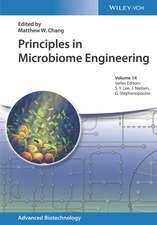 Principles in Microbiome EngineeringM. Chang-14%Preț: 867.52 lei1008.75 lei
Public țintă
ResearchCuprins
I. Introduction.- 1 · Introduction.- II. Microbial GMOs.- 2 · Genetically Modified Microorganisms: Development and Applications.- 3 · Producing Proteins Derived From Genetically Modified Organisms for Toxicology and Environmental Fate Assessment of Biopesticides.- 4 · Genetically Modified Microorganisms: Biosafety and Ethical Issues.- III. Mammalian GMOs.- 5 · Large-Scale Exogenous Protein Production in Higher Animal Cells.- 6 · Biosafety, Ethics, and Regulation of Transgenic Animals.- 7 · Transgenic Aquatic Animals.- IV. Plant GMOs.- 8 · Development of Genetically Modified Agronomic Crops.- 9 · Gene Silencing in Plants: Nature’s Defense.- 10 · Value Creation and Capture With Transgenic Plants.- 11 · Biosafety Issues, Assessment, and Regulation of Genetically Modified Food Plants.- 12 · Conclusion and Future Directions.
Recenzii
"...succeeds in providing scientists and advancecd science and engineering students with a starting point for understanding biotechnology...should be on the shelves of most public and private research libraries around the world." -American Entomologist
Textul de pe ultima copertă
Today genetically modified organisms (GMOs) and their products are central to the agricultural, food, and pharmaceutical industries and heated debate over their risks and benefits exists. In The GMO Handbook: Genetically Modified Animals, Microbes, and Plants in Biotechnology, leading scientists and administrators who have made significant contributions to the biotechnology revolution survey the best current accomplishments of GMO research in all their complexity and ramifications. Their encompassing review introduces the fundamentals of biotechnology as a scientific discipline, shows how GMO research is conducted today, discusses the problems that have arisen from genetic technology and the tools needed to resolve them, and describes how GMO-derived technology may impact our lives in the future. On the technical side, the authors examine a wide range of current technologies employed from cell biology, molecular biology, and biochemistry for constructing GMOs, and describe approaches to novel research, appropriate protocols, and the process of constructing and screening a GMO. The discussion of plant and animal cells covers new strategies employed and the large-scale expression and purification of recombinant products in cultured cells. Social, political, and legal issues are also included through discussions of the importance of public acceptance of GMOs and the regulatory environment both in the US and other countries.
Accessible and informative, The GMO Handbook: Genetically Modified Animals, Microbes, and Plants in Biotechnology offers biotechnologists a comprehensive survey of the GMO field, describing its history, current and emerging technologies, hands-on methods for transferring genes, and a reference guide to the regulatory, ethical, and biosafety compliance needs for GMO-derived consumer products.
Accessible and informative, The GMO Handbook: Genetically Modified Animals, Microbes, and Plants in Biotechnology offers biotechnologists a comprehensive survey of the GMO field, describing its history, current and emerging technologies, hands-on methods for transferring genes, and a reference guide to the regulatory, ethical, and biosafety compliance needs for GMO-derived consumer products.