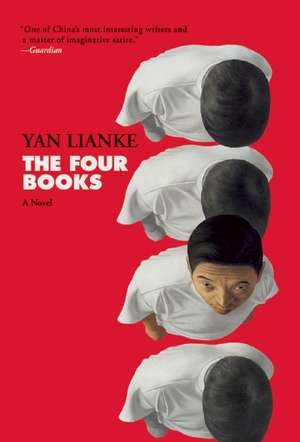
The Four Books
Autor Yan Liankeen Limba Engleză Paperback – 8 mar 2016
Ne-a atras atenția, încă de la primele pagini, imaginea dezolantă a districtului nouăzeci și nouă: o comunitate de intelectuali siliți să își îngroape instrumentele spiritului în pământul arid al provinciei Henan. În The Four Books, Yan Lianke nu doar relatează o perioadă istorică, ci construiește o cosmogonie a absurdului. Muziciana, Savantul, Autorul și Teologul devin pioni într-un experiment de reeducare coordonat de un personaj colectiv neliniștitor, Copilul, a cărui autoritate se bazează pe recompense infantile și pedepse draconice, precum confiscarea cărților iubite. Considerăm că forța acestui roman rezidă în modul în care satira politică se transformă treptat într-o tragedie metafizică, pe măsură ce cotele de producție devin imposibil de atins, iar regimul își abandonează „elevii” în fața foametei. Putem afirma că The Four Books reprezintă apogeul stilistic al lui Yan Lianke, continuând explorarea mecanismelor puterii și ale trădării pe care autorul le-a început în lucrări precum Hard Like Water sau Serve the People!. Dacă în scrierile anterioare satira viza direct cultul personalității sau ambiția politică, aici ea capătă valențe universale prin structura sa cvasi-religioasă. Amintește de Balzac and the Little Chinese Seamstress prin decorul lagărelor de reeducare și contrastul dintre marea cultură și munca de jos, dar se diferențiază radical prin tonul său mult mai întunecat și grotesc, refuzând nostalgia în favoarea unei analize chirurgicale a colapsului moral.
Preț: 115.04 lei
Carte disponibilă
Livrare economică 02-16 noiembrie
Specificații
ISBN-10: 0802124690
Pagini: 354
Dimensiuni: 136 x 208 x 27 mm
Greutate: 0.36 kg
Ediția:First Trade Paper Edition
Editura: Grove Atlantic Inc.
V-ar putea interesa
-
 Lectures on Modern HistoryJohn ActonPreț: 96.07 lei
 -
 Glimpses of Three Coasts (1886). byHelen JacksonPreț: 89.49 lei
 -
 The Passing of the Third Floor BackJerome K. JeromePreț: 59.44 lei
 -
 Cranford. byElizabeth GaskellPreț: 57.09 lei
 -
 You Better Not ShoutShatzman, MR Richard M.Preț: 106.56 lei
 -
 Un sac de billesJoseph JoffoPreț: 65.45 lei
De ce să citești această carte
Recomandăm această carte cititorilor care caută o literatură de idei densă, capabilă să transforme trauma istorică în artă alegorică. The Four Books oferă o perspectivă viscerală asupra Rezistenței prin spirit în fața unui sistem care încearcă să anuleze individualitatea. Veți câștiga o înțelegere profundă a absurdului totalitar, servită într-o proză lirică ce transformă suferința în simbol, fiind o lectură esențială pentru cei fascinați de istoria Chinei contemporane.
Despre autor
Yan Lianke, născut în 1958 în provincia Henan, este considerat unul dintre cei mai importanți și controversați scriitori chinezi contemporani. Opera sa, marcată de un realism mitic și o satiră tăioasă la adresa ideologiei, i-a adus numeroase distincții, printre care Premiul Franz Kafka și nominalizări la Man Booker International Prize. Multe dintre volumele sale, precum Dream of Ding Village, au fost cenzurate în China, dar au primit recunoaștere globală pentru curajul de a aborda teme tabu. Experiența sa personală în armată și originile sale rurale infuzează scrierile sale cu o autenticitate brutală și o compasiune profundă față de condiția umană.
Descriere scurtă
Recenzii
"An original work of art . . . The Four Books shows Yan in top satirical form." —Malcolm Forbes, The National
"[The Four Books] can be read as a culmination of the longer project in which Lianke is engaged: criticizing the foundations of the Chinese state and the historical narrative on which it is built, while still somehow remaining one of its most lauded writers." —Jacob Mikanowski, New Republic
"Arch and playful. . . . [Yan] deploys offbeat humour, anarchic set pieces and surreal imagery to shed new light on dark episodes from modern Chinese history. . . . [A] brave, brilliant novel." —David Evans, Financial Times
"[The Four Books] is driven by a cold fury at the events it recounts, its satire edged with Swiftian moral disgust. It is unsparing in its picture of the ways in which totalitarian habits of thought seep deep into personal relations, and it is smart in its depiction of how intellectuals get co-opted by the system . . . [Yan’s] fiction of ideas feels hard won and genuine, an expression of sorrow, bafflement, anger, and love." —Robert Anthony Siegel, The Rumpus
"No other writer in today's China has so consistently explored, dissected and mocked the past six and a half decades of Chinese communist rule. . . . An extraordinary novel, one that both commemorates the state’s victims and defies China's state-sponsored amnesia." —Isabel Hilton, Guardian
"[The Four Books is] a Chinese novel hailed across the planet as a masterpiece, and I’m normally the first to resist such an imposition before I've even opened the thing—but for once, the hype doesn’t go far enough. . . . Stupendous and unforgettable . . . a devastating, brilliant slice of living history." —Kate Saunders, The Times (UK)
"A satirical tale about abuse of power and the vicious survivalist psychology of people who have been robbed of their moral and intellectual compass . . . brilliantly chilling . . . The Four Books captures an aspect of Chinese life which is hard to imagine and understand for a foreigner, and Yan’s skilful depiction reaffirms why he is China’s most heralded and censored modern writer." —The South China Morning Post
"The Four Books should be celebrated for its originality. . . . A fascinating approach to a daring and interesting subject." —The Harvard Crimson
"One of contemporary Chinese literature's richest, wittiest, most seductive and powerful novels. . . . A joy to read." —The Saturday Paper (Au)
"A searing, allegorical view of Chinese society during some of the darkest moments of the Mao era. . . . Yan cements his reputation as one of China's most important—and certainly most fearless—living writers." —Kirkus Reviews
"Yan has built his substantial career on exposing the surreal absurdity of China’s 20th-century tragedies. . . . [This] multilayered novel is . . . a vital historical testimony." —Library Journal (starred review)
"A stinging indictment of the illogic of bureaucracy and tyranny . . . the literary structure is tight and the prose incredibly accessible. Readers will have difficulty putting this down." —Publishers Weekly
"One of the masters of modern Chinese literature, Yan Lianke gives all the pleasures one gets from reading. He can extract humor from the bleakest situation. I wholeheartedly recommend this latest book." —Jung Chang
"[A] rich and complex novel." —Booklist
Notă biografică
Descriere
In the ninety-ninth district of a sprawling labour camp, the Author, Musician, Scholar, Theologian and Technician - and hundreds just like them - are undergoing Re-education, to restore their revolutionary zeal and credentials. In charge of this process is the Child, who delights in draconian rules, monitoring behaviour and confiscating books.