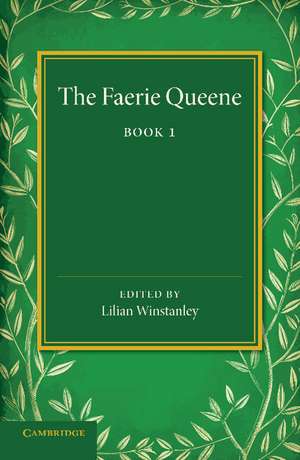
The Faerie Queene: Book I
Autor Edmund Spenser Editat de Lilian Winstanleyen Limba Engleză Paperback – 18 dec 2013
Observăm că aplicabilitatea practică a acestei ediții Oxford University Press rezidă în capacitatea sa de a face accesibil un text fundamental al Renașterii engleze pentru publicul contemporan. Prin structurarea riguroasă a primei cărți din The Faerie Queene, editorul P.C. Bayley oferă instrumentele necesare pentru descifrarea alegoriei complexe a „Cavalerului Crucii Roșii” și a virtuții Sfințeniei. Credem că această ediție este esențială pentru studiul literaturii elisabetane, deoarece păstrează ortografia și ritmul operei originale, dar le completează cu note care explică simbolismul creștin și cel politic de la curtea reginei Elisabeta I. Această lucrare completează perspectiva oferită de On the Poetry of Spenser and the Form of Romances de John Arthos, adăugând analiza detaliată a textului propriu-zis acolo unde Arthos se concentrează pe evoluția formei de romance și a viziunilor pastorale. În contextul operei sale, The Faerie Queene. Book 1 reprezintă punctul de plecare pentru marele proiect epic al lui Edmund Spenser, fiind mai concentrată pe simbolismul religios decât volumele ulterioare, precum The Faerie Queene, Books Three and Four, unde accentul se mută pe dinamica dorinței și politica națională. Recomandăm acest volum pentru rigoarea filologică și claritatea cu care este prezentat conflictul dintre virtute și viciu.
Preț: 336.87 lei
Carte tipărită la comandă
Livrare economică 02-16 iunie
Specificații
ISBN-10: 1107696755
Pagini: 374
Dimensiuni: 129 x 198 x 20 mm
Greutate: 0.36 kg
Editura: Cambridge University Press
Colecția Cambridge University Press
Locul publicării:New York, United States
V-ar putea interesa
-
 The Eve of St AgnesJohn Keats-21%Preț: 16.18 lei20.47 lei
 -
 Woman Much MissedThomas Hardy-31%Preț: 16.18 lei23.58 lei
 -
 The Night is Darkening Round MeEmily Bronte-40%Preț: 16.31 lei27.12 lei
 -
 The Fall of IcarusOvidPreț: 27.12 lei
 -
 Come CloseSappho-40%Preț: 16.31 lei27.12 lei
 -
 Wait Till I'm DeadAllen Ginsberg-20%Preț: 59.85 lei75.19 lei
 -
 Keats and EmbarrassmentChristopher Ricks-24%Preț: 415.23 lei543.60 lei
 -
 The Major WorksWilliam Wordsworth-18%Preț: 81.68 lei99.02 lei
 -
 The New Posidippus: A Hellenistic Poetry BookKathryn Gutzwiller-23%Preț: 483.77 lei624.29 lei
 -
 The Masnavi, Book TwoJalal al-Din Rumi-20%Preț: 60.73 lei75.72 lei
 -
 Cynthia: A Companion to the Text of PropertiusS. J. Heyworth-25%Preț: 611.80 lei815.54 lei
 -
 William Wordsworth: 21st-Century Oxford AuthorsStephen GillPreț: 256.17 lei
 -
 KalevalaElias Lonnrot-18%Preț: 74.88 lei91.36 lei
 -
 Seasonal Works with Letters on FireBrenda HillmanPreț: 82.51 lei
 -
 Selected PoemsAnna Akhmatova-20%Preț: 111.04 lei138.07 lei
 -
 Armageddon of FunkMichael WarrPreț: 77.93 lei
 -
 Mourning JewelryStephanie M. WytovichPreț: 81.23 lei
De ce să citești această carte
Recomandăm această ediție oricărui student sau pasionat de literatură clasică care dorește să exploreze bazele epopeii engleze. Cititorul câștigă o înțelegere profundă a modului în care Edmund Spenser a împletit mitul arthurian cu morala creștină. Este un instrument de studiu excelent datorită glosarului și notelor care clarifică limbajul arhaic intenționat al autorului, facilitând lectura fără a sacrifica profunzimea academică.
Despre autor
Edmund Spenser (c. 1552–1599) a fost unul dintre cei mai importanți poeți ai erei elisabetane, cunoscut pentru inovațiile sale metrice și pentru utilizarea unui limbaj arhaic, menit să onoreze tradiția lui Chaucer. Opera sa monumentală, The Faerie Queene, a fost concepută ca o alegorie morală vastă, menită să ilustreze virtuțile cavalerismului creștin. Admirator al mitologiei arthuriene și al valorilor umaniste, Spenser a creat „strofa spenseriană”, o structură poetică complexă care a influențat generații de scriitori, de la poeții romantici până la moderniști.