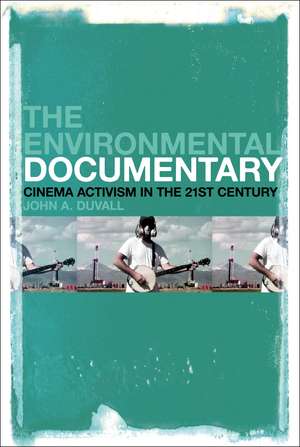
The Environmental Documentary: Cinema Activism in the 21st Century
Autor John A. Duvallen Limba Engleză Paperback – 29 noi 2018
Descoperim în The Environmental Documentary o analiză senzorială a modului în care cinematografia a încetat să fie un simplu observator al naturii, devenind un instrument de intervenție directă. Încă din primele pagini, suntem invitați să privim dincolo de estetica peisajului, luând ca exemplu impactul visceral al documentarului An Inconvenient Truth, care a transformat datele climatice abstracte într-o experiență vizuală ce a redefinit discursul public. Remarcăm cum autorul, John A. Duvall, utilizează expertiza sa tehnică de fost editor de sunet la Hollywood pentru a decripta mecanismele prin care sunetul și imaginea sunt orchestrate pentru a genera urgență în fața crizei ecologice.
Structura volumului urmărește o progresie logică și alarmantă, de la bazele teoretice ale ecocriticismului spre capitole dedicate unor nișe specifice: de la criza petrolului (Peak Oil) la industria deșeurilor și etica tratării animalelor. Această organizare ne permite să înțelegem cum „miniaturizarea echipamentelor de înregistrare”, menționată de autor, a democratizat activismul, permițând filmelor independente să atingă audiențe globale prin rețele de activiști. Ca și Film and Everyday Eco-disasters, acest volum pune în valoare legătura dintre consumul uman și dezastrele ecologice, dar cu un accent pe impactul politic și pe strategiile de distribuție care transformă un spectator pasiv într-un cetățean informat. Apreciem modul în care The Environmental Documentary se distinge de Framing the World prin concentrarea sa pe secolul XXI și pe documentarul ca formă de rezistență activă, nu doar ca obiect de studiu academic. Este o explorare riguroasă a modului în care cinema-ul documentează nu doar mediul, ci și lupta noastră pentru supraviețuire.
Preț: 268.58 lei
Preț vechi: 348.64 lei
-23%
Carte tipărită la comandă
Livrare economică 08-22 decembrie
Specificații
ISBN-10: 1501347519
Pagini: 368
Ilustrații: 31 bw illus
Dimensiuni: 152 x 228 x 22 mm
Greutate: 0.49 kg
Editura: Bloomsbury Publishing
Colecția Bloomsbury Academic
Locul publicării:New York, United States
V-ar putea interesa
-
 -19%Preț: 526.34 lei653.26 lei
 -
 The Essay Film After Fact and FictionNora M. AlterPreț: 324.66 lei
 -
 Preț: 196.50 lei
 -
 Preț: 235.90 lei
 -
 Brecht On Film & RadioBertolt Brecht-11%Preț: 348.07 lei390.66 lei
 -
 The Story of HollywoodGregory Paul WilliamsPreț: 261.63 lei
 -
 The Philosophy of Documentary FilmDavid Larocca-30%Preț: 382.53 lei546.62 lei
 -
 -16%Preț: 211.29 lei252.78 lei
 -
 New Waves in CinemaSean Martin-30%Preț: 96.71 lei138.63 lei
 -
 New Directions in German CinemaPaul Cooke-17%Preț: 185.00 lei223.49 lei
De ce să citești această carte
Recomandăm această carte studenților la jurnalism, studii de film și activiștilor de mediu care doresc să înțeleagă puterea narativă a documentarului. Cititorul câștigă o perspectivă critică asupra modului în care marile probleme globale — de la exploatarea resurselor la malpraxisul corporatist — sunt traduse vizual pentru a influența opinia publică. Este un ghid esențial despre cum imaginea în mișcare poate deveni un catalizator pentru schimbarea politică reală.
Despre autor
John A. Duvall este profesor asociat de comunicare și studii media la Dominican University of California, fiind specializat în producție cinematografică și scriere de scenarii. Experiența sa profesională este una hibridă, îmbinând rigoarea academică cu practica de teren; a produs documentarul Peak Oil and Transition în cadrul tezei sale de doctorat și a lucrat anterior în industria de divertisment de la Hollywood ca editor de efecte sonore. Această dublă perspectivă îi permite să analizeze documentarul de mediu atât ca teoretician, cât și ca practician al imaginii.
Descriere
The text examines the processes of production and distribution that have produced this explosion in documentaries. The films range from a high-profile Hollywood production with theatrical distribution like An Inconvenient Truth, to shorter independently produced films like The End of Suburbia that have reached a small audience of activists through video distribution, interviews with many of the filmmakers, and word of mouth.
Cuprins
1. Documenting the Environment What is a Documentary? What is the Environment?
2. Ecocritical Perspectives
3. A Brief History of the Environmental Documentary The Films
4. General Environmental History and Concerns
5. Climate Change
6. Peak Oil
7. Pollution and Waste
8. Food and Water
9. Animals and Extinction
10. Community and Direct Activism
11. Conclusion
References
Index
Recenzii
The Environmental Documentary should be in every college and public library as a handy reference work. It provides helpful material about films we have seen and points us in directions for future viewing.
Useful both for readers interested in documentary filmmaking and those interested in the health of the planet and the environmental movement trying to preserve it. Any library ... should certainly consider adding it.
Duval makes a complex and thoroughly controversial genre accessible in a way that would prompt young scholars and students to seriously consider the destructive impact of consumption and neoliberal ideologies on the environment. Teachers may also find Duval's overview helpful in selecting films for classes dealing with environmental issues ... As such, the book itself functions as a piece of activism, raising awareness not only of our responsibility towards our environment, but also putting a spotlight on a genre that has not received as much attention as it should within the discipline of film studies.
Duvall has given us the first book-length overview of the environmental documentary-a rapidly expanding genre that informs and empowers viewers as the process of ecological decline intensifies due to climate change, resource depletion, population growth, and species extinctions. His work is clear, comprehensive, and authoritative. Recommended for students in environment or media courses, for aspiring filmmakers, and for general readers who want to know more about this important genre.
John A. Duvall's The Environmental Documentary: Cinema Activism in the 21st Century offers a wealth of information on the content, production, and distribution of a selection of recent environmental documentaries ranging from The 11th Hour to Rebels with a Cause. The book also provides readers with succinct overviews of the critical debates around key terms such as "documentary" and "environment.'" It will be useful to students at the high school and college level and to everyone else interested in environmental documentary film.
John Duvall has produced a grand catalogue of environmental documentaries made at the start of the twenty-first century. Contemporary students of documentary and environmental studies can find here a wealth of information on themes, styles, and production conditions. Looking back historians will find in his accounts of the films a significant resource logging the deep concerns of activist communities and their passionate attempts to get them into mainstream debates using all the resources that documentary can offer.
The Environmental Documentary: Cinema Activism in the 21st Century is a well-researched journey through significant films of activist documentary producers and directors. Documentary students brimming with idealistic fervor and eager to intervene should benefit from the extensive real world detail on production narratives and audience reception for major environmental documentaries. I believe this book will be spectacularly useful and inspiring in any documentary curriculum.
With the publication of John Duvall's book, twenty-first century eco-activist documentary boasts its first general primer. Duvall's astute and probing analyses of forty-four key films is buttressed by an admirable historical contextualization of the genre. With its well researched overview of the multiple themes, approaches, and challenges in presenting environmental issues on film, the book makes an indispensable resource, not only for students and scholars of documentary and ecocinema, but for audiences and aspiring filmmakers alike.
Does our environmental movement address effects more than causes? Does it chart feasible alternatives? Duvall's book examines the cream of environmental documentaries to answer these and other crucial questions in this comprehensive, engaging book.