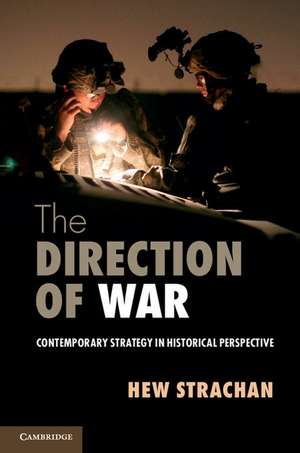
The Direction of War
Autor Hew Strachanen Limba Engleză Paperback – 22 mar 2019
Ne-a atras atenția modul în care The Direction of War abordează criza de strategie a Occidentului, pornind de la capitolul dedicat relevanței lui Clausewitz în secolul XXI. Sir Hew Strachan nu se limitează la o critică a intervențiilor din Irak și Afganistan, ci demonstrează că frustrările actuale derivă dintr-o neînțelegere fundamentală a teoriei militare clasice. Remarcăm o structură riguroasă în 13 capitole care ghidează cititorul de la perspectivele istorice asupra înțelesului strategiei, până la impactul tehnologiei și al moștenirilor imperiale asupra conflictelor moderne. Putem afirma că lucrarea reprezintă o sinteză critică a carierei autorului, completând cercetările sale anterioare din The Changing Character of War. Dacă în lucrările dedicate Primului Război Mondial, precum The First World War, Strachan analiza mecanismele unui conflict total, aici se concentrează pe „războiul limitat” și pe dificultatea coordonării guvernamentale în democrațiile contemporane. Autorul argumentează convingător că, deși formele de manifestare se schimbă, natura războiului rămâne constantă, contestând eticheta de „noi războaie” atribuită conflictelor asimetrice recente. În peisajul literaturii de specialitate, această analiză completează perspectiva oferită de Contemporary Military Strategy and the Global War on Terror de Alastair Finlan. În timp ce Finlan se concentrează pe detaliile operaționale și planificarea elitelor politice în campaniile specifice de după 2001, Strachan oferă fundamentul teoretic și istoric care explică de ce acele planuri au eșuat adesea în a transforma succesul militar în victorie politică. Tonul este unul academic, precis, evitând simplificările și punând accent pe continuitatea istorică în fața inovației tehnologice.
Preț: 244.50 lei
Carte tipărită la comandă
Livrare economică 20 noiembrie-04 decembrie
Specificații
ISBN-10: 1107654238
Pagini: 338
Dimensiuni: 152 x 229 x 19 mm
Greutate: 0.53 kg
Ediția:New.
Editura: Cambridge University Press
Locul publicării:New York, United States
V-ar putea interesa
-
 -6%Preț: 353.65 lei378.03 lei
 -
 A History of IndiaPeter Robb-22%Preț: 193.62 lei248.30 lei
 -
 -16%Preț: 589.01 lei701.21 lei
 -
 Food and Fantasy in Early Modern JapanEric Rath-23%Preț: 505.33 lei656.28 lei
 -
 Preț: 342.99 lei
 -
 China and Maritime Europe, 1500-1800Jr John E. WillsPreț: 330.17 lei
 -
 Chinese FestivalsLiming WeiPreț: 182.32 lei
 -
 Chinese FoodJunru LiuPreț: 182.76 lei
 -
 -14%Preț: 767.28 lei892.18 lei
 -
 -14%Preț: 110.41 lei127.76 lei
 -
 PakistanImran Khan-18%Preț: 76.97 lei94.27 lei
 -
 Religion and the Making of Modern East AsiaThomas David DuboisPreț: 244.58 lei
 -
 Ho Chi MinhPierre BrocheuxPreț: 269.97 lei
De ce să citești această carte
Această carte este esențială pentru cercetătorii în științe politice și profesioniștii din domeniul apărării care doresc să înțeleagă de ce strategiile occidentale recente au stagnat. Cititorul câștigă o perspectivă istorică profundă asupra modului în care deciziile politice trebuie să se alinieze cu realitățile de pe teren, învățând să distingă între schimbările reale în natura conflictului și simplele evoluții tehnologice.
Despre autor
Sir Hew Strachan este unul dintre cei mai respectați istorici militari la nivel mondial, recunoscut în special pentru contribuțiile sale academice asupra armatei britanice și a Primului Război Mondial. A deținut prestigioasa catedră Chichele la All Souls College, Oxford, iar în prezent este profesor de relații internaționale la University of St Andrews. Expertiza sa vastă, reflectată în numeroase volume de referință, îi permite să analizeze conflictele contemporane dintr-o perspectivă istorică unică, fiind o voce autoritară în dezbaterile privind strategia militară și politicile de securitate globale.
Descriere scurtă
Cuprins
Recenzii
'Another masterpiece from the foremost military academic of our generation. If you want to understand strategy, just read this book!' General Sir David Richards GCB CBE DSO, former Chief of Defence Staff
'Unparalleled in historic depth of argument, a surprising yet seductive view on whether modern war should bend to the demands of politics, or politics to the needs of war.' Jan Willem Honig, King's College London
'Strachan's historical analyses are a valuable addition to the literature on strategy. He invites the reader to think carefully about what we think we know and understand about strategy, and, perhaps more significantly, why we understand and think about strategy the way we do today.' Terry Terriff, University of Calgary
'A valuable book tracing an esteemed scholar's contributions to contemporary strategic thinking.' Antulio Echevarria, Strategic Studies Institute, United States Army War College
'[A] powerful and stimulating essay about the conduct of war and peace in our time. It is an essential read for MPs and hacks, the ideal primer for the debate about why we need armed force, and in what form, today.' London Evening Standard
'Impressive and provocative.' Daily Telegraph
'… a timely and devastating critique.' Richard Norton-Taylor, The Guardian online
'… extremely well written …' Jerry Lenaburg, New York Journal of Books
'[Strachan's] insistence on Clausewitzian exactitude produces a uniquely incisive assessment of key moments in America's twenty-first-century wars that may be particularly valuable to American leadership as it leaves them behind.' Foreign Policy's 'The Best Defense' blog
'… offers much good sense.' Lawrence D. Freedman, Foreign Affairs