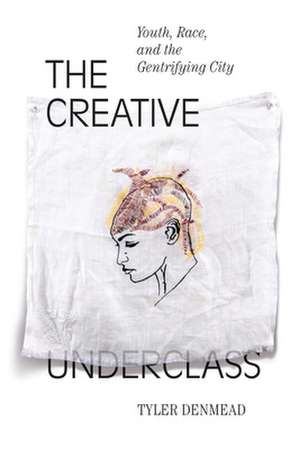
The Creative Underclass
Autor Tyler Denmeaden Limba Engleză Hardback – 8 noi 2019
Preț: 724.28 lei
Preț vechi: 883.26 lei
-18%
Puncte Express: 1086
Carte tipărită la comandă
Livrare economică 09-23 ianuarie 27
Livrare prin curier în România Termenul estimat este afișat lângă disponibilitate.
Transport gratuit pentru acest produs Plată online sau ramburs, în funcție de opțiunile comenzii.
Retur gratuit în 14 zile Comandă securizată și suport în română.
Specificații
ISBN-13: 9781478005933
ISBN-10: 1478005939
Pagini: 216
Dimensiuni: 157 x 234 x 18 mm
Greutate: 0.43 kg
Editura: Duke University Press
V-ar putea interesa
-
 Amazons & WarriorsAusxip ColoringPreț: 78.88 lei
-
 Myth Into Art: Poet and Painter in Classical GreeceH. A. Shapiro-18%Preț: 1165.23 lei1421.01 lei
-
 B-Seiten #1 - 2. Auflage (Archiv)Florian LechnerPreț: 72.84 lei
-
 Summer in the CityLaura ElkinsPreț: 176.42 lei
-
 On Chantal AkermanPatricia WhitePreț: 69.54 lei
-
 Latinx ArtArlene DávilaPreț: 151.66 lei
-
 Thoughts - Sweet and SourSanjeev KumarPreț: 121.94 lei
-
 The Columbus Ohio Coloring and Activity Book Part IIKatie BarronPreț: 126.84 lei
-
 Das Malbuch (Weihnachtsmalbuch)Jessica WindhamPreț: 88.28 lei
-
 Murder Dog The Covers Vol. 1Black Dog BonePreț: 293.16 lei
-
 Color! Easy Designs for Your RelaxationDeb GilbertPreț: 67.28 lei
Cuprins
Acknowledgment ix
Introduction 1
1. Troublemaking 30
2. The Hot Mess 45
3. Chillaxing 76
4. Why the Creative Underclass Doesn't Get Creative-Class Jobs 96
5. Autoethnography of a "Gentrifying Force" 118
6. "Is This Really What White People Do" in the Creative Capital? 133
Conclusion 155
Notes 173
Biography 185
Index 197
Notă biografică
Tyler Denmead is University Lecturer of Arts and Creativity in Education at the University of Cambridge and a Fellow at Queens’ College.
Descriere
Descriere de la o altă ediție sau format:
Tyler Denmead critically examines his role as the founder of New Urban Arts-a nonprofit arts program for young people of color in Providence, Rhode Island-and how despite its success, it unintentionally contributed to Providence's urban renewal efforts, gentrification, and the displacement of people of color.