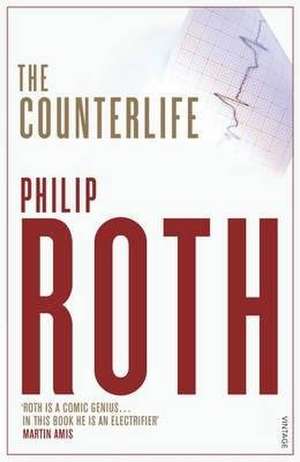
The Counterlife
Autor Philip Rothen Limba Engleză Paperback – oct 2005
The Counterlife is about people living their dreams of renewal and escape, some of them going so far as to risk their lives to alter their destinies. Wherever they find themselves, the characters of The Counterlife are tempted by the prospect of an alternative existence.
Illuminating these lives in free-fall and transformation is the acrobat mind of novelist Nathan Zuckerman. His is the sceptical, enveloping intelligence that calculates the price that's paid in the struggle to change personal fortune and reshape history, whether in a dentist's office in suburban New Jersey; a tradition-bound English Village in Gloucestershire; a church in London's West End; or in a tiny desert settlement in Israel's occupied West Bank. Shot through with head-turning dualities, as daring as it is moving, The Counterlife reinvents the novel with style, wit and grace.
Preț: 64.81 lei
Preț vechi: 79.40 lei
-18%
Puncte Express: 97
Carte disponibilă
Livrare economică 12-18 noiembrie
Livrare express 24-30 octombrie pentru 35.87 lei
Livrare prin curier în România Termenul estimat este afișat lângă disponibilitate.
Transport gratuit de la 400.00 lei Plată online sau ramburs, în funcție de opțiunile comenzii.
Retur gratuit în 14 zile Comandă securizată și suport în română.
Specificații
ISBN-13: 9780099481355
ISBN-10: 0099481359
Pagini: 328
Dimensiuni: 128 x 198 x 25 mm
Greutate: 0.24 kg
Editura: Random House
Colecția Vintage
Locul publicării:United Kingdom
ISBN-10: 0099481359
Pagini: 328
Dimensiuni: 128 x 198 x 25 mm
Greutate: 0.24 kg
Editura: Random House
Colecția Vintage
Locul publicării:United Kingdom
V-ar putea interesa
-
 Inside OutDemi MoorePreț: 79.19 lei
 -
 The BreastPhilip Roth-20%Preț: 50.41 lei63.40 lei
 -
 IndignationPhilip Roth-19%Preț: 58.23 lei71.76 lei
 -
 Aunt Julia and the ScriptwriterMario Vargas LlosaPreț: 80.69 lei
 -
 Eye of the ShamanBasil RiverdalePreț: 89.44 lei
 -
 A Brief History of TimeStephen Hawking-19%Preț: 64.40 lei79.13 lei
 -
 The Adventures of Wabash JakeRick KelsheimerPreț: 64.59 lei
 -
 Therefore Choose LifeMadestella C. HolcombPreț: 168.69 lei
 -
 -24%Preț: 95.15 lei125.20 lei
 -
 Urban LegendsDaryl T. WainwrightPreț: 36.71 lei
 -
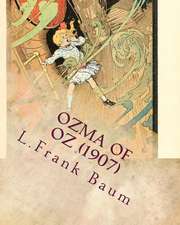 Ozma of Oz (1907) byBaum BaumPreț: 59.58 lei
 -
 Preț: 143.22 lei
 -
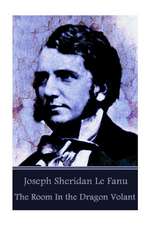 Joseph Sheridan Le Fanu - Green Tea & MR Justice HarbottleJoseph Sheridan Le FanuPreț: 67.80 lei
 -
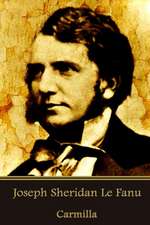 Joseph Sheridan Le Fanu - CarmillaJoseph Sheridan Le FanuPreț: 68.19 lei
 -
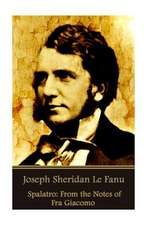 Joseph Sheridan Le Fanu - SpalatroJoseph Sheridan Le FanuPreț: 66.83 lei
 -
 Joseph Sheridan Le Fanu - CheckmateJoseph Sheridan Le FanuPreț: 105.03 lei
 -
 Joseph Sheridan Le Fanu - Uncle SilasJoseph Sheridan Le FanuPreț: 117.83 lei
 -
 Joseph Sheridan Le Fanu - Guy Deverell - Volume IJoseph Sheridan Le FanuPreț: 73.95 lei
 -
 Sabbaths TheaterPhilip RothPreț: 115.46 lei
 -
 Der menschliche MakelPhilip RothPreț: 128.50 lei
 -
 Das sterbende TierPhilip RothPreț: 94.83 lei
 -
 Zuckermans BefreiungPhilip RothPreț: 86.56 lei
 -
 Nu te găsesc pe nicăieriLaura IonescuPreț: 39.01 lei
Notă biografică
Philip Roth was born in Newark, New Jersey on 19 March 1933, to second-generation Americans Bess and Herman. He grew up in the largely Jewish community of Weequahic, a neighbourhood his writing returned to time and again.
Roth received the National Book Award for his first book, Goodbye, Columbus (1959), but it was his fourth, Portnoy's Complaint (1969) which secured his reputation as one of America's finest writers, and American Pastoral (1997) which won the Pulitzer Prize. Roth wrote thirty-one books in all, winning the International Man Booker Prize and the National Book Critics Circle Award twice. He was presented with the National Medal of Arts and the National Humanities Medal by Presidents Clinton and Obama, respectively.
Roth died aged eighty-five on 22 May 2018, six years after retiring from writing.
Roth received the National Book Award for his first book, Goodbye, Columbus (1959), but it was his fourth, Portnoy's Complaint (1969) which secured his reputation as one of America's finest writers, and American Pastoral (1997) which won the Pulitzer Prize. Roth wrote thirty-one books in all, winning the International Man Booker Prize and the National Book Critics Circle Award twice. He was presented with the National Medal of Arts and the National Humanities Medal by Presidents Clinton and Obama, respectively.
Roth died aged eighty-five on 22 May 2018, six years after retiring from writing.
Descriere
Winner of the National Book Critics Circle Award for FictionThe Counterlife is about people living their dreams of renewal and escape, some of them going so far as to risk their lives to alter their destinies.
Recenzii
"Magnificent...splendid.... I hope The Counterlife felt, as Mr. Roth wrote it, like a triumph, because that is certainly how it reads to me." —William Gass, The New York Times Book Review
"Roth is a comic genius.... In this book (wonderfully sharp, worryingly intense) he is an electrifier." —Martin Amis, The Atlantic
"No other writer combines such a surface of colloquial relaxation and even dishevelment with such a dense load of mediating intelligence.... Roth has never written more scrupulously or, in spots, more lovingly." —John Updike, The New Yorker
"Roth is a comic genius.... In this book (wonderfully sharp, worryingly intense) he is an electrifier." —Martin Amis, The Atlantic
"No other writer combines such a surface of colloquial relaxation and even dishevelment with such a dense load of mediating intelligence.... Roth has never written more scrupulously or, in spots, more lovingly." —John Updike, The New Yorker