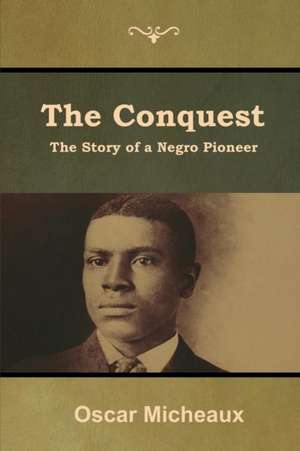
The Conquest
Autor Oscar Micheauxen Limba Engleză Paperback – 12 iun 2019
Preț: 110.52 lei
Puncte Express: 166
Carte tipărită la comandă
Livrare economică 21 noiembrie-05 decembrie
Livrare prin curier în România Termenul estimat este afișat lângă disponibilitate.
Transport gratuit de la 400.00 lei Plată online sau ramburs, în funcție de opțiunile comenzii.
Retur gratuit în 14 zile Comandă securizată și suport în română.
Specificații
ISBN-13: 9781644392010
ISBN-10: 1644392011
Pagini: 196
Dimensiuni: 152 x 229 x 11 mm
Greutate: 0.29 kg
Editura: Indoeuropeanpublishing.com
ISBN-10: 1644392011
Pagini: 196
Dimensiuni: 152 x 229 x 11 mm
Greutate: 0.29 kg
Editura: Indoeuropeanpublishing.com
V-ar putea interesa
-
 An Empire On The EdgeNick BunkerPreț: 127.36 lei
 -
 America's Greatest BlunderBurton Yale PinesPreț: 199.30 lei
 -
 The Age of DaredevilsMichael ClarksonPreț: 57.85 lei
 -
 -23%Preț: 271.26 lei350.35 lei
 -
 White RageCarol AndersonPreț: 160.61 lei
Notă biografică
Oscar Micheaux (1884-1951) was an African American film director and author. Born on a farm in Metropolis, Illinois, Micheaux was raised in a family of thirteen children. His father, born in Kentucky, was a former slave. At seventeen, he moved to Chicago with his older brother and took jobs at the local stockyards and steel mills. After opening a shoeshine stand and finding a good job as a Pullman porter, he moved to South Dakota to work the land as a homesteader, an experience that would inspire several of his works in literature and film. Left by his first wife, whose family took his money and property from him while he was away on business, Micheaux was forced to reinvent himself once again. His first major publication as a writer was The Conquest: The Story of a Negro Pioneer (1913), a semi-autobiographical novel. When a production deal for his novel The Homesteader (1917) failed to work out, Micheaux started his own company and produced the film himself. The Homesteader (1919), now lost, was a pioneering silent film that launched Micheaux's storied career. He would go on to produce over forty films, entertaining audiences both at home and abroad while paving the way for other Black filmmakers and storytellers to follow in his footsteps. Despite his success and reputation, Micheaux was largely ignored by white audiences and critics and only received recognition for his lofty achievement several decades after his death.