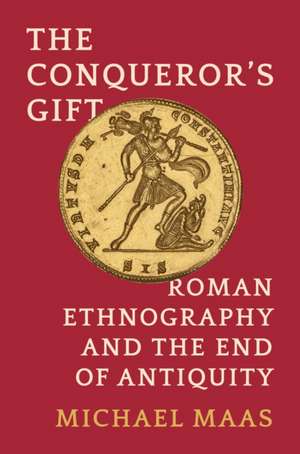
The Conqueror's Gift
Autor Michael Maasen Limba Engleză Hardback – 25 feb 2025
Considerăm că The Conqueror's Gift redefinește înțelegerea mecanismelor de putere ale Romei, propunând o metodologie care plasează etnografia în centrul aparatului administrativ și ideologic. Structura materialului este organizată în jurul conceptului de „infrastructură etnografică”, Michael Maas demonstrând cum descrierea sistematică a celuilalt nu a fost doar un exercițiu literar, ci un instrument pragmatic de guvernare, esențial în trasarea provinciilor, redactarea tratatelor de pace și gestionarea alianțelor. Autorul explorează modul în care romanii au utilizat cunoașterea culturală pentru a impune ordine într-o lume marcată de instabilitate, analizând tranziția critică spre Antichitatea Târzie. Putem afirma că lucrarea se distinge prin examinarea impactului creștinismului asupra viziunii romane despre diversitate. Maas argumentează că textele etnografice serveau unor scopuri precise: integrarea străinilor în sisteme de cunoaștere accesibile, evaluarea lor în funcție de proximitatea față de normele romane și definirea limitelor cetățeniei. Această abordare oferă o perspectivă inedită asupra modului în care imperiul s-a transformat prin absorbția și redefinirea elementelor externe. The Conqueror's Gift acoperă aceeași arie tematică ca Ancient Ethnography de Eran Almagor, dar cu o abordare mai aplicată pe mecanismele de transformare imperială și pe rolul specific al creștinismului în reconfigurarea identității romane. În timp ce Tales of the Barbarians de Greg Woolf se concentrează pe reprezentarea literară a străinului, volumul de față, publicat de Princeton University Press, integrează aceste reprezentări într-o analiză mai vastă a supraviețuirii și adaptării instituționale în fața presiunilor externe.
Preț: 360.37 lei
Carte disponibilă
Livrare economică 27 octombrie-10 noiembrie
Livrare express 10-16 octombrie pentru 55.91 lei
Specificații
ISBN-10: 069125902X
Pagini: 456
Dimensiuni: 166 x 237 x 39 mm
Greutate: 0.82 kg
Editura: Princeton University Press
De ce să citești această carte
Această lucrare este esențială pentru cercetătorii și studenții la istorie antică interesați de Antichitatea Târzie. Cititorul câștigă o înțelegere profundă a modului în care informația culturală a fost utilizată ca armă politică și administrativă. Este o recomandare solidă pentru cei care doresc să exploreze cum ideologia și religia au remodelat granițele sociale și politice ale Imperiului Roman, dincolo de simplele campanii militare.