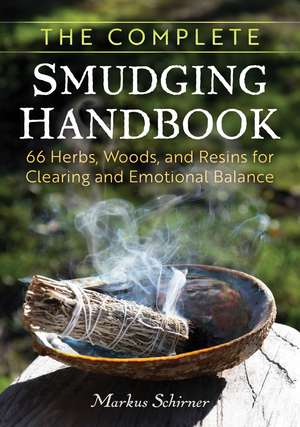
The Complete Smudging Handbook: 67 Herbs, Woods, and Resins for Clearing and Emotional Balance
Autor Markus Schirneren Limba Engleză Paperback – 23 oct 2025
A comprehensive guide to smudging with full-color illustrations
• Describes 34 spiritual and physical smudging protocols for divination, grounding, improving health, confidence, and dreaming
• Offers smudging methods for ritual practice and explains how to properly collect, store, and prepare smudging ingredients
• Includes an A–Z catalog of 67 herbs, resins, and woods for smudging, exploring their history and traditional as well as contemporary uses
Explore smudging with this comprehensive illustrated guide that offers new and traditional ways to approach this ancient practice.
While this book examines the common uses of smudging for protection and energetic cleansing with mainstays like sage, sweetgrass, and frankincense, it also offers unfamiliar and surprising ingredients and applications. The author explains how to smudge with rose petals for acceptance or elder to connect with ancestors. Learn how to ritually prepare mixtures of herbs, resins, and woods for various purposes such as divination, grounding, and approaching new beginnings. Markus details 34 physical and spiritual protocols for smudging rituals to improve overall health, courage and self-confidence, clarity, and lucid dreaming. This guide book will teach you how to prepare for a smudging ritual, choose the appropriate method, and select the right ingredients. Markus also shows how to properly collect, store, and prepare your ingredients in bundles and cones to smudge for yourself or others. With a comprehensive A–Z catalog featuring full color illustrated portraits of 67 herbs, resins, and woods, this book also offers a detailed history of these smudging materials.
The Complete Smudging Handbook offers a modern interpretation of smudging and incense burning that will anchor and deepen any reader’s approach to this ancient practice. Immerse yourself in the world of smudging and open up to plant wisdom for improved physical health and emotional wellbeing.
Preț: 99.80 lei
Preț vechi: 133.03 lei
-25% Recomandat
Carte disponibilă
Livrare economică 22 mai-03 iunie
Livrare express 01-07 mai pentru 62.12 lei
Specificații
Pagini: 176
Ilustrații: Full-color throughout
Dimensiuni: 165 x 235 x 10 mm
Greutate: 0.42 kg
Editura: Inner Traditions/Bear & Company
Colecția Earthdancer Books
V-ar putea interesa
-
 Magical FolkhealingD. J. Conway-30%Preț: 93.85 lei134.93 lei
 -
 The Practical Science of HerbsAisha Hill-Hart-18%Preț: 114.11 lei139.92 lei
 -
 The Herbalist's Guide for the Sober CuriousLeah Jorgensen Jean-15%Preț: 79.74 lei94.31 lei
 -
 Magical HerbalismScott Cunningham-20%Preț: 83.37 lei103.61 lei
 -
 The Complete Book of Incense, Oils & BrewsScott Cunningham-19%Preț: 95.63 lei118.09 lei
 -
 Magical Aromatherapy: The Power of ScentScott Cunningham-19%Preț: 39.11 lei48.45 lei
 -
 Master Book of HerbalismPaul BeyerlPreț: 143.00 lei
 -
 -27%Preț: 84.67 lei116.66 lei
 -
 1001 Magical PlantsCassandra Eason-26%Preț: 117.23 lei157.76 lei
 -
 Preț: 67.81 leiRecomandat
 -
 Plant Magic: The Magic Connections of Plants with the UniverseAnastasia Mostacci-18%Preț: 109.30 lei133.46 leiRecomandat
 -
 Worry Medicine: Remedies and Rituals for Anxious TimesNina Montenegro-20%Preț: 110.77 lei137.91 leiRecomandat
 -
 -27%Preț: 85.70 lei117.27 lei
 -
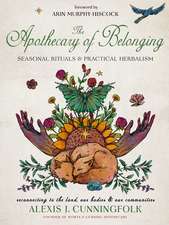 The Apothecary of Belonging: Seasonal Rituals and Practical HerbalismAlexis J. Cunningfolk-17%Preț: 105.56 lei127.66 leiRecomandat
 -
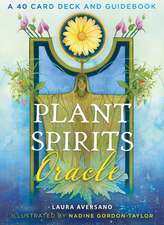 Plant Spirits Oracle: A 40-Card Deck and GuidebookLaura AversanoPreț: 73.98 lei
 -
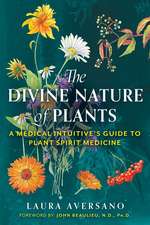 -24%Preț: 91.74 lei120.07 leiRecomandat
 -
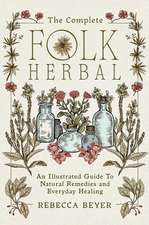 -17%Preț: 118.64 lei142.67 leiRecomandat
 -
 Pagan Portals - Sage AdviceDawn Leith DoughertyPreț: 70.90 lei
 -
 The Runes and Roots Oracle: A 36-Card Deck and GuidebookNicolette MielePreț: 73.89 lei
 -
 -28%Preț: 163.03 lei225.73 leiRecomandat
Notă biografică
Markus Schirner is a kinesiology and Touch for Health teacher, a Movement Facilitator with Brain Gym, and massage therapist. His other areas of specialization include aromatherapy and herbalism, meditation and breathing therapy, and Buddhist philosophy. He is the founder of Schirner Verlag, one of the best known spiritual publishing houses in Germany.
Extras
Acceptance
ACCEPTING SOMETHING means to acknowledge it and to recognize it for what it is. We can accept and tolerate the opinions of others without necessarily sharing or even approving of them. When we are able to accept something without taking it too personally or relating it to ourselves, we are acting with tolerance and equanimity. However, it is not just a question of accepting things, other people, and their opinions, it is almost more important to accept ourselves, with all our faults and failings, our appearance, our feelings, and the mistakes we make. It is about allowing ourselves to be just as we are, and to treat ourselves with kindness and consideration.
The opposite of self-acceptance runs the gamut of everything from self-criticism to self-hatred—there are few who have mastered the art of constructive self-criticism. Being at peace with our own emotions means allowing ourselves to feel but without suppressing any unpleasant feelings. In spiritual groups, feelings of rage, rejection, or pain can be seen as undesirable or even as faults. The expectation is that everything should constantly be “light and love” while “negative” emotions are considered a sign that an individual has not yet progressed far enough along their path to enlightenment. However, true mastery is achieved by those who acknowledge all their feelings and allow them to exist, accepting themselves as they are. Whether and how this is acted upon is another matter.
Ancestors
Parting Grief and End-of-Life Care Annual Festivals
IN MANY CULTURES death and dying have been banished behind closed hospital doors and the body of the deceased is no longer washed or laid out by relatives. Not so in some countries, where death and caring for one’s ancestors are a still a natural part of life. Not only do people still visit graves regularly, but an ancestor’s remains might be kept in an urn at home with the family, perhaps on a dedicated altar, and in some cultures the remains of the dead are sometimes even brought out for ceremonies on certain days. In this way, a person’s forebears are not only honored as those who came before them and gave them life, but are also a part of everyday life. In Western Christian culture, several days in November are designated as days of remembrance (All Saints’ Day, All Souls’ Day, and Veterans Day), when the dead are commemorated, while Halloween (the evening before All Saints’ Day) is celebrated as an excuse for dressing up in scary costumes (and conspicuous consumption) whose real origins have been forgotten. Only those who wish to observe the old Nordic traditions and celebrate the annual festival of Samhain pay homage to the dead and their ancestors on the night of October 31 to November 1.
There are two ways of getting in touch with our ancestors. Firstly, we can remember them and honor the role they played in our lives (whether we have been conscious of this or not). A good way of doing this is to set up a small ancestral altar. It can be temporary or permanent, with photos and mementoes such as jewelry or something inherited that brings us closer to them. As a regular ritual and day of remembrance, a candle can be lit on their birthday and/or the anniversary of their death.
The second way to make contact is through necromancy, the questioning of ancestors, based on the assumption that those who have passed on beyond the veil are able to still advise us. Incense was traditionally used for this purpose. “Threshold herbs” (that soften the boundary between life and death) and those that promote the reception of visions are recommended, but some previous experience of engaging with the spirit world is essential for this type of inquiry to be successful.
Annual Festivals
CERTAIN FESTIVALS happen at set times in the year. Four such festivals (the two solstices and two equinoxes), also known as solar festivals, are notably determined by the path of the sun across the skies, and are celebrated in more or less every culture. Four other festivals, known as moon or harvest festivals, depending on spiritual preferences, are oriented toward events in nature (and agriculture in particular), and are celebrated globally too, although in different ways, depending on the location and therefore the climatic conditions. Where we might celebrate the first snowdrops peeking out of a blanket of snow, the ancient Egyptians commemorated the annual flooding of the Nile that brought fertility. Christianity adopted many of these old festivals and reinterpreted them, but their original pagan core is often still recognizable. Easter, for example, is still determined by the full moon (and is celebrated on the first Sunday after the first full moon of spring), and Christmas, the birth of Christ, neatly coincides with the winter solstice. Celebrating the cycle of nature that is still ritually observed in annual festivals is known as natural religion. Simply observing natural events and when they occur (the first leaves on the trees in spring, the emergence of the first crocus flower, the migration of different bird species, when the days start to lengthen) is enough, and helps us—as humans, who have become so alienated from nature—to slot back into the cycles of the natural world. Here are a few suggestions for those who would like to give greater symbolism to these events or wish to associate them with Christian ideas.
Yule/Alban Arthan/midwinter/winter solstice
The Nights of Yuletide Light-Bringers Divination/Clairvoyance
The longest night, the time of greatest darkness, occurs with the winter solstice on December 21, and from this day onward, the days begin to get longer again. This return of the light is a theme that recurs in every culture, with the winter solstice being a day (or rather, a night) for both looking back and looking forward, for partings and new beginnings. In some traditions, it also marks the first of the nights of Yuletide, an evening in which all kinds of spirits are up to mischief and it is possible to catch a glimpse beyond the veil.
Imbolc
New Beginnings and Transition Cleansing
The first signs of life in nature are celebrated at Imbolc (February 1), also known as St Brigid’s Day, one of Ireland’s patron saints. Snowdrops and birch trees are traditionally closely associated with this time, one of new beginnings. In the past it was also a day on which the devout would pray for blessings, since the coldest time of the year, when winter supplies would run low, was often still to come. It is a time to think about what ideas and passions are to be awakened in the coming year, what seeds are to be sown. Imbolc was also a day on which a cleansing smudging ritual would traditionally be carried out in the home and in the stalls and barns sheltering animals.
Ostara/Alban Eilir/spring equinox
Cleansing
Ostara is celebrated on March 20, the spring equinox, a day of balance before the light and sun-filled but also busy time of summer begins. The last snows have now melted and what began to stir at Imbolc is now starting to grow. This day represents another opportunity to think about what should be sown this year.
Beltane/Walpurgis
Energy and Vitality Love and Sensuality
Beltane, which is celebrated on May 1 or during the night of April 30 to May 1 (or also on the second full moon of spring) is a festival of pure vitality, love, passion, and joy in life, and is a time of growth and change. Many customs, such as dancing around a maypole or May tree (hawthorn), have been preserved and are still practiced to this day across the world. Nature is now in full bloom, and even people find they have a spring in their step.
Litha/Alban Hefin/midsummer/summer solstice
Light-Bringers
The summer solstice on June 21 marks the height of summer, the high point of the power of light and the sun. It is around this time that sunflowers and various light-bringing plants are in bloom (and have the greatest powers of healing). Celebrations for the solstice are carried out all over the world with festivals and gatherings. Bonfires are traditionally lit in some countries, prompting reflection on what habits, thoughts, or attitudes should be consigned to the flames. St John’s wort and mugwort are an essential part of this festival.
Cuprins
Introduction
Smudging Methods
The Smudging Ritual
Sourcing Smudging Materials
The Uses of Smudging
Acceptance Ancestors
Annual Festivals
Blessing
and Consecration
Clarity
Cleansing
Concentration
Courage and
Self-Confidence
Creativity and Inspiration
Divination
and Clairvoyance
Dreams
Energy and Vitality
Evening Smudging
Sessions
Fear and Anxiety
Good Mood
and Joy in Life
Grief and End-of-Life Care
Grounding
Headaches
Healing
Insect Repellent
Letting Go
Light-Bringers
Love and Sensuality
Meditation
and Inner Vision
Muscle Tension
and Stiffness
New Beginnings
and Transition
The Nights of Yuletide
Parting
Prayer and Invocation
Protection
Respiratory Problems
Rheumatism
Stress and Tension
Women’s Issues
Glossary of Herbs & Resins
Agarwood
Amber
Angelica
Aniseed/Star Anise
Ash
Bay Leaf
Benzoin
Birch
Calamus
Camphor
Cardamom
Cedar
Cedar (American)
Chamomile
Cinnamon
Cloves
Copal
Cypress
Dammar Gum
Dragon’s Blood
Elder
Elecampane
Elemi
Eucalyptus
Frankincense
Galangal
Galbanum
Guggul
Hops
Hyssop
Iris
Juniper
Labdanum
Lady’s Mantle
Larch
Lavender
Lemon Balm
Marigold
Mastic
Meadowsweet
(Mead Wort)
Mistletoe
Mugwort
Myrrh
Myrtle
Nutmeg/Mace
Oak
Opoponax Myrrh
Palo Santo
Patchouli
Peppermint/Mint
Rose
Rosemary
Sage
Sage (White)
Sandalwood (Red)
Sandalwood (White)
Scots Pine
Spikenard
Spruce
St John’s Wort
Styrax
Sweetgrass/Vernal Grass
Thyme
Tonka
Verbena
Vetiver
Yarrow
Epilogue
About the Author
Picture Credits
Recenzii
“The Complete Smudging Handbook offers a modern interpretation of smudging and incense burning that will anchor and deepen any reader’s approach to this ancient practice. Immerse yourself in the world of smudging and open up to plant wisdom for improved physical health and emotional wellbeing.”
“Original, informative, deftly written, and thoroughly 'reader/user' friendly in organization and presentation, The Complete Smudging Handbook is a complete, comprehensive, and illustrated DIY guide to smudging. It identifies and describes 34 spiritual and physical smudging protocols for divination, grounding, improving health, confidence, and dreaming. All while offering smudging methods for ritual practice and explains how to properly collect, store, and prepare smudging ingredients.”
Descriere
A comprehensive guide to smudging with full-color illustrations