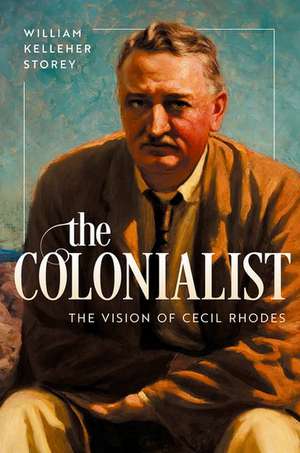
The Colonialist: The Vision of Cecil Rhodes: Oxford University Press
Autor William Kelleher Storeyen Limba Engleză Hardback – 24 iul 2025
Din seria Oxford University Press
- 5%
 Preț: 66.88 lei
 - 25%
 Preț: 229.84 lei
 - 19%
 Preț: 64.05 lei
 - 19%
 Preț: 52.70 lei
 - 26%
 Preț: 283.31 lei
 - 19%
 Preț: 58.63 lei
 - 28%
 Preț: 85.93 lei
 - 23%
 Preț: 148.10 lei
 -
 Preț: 59.17 lei
 - 19%
 Preț: 52.23 lei
 - 19%
 Preț: 99.76 lei
 -
 Preț: 64.48 lei
 - 21%
 Preț: 163.37 lei
 - 25%
 Preț: 231.41 lei
 -
 Preț: 142.18 lei
 - 26%
 Preț: 172.48 lei
 - 19%
 Preț: 64.36 lei
 - 29%
 Preț: 85.31 lei
 - 19%
 Preț: 104.37 lei
 -
 Preț: 70.12 lei
 - 25%
 Preț: 229.79 lei
 - 27%
 Preț: 255.84 lei
 - 17%
 Preț: 84.76 lei
 - 26%
 Preț: 283.04 lei
 - 20%
 Preț: 45.80 lei
 -
 Preț: 79.11 lei
 - 30%
 Preț: 213.28 lei
 - 19%
 Preț: 63.55 lei
 - 18%
 Preț: 203.85 lei
 - 21%
 Preț: 256.40 lei
 - 26%
 Preț: 257.20 lei
 - 18%
 Preț: 59.62 lei
 -
 Preț: 68.59 lei
 - 19%
 Preț: 80.33 lei
 - 29%
 Preț: 83.78 lei
 - 18%
 Preț: 64.70 lei
 - 29%
 Preț: 83.29 lei
 - 16%
 Preț: 56.15 lei
 - 29%
 Preț: 83.86 lei
 - 26%
 Preț: 224.28 lei
 -
 Preț: 54.45 lei
 -
 Preț: 62.42 lei
 - 15%
 Preț: 70.07 lei
 - 25%
 Preț: 230.11 lei
 - 28%
 Preț: 85.87 lei
 - 26%
 Preț: 292.05 lei
 - 5%
 Preț: 318.35 lei
 -
 Preț: 94.75 lei
 - 15%
 Preț: 76.86 lei
 - 30%
 Preț: 209.91 lei
Preț: 253.65 lei
Preț vechi: 276.13 lei
-8%
Puncte Express: 380
Carte disponibilă
Livrare economică 06-17 noiembrie
Livrare express 24-30 octombrie pentru 71.16 lei
Livrare prin curier în România Termenul estimat este afișat lângă disponibilitate.
Transport gratuit de la 400.00 lei Plată online sau ramburs, în funcție de opțiunile comenzii.
Retur gratuit în 14 zile Comandă securizată și suport în română.
Specificații
ISBN-13: 9780199811359
ISBN-10: 0199811350
Pagini: 528
Ilustrații: 31 black and white illustrations
Dimensiuni: 165 x 234 x 46 mm
Greutate: 0.89 kg
Editura: Oxford University Press
Colecția OUP USA
Seria Oxford University Press
Locul publicării:New York, United States
ISBN-10: 0199811350
Pagini: 528
Ilustrații: 31 black and white illustrations
Dimensiuni: 165 x 234 x 46 mm
Greutate: 0.89 kg
Editura: Oxford University Press
Colecția OUP USA
Seria Oxford University Press
Locul publicării:New York, United States
V-ar putea interesa
-
 Legacy of ViolenceCaroline Elkins-15%Preț: 107.71 lei127.16 lei
 -
 The Africa HouseChristina LambPreț: 93.54 lei
 -
 Hero of the EmpireCandice Millard-28%Preț: 77.41 lei108.23 lei
 -
 Preț: 190.55 lei
 -
 Trapped in HistoryNicholas RankinPreț: 94.82 lei
 -
 The Big PaybackLenry HenryPreț: 94.51 lei
 -
 HeiressesMiranda KaufmannPreț: 191.96 lei
 -
 The Killing AgeClifton CraisPreț: 142.17 lei
 -
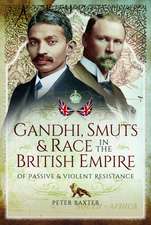 Gandhi, Smuts and Race in the British EmpirePeter BaxterPreț: 107.35 lei
 -
 From Superman to ManJ. A. RogersPreț: 52.51 lei
 -
 -25%Preț: 90.71 lei121.71 lei
 -
 Imperial IslandCharlotte Lydia Riley-18%Preț: 65.45 lei79.76 lei
 -
 The Boer WarMartin Bossenbroek-23%Preț: 163.06 lei210.44 lei
 -
 Too Black to Wear WhiteJonty WinchPreț: 139.99 lei
 -
 An African in Imperial LondonDanell Jones-17%Preț: 116.65 lei139.89 lei
 -
 Preț: 227.96 lei
 -
 -20%Preț: 108.47 lei135.33 lei
 -
 Off The RailsSally GimsonPreț: 136.96 lei
 -
 The If ManChris AshPreț: 155.93 lei
Recenzii
A fluent and compelling work that never loses sight of the narrative arc of Rhodes's life... Kelleher Storey enriches the familiar political history of Rhodes's career with a deeply researched study of how Rhodes managed a transnational network of people and materials to build his De Beers diamond wealth and colonise central southern Africa.
A brave and learned book ... We need to know the history - which is so punctiliously told in this book. It has never been related before in such detail, or with such impartiality, or awareness of the rage which the very name of Rhodes inspires in African hearts.
Sober, heavyweight and quietly damning...Storey argues vigorously that [Rhodes's] record must be contextualized as well as condemned...It all adds up to a rich and panoramic narrative.
William Kelleher Storey has given us the most exhaustive and meticulously researched biography of one of the most consequential figures of the modern age. While the notoriously megalomanic Rhodes saw himself as a colossus standing astride Africa and the British Empire, Storey cuts him wonderfully down to size to show us a flawed historical figure who was and is so fascinating precisely because he was so human. Storey reminds us of a man who failed more than he succeeded, who owed his success more to the contingencies of life than to genius, and who was a provincial whose influence extends around the globe. We live, for better and for worse, in the world that Rhodes wrought. It behooves us to understand him. Thanks to Storey, we can say we do.
This deeply researched book focuses on Rhodes's colonial vision for southern Africa which was rooted in mining, railways, and scientific agriculture. A do-er rather than a thinker, Rhodes's imprint on the country has more to do with his actions in support of white colonial expansion than his thought. This is apt to be forgotten in recent debates. Storey's rigorous analysis of Rhodes's material legacy in Southern Africa represents a major contribution to the field.
[The Colonialist] is a thorough and serious book, offering detailed analysis of how Rhodes persuaded London politicians and investors to back his schemes.
The Colonialist is a serious work of historical scholarship, written lucidly with all the sensibilities that correlate appropriately with its time... Its greatest contribution is its entwinement of Rhodes with histories of technology, specifically how technological innovations influenced social and political developments. ...Storey may be the latest in a long line of Rhodes biographers, but The Colonialist represents a new benchmark.
Storey performs a service by documenting just how consistently and completely Rhodes' rise disadvantaged the black Africans of his adopted country.
With increased access to archival materials, new emergent intellectual and social contexts, and decolonizing efforts (including the removal of public monuments, such as those celebrating Rhodes), it was time for Rhodes's legacy-controversial even in his own time-to be reconsidered through a 21st-century lens. This hefty volume by Storey is well-suited to the subject matter, well written, and thoroughly researched....[It] is fresh in its presentation and focus on themes of 'managing environment, geography, and technology,' which are directly reflected in the ongoing policies and practices in mining and other aspects of southern African nations.
A brave and learned book ... We need to know the history - which is so punctiliously told in this book. It has never been related before in such detail, or with such impartiality, or awareness of the rage which the very name of Rhodes inspires in African hearts.
Sober, heavyweight and quietly damning...Storey argues vigorously that [Rhodes's] record must be contextualized as well as condemned...It all adds up to a rich and panoramic narrative.
William Kelleher Storey has given us the most exhaustive and meticulously researched biography of one of the most consequential figures of the modern age. While the notoriously megalomanic Rhodes saw himself as a colossus standing astride Africa and the British Empire, Storey cuts him wonderfully down to size to show us a flawed historical figure who was and is so fascinating precisely because he was so human. Storey reminds us of a man who failed more than he succeeded, who owed his success more to the contingencies of life than to genius, and who was a provincial whose influence extends around the globe. We live, for better and for worse, in the world that Rhodes wrought. It behooves us to understand him. Thanks to Storey, we can say we do.
This deeply researched book focuses on Rhodes's colonial vision for southern Africa which was rooted in mining, railways, and scientific agriculture. A do-er rather than a thinker, Rhodes's imprint on the country has more to do with his actions in support of white colonial expansion than his thought. This is apt to be forgotten in recent debates. Storey's rigorous analysis of Rhodes's material legacy in Southern Africa represents a major contribution to the field.
[The Colonialist] is a thorough and serious book, offering detailed analysis of how Rhodes persuaded London politicians and investors to back his schemes.
The Colonialist is a serious work of historical scholarship, written lucidly with all the sensibilities that correlate appropriately with its time... Its greatest contribution is its entwinement of Rhodes with histories of technology, specifically how technological innovations influenced social and political developments. ...Storey may be the latest in a long line of Rhodes biographers, but The Colonialist represents a new benchmark.
Storey performs a service by documenting just how consistently and completely Rhodes' rise disadvantaged the black Africans of his adopted country.
With increased access to archival materials, new emergent intellectual and social contexts, and decolonizing efforts (including the removal of public monuments, such as those celebrating Rhodes), it was time for Rhodes's legacy-controversial even in his own time-to be reconsidered through a 21st-century lens. This hefty volume by Storey is well-suited to the subject matter, well written, and thoroughly researched....[It] is fresh in its presentation and focus on themes of 'managing environment, geography, and technology,' which are directly reflected in the ongoing policies and practices in mining and other aspects of southern African nations.
Notă biografică
William Kelleher Storey is Professor of History and Dean of Arts and Humanities at Millsaps College. He is the author of Guns, Race, and Power in Colonial South Africa and Writing History: A Guide for Students, among other books. Storey has been recognized as statewide Professor of the Year by the Council for Advancement and Support of Education (CASE) and the Carnegie Foundation for the Advancement of Teaching.
Cuprins
- Introduction: Reconsidering Cecil Rhodes
- Chapter 1: Becoming an Englishman and a Migrant
- Chapter 2: Digging Diamonds
- Chapter 3: Growing Pains
- Chapter 4: Learning at Oxford
- Chapter 5: Entering Politics
- Chapter 6: Aiming North
- Chapter 7: Controlling De Beers
- Chapter 8: Amalgamating the Mines
- Chapter 9: Connecting a Country
- Chapter 10: Stealing Arcadia
- Chapter 11: Perpetrating a Fraud
- Chapter 12: Leading the Cape Colony
- Chapter 13: Multiplying Force
- Chapter 14: Consolidating Rhodesia
- Chapter 15: Fighting for Arcadia
- Chapter 16: Maintaining Mines
- Chapter 17: Raiding the Rand
- Chapter 18: Defending the Vision
- Chapter 19: Recovering the Vision
- Chapter 20: Falling Short
- Conclusion: Perpetuating the Vision
- Acknowledgments
- Select Bibliography
- Index