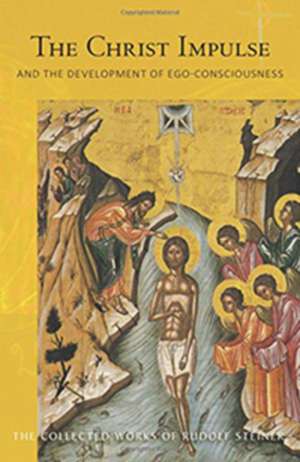
The Christ Impulse
Autor Rudolf Steiner Traducere de C. von Arnimen Limba Engleză Paperback – 24 oct 2014
Suntem de părere că The Christ Impulse ocupă un loc central în arhitectura antropozofică, propunând o perspectivă interdisciplinară care intersectează istoria religiilor, cosmologia ezoterică și fenomenologia spiritului. Subliniem modul în care Rudolf Steiner redefinește conceptul hristic, extrăgându-l din cadrele dogmatice tradiționale pentru a-l prezenta ca pe o forță cosmică activă, esențială pentru progresul întregii umanități, indiferent de rasă sau confesiune. Considerăm că această abordare transformă hristologia într-o știință a spiritului aplicată evoluției umane. Stilul este cel caracteristic prelegerilor lui Steiner: o expunere densă, bazată pe observații suprasensibile, care solicită o gândire activă din partea cititorului. Autorul analizează pregătirea istorică a încarnării lui Iisus din Nazaret și proiectează efectele acestui „impuls” asupra viitorului Pământului. Această lucrare reprezintă o alternativă necesară la Christianity as a Mystical Fact pentru cursurile de antropozofie, cu avantajul că oferă o perspectivă mult mai dinamică asupra rolului activ al forțelor spirituale în viitor, nu doar o analiză a originilor mistice. În contextul operei sale, The Christ Impulse servește drept contrapondere teoretică pentru The Incarnation of Ahriman. Dacă în cea din urmă Steiner avertizează asupra forțelor care tind spre mecanizarea și materializarea spiritului, în volumul de față el fundamentează sursa de echilibru și regenerare. Este o lectură care completează viziunea autorului despre triada cosmică, oferind claritatea necesară înțelegerii modului în care individul se poate raporta la universal.
Preț: 120.91 lei
Carte disponibilă
Livrare economică 09-23 noiembrie
Livrare express 24-30 octombrie pentru 23.61 lei
Specificații
ISBN-10: 1855844060
Pagini: 184
Dimensiuni: 151 x 233 x 20 mm
Greutate: 0.3 kg
Editura: Rudolf Steiner Press
V-ar putea interesa
-
 CosmosophyRudolf SteinerPreț: 91.96 lei
 -
 The Philosophy of Spiritual ActivityRudolf SteinerPreț: 186.18 lei
 -
 Truth and KnowledgeRudolf SteinerPreț: 89.91 lei
 -
 Christianity as Mystical Fact and the Mysteries of AntiquityRudolf SteinerPreț: 59.75 lei
 -
 Exploring TheosophyTheosophical Society-11%Preț: 34.08 lei38.14 lei
 -
 Fairy Worlds and WorkersMarjorie SpockPreț: 85.89 lei
 -
 Why on Earth?Signe Eklund SchaeferPreț: 143.10 lei
 -
 Rethinking EconomicsRudolf SteinerPreț: 224.83 lei
 -
 Ancient Myths and the New Isis MysteryRudolf SteinerPreț: 102.53 lei
 -
 Six Steps in Self-developmentRudolf SteinerPreț: 76.40 lei
 -
 Occult ScienceRudolf SteinerPreț: 103.70 lei
 -
 The Mystery of Arthur at TintagelRichard SeddonPreț: 100.37 lei
 -
 Man or MatterErnst LehrsPreț: 177.86 lei
 -
 A Study in ConsciousnessAnnie BesantPreț: 124.08 lei
 -
 Christ and AntichristPeter TradowskyPreț: 99.09 lei
 -
 Rudolf Steiner's Sculptural GroupSergei O. ProkofieffPreț: 113.03 lei
 -
 We are the Revolution!Ulrich RoeschPreț: 90.02 lei
 -
 Preț: 89.36 lei
 -
 Selbsterkenntnis und Gotteserkenntnis 1Rudolf SteinerPreț: 477.78 lei
De ce să citești această carte
Recomandăm această carte cititorilor interesați de o viziune non-confesională asupra spiritualității. The Christ Impulse oferă un cadru conceptual pentru înțelegerea evoluției umane dincolo de limitele religioase clasice. Cititorul va câștiga o perspectivă nouă asupra modului în care forțele spirituale modelează istoria, fiind un instrument esențial pentru cei care studiază opera lui Rudolf Steiner și impactul antropozofiei asupra gândirii moderne.
Despre autor
Rudolf Steiner (1861–1925) a fost un filozof austriac, reformator social și fondator al antropozofiei. Opera sa este vastă, pornind de la critica literară și filozofia libertății, până la dezvoltarea unor domenii practice precum educația Waldorf, agricultura biodinamică și medicina antropozofică. Prin conceptul de „știință spirituală”, Steiner a încercat să aplice rigoarea gândirii occidentale asupra întrebărilor metafizice, căutând o sinteză între lumea materială și cea spirituală. The Christ Impulse reflectă perioada sa de tranziție de la teozofie spre o perspectivă hristocentrică proprie, care a definit ulterior întreaga sa activitate de la centrul Goetheanum.
Descriere scurtă
"Christ will reappear but in a higher reality than the physical one--in a reality tht we will see only if we have first acquired a sense and understanding of spiritual life. Inscribe in your hearts what Anthroposophy should be--preparation for the great epoch of humanity that lies ahead of us." -- Rudolf Steiner Rudolf Steiner's teachings of Christ--and in particular what he calls the "Christ impulse"--are unique. Christ, he says, is an objective universal force that exists independently of Christian churches and creeds, working for all humanity. The impulse that Christ brought to Earth acts to advance all people, irrespective of religion, creed, or race.
Speaking in Berlin while still a representative of the largely Eastern-oriented Theosophical Society, Steiner presents multifaceted perspectives on the Christ impulse based on his independent spiritual research--from the vast cycles of time that preceded Christ's incarnation and the preparation for his coming to the actual physical embodiment of Christ about two thousand years ago in Palestine as Jesus of Nazareth. Steiner also describes how Christ will influence the future development of the Earth and humanity.
In his opening lecture, Steiner discusses the nature of the bodhisattvas and their role in relation to Christ and human evolution. Bodhisattvas are the great teachers of humanity, incarnating in human form during their passage through the various cycles of cultural development. They are intimately involved in preparing the work of the Christ impulse.
In other lectures Steiner addresses subjects as diverse as the Sermon on the Mount in relation to the development of conscience and the current duality of male and female (microcosm) and its correspondence in the cosmos (macrocosm). This microcosmic-macrocosmic phenomenon is related to initiation in the Germanic and Egyptian mysteries, which reach a higher unity in Christian initiation.
Among the myriad other themes are the introduction of the "I" in human development and its essential connection to Christ; the preparation of the Christ impulse through the Jahveh religion and Mosaic law; the meaning of the Ten Commandments; and the new clairvoyance in relation to the reappearance of Christ in the etheric.
This volume is a translation from German of Der Christus-Impuls und die Entwicklung des Ich-Bewußtseins (GA 116).