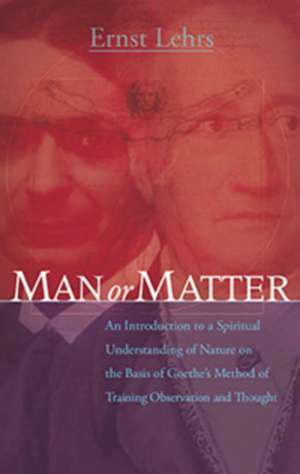
Man or Matter
Autor Ernst Lehrs Editat de Nick Thomas, Peter Bortoften Limba Engleză Paperback – 14 noi 2013
Recomandăm Man or Matter cercetătorilor, studenților în științe umaniste și practicianului interesat de epistemologia alternativă, ca pe un instrument riguros pentru extinderea capacității de înțelegere a realității. Această a treia ediție, publicată de Rudolf Steiner Press, reprezintă sinteza muncii de o viață a lui Ernst Lehrs, care propune o depășire a materialismului științific prin integrarea metodelor observaționale ale lui Goethe cu cercetarea spirituală a lui Steiner. Ne-a atras atenția modul în care autorul reușește să structureze o lucrare de 560 de pagini care nu necesită neapărat o pregătire tehnică prealabilă, dar care solicită o disciplină mentală severă în explorarea fenomenelor naturale. Suntem de părere că relevanța acestui volum pentru curriculumul de studii antroposofice este fundamentală, oferind o bază teoretică solidă pentru cei care doresc să înțeleagă legătura dintre forțele fizice și cele eterice. Cititorii familiarizați cu Nature's Open Secret de Rudolf Steiner vor aprecia modul în care Ernst Lehrs aplică principiile goetheene într-un format mai sistematic și adaptat provocărilor științifice moderne. Spre deosebire de textele pur teoretice, acest volum funcționează ca un ghid metodologic pentru dezvoltarea percepției umane. Tonul este unul precis, academic, evitând speculațiile nefondate în favoarea unei observații atente a modului în care materia interacționează cu spiritul. Subliniem faptul că autorul, având o pregătire doctorală solidă, reușește să mențină un echilibru între rigoarea științei clasice și perspectivele noi oferite de antroposofie.
Preț: 177.86 lei
Carte disponibilă
Livrare economică 09-23 noiembrie
Livrare express 24-30 octombrie pentru 46.39 lei
Specificații
ISBN-10: 1855843897
Pagini: 560
Dimensiuni: 136 x 216 x 38 mm
Greutate: 0.78 kg
Ediția:3rd Third Edition, 3rd edition
Editura: Rudolf Steiner Press
De ce să citești această carte
Această carte este esențială pentru oricine dorește să exploreze limitele cunoașterii umane dincolo de limitele impuse de materialismul convențional. Cititorul câștigă o nouă perspectivă asupra naturii și a propriei facultăți de gândire, învățând să aplice metoda fenomenologică a lui Goethe. Este o recomandare certă pentru educatorii Waldorf și pentru cei pasionați de filosofia științei care caută o punte între observația empirică și intuiția spirituală.
Despre autor
Ernst Lehrs (1894–1979) a fost un distins om de știință și pedagog german, format la Universitatea din Berlin. După ce a obținut doctoratul în 1923, a devenit unul dintre profesorii seniori ai primei școli Waldorf din Stuttgart, colaborând direct cu Rudolf Steiner. Cariera sa a fost marcată de exilul forțat din cauza regimului nazist, activând ca profesor în Olanda și ulterior în Marea Britanie. După 1952, s-a întors în Germania pentru a pune bazele cursurilor de educație specială antroposofică la Eckwalden. Opera sa reflectă dorința de a reconcilia rigoarea științifică dobândită în mediul academic cu cercetarea fenomenologică spirituală.
Notă biografică
Descriere scurtă
The beginnings of this method were formulated by Goethe (1749-1832) more than 200 years ago, but his contemporaries offered little in the way of fertile ground for his ideas. It was Rudolf Steiner who recognized the significance of "Goetheanism" for the future development of not only science, but also human culture in general, and who developed Goethe's work in modern times.
Man or Matter contains the systematic results of the author's work with the methods of Goethe and Steiner (whom he knew personally). In this unique study, Lehrs addresses himself to anyone--with or without a specialized scientific training--concerned with developing the human power of cognition in the present time.
"Once a being has recognized itself as a product of evolution, it immediately ceases to be that and nothing more. With its very first act of self-knowledge, it transcends its previous limits and must in future rely on its own conscious actions for the carrying on of its development." -- Ernst Lehrs This revised edition was edited by Nick Thomas and Peter Bortoft.