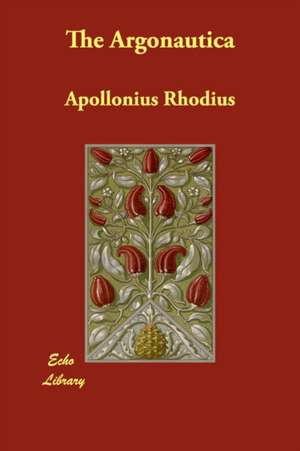
The Argonautica
Autor Apollonius Rhodiusen Limba Engleză Paperback – 19 mar 2007
Ce rămâne din gloria unui erou atunci când zeii păstrează tăcerea, iar singura cale spre victorie trece prin inima unei femei străine? În The Argonautica, Apollonius Rhodius ne propune o viziune care fracturează canoanele epocii arhaice. Descoperim aici nu un semizeu invulnerabil, ci pe Iason, un lider care ezită, care plânge în fața insultelor și care depinde aproape în întregime de farmecele magice ale Medeei pentru a-și îndeplini misiunea. Stilul are ceva din densitatea prozei lui Apollonius of Rhodes din edițiile Oxford World's Classics, fără să fie o imitație — reușește să condenseze mitul Argonauților într-o formă surprinzător de modernă, adaptată rigorilor aristoteliene de brevitate și unitate dramatică. Putem afirma că forța acestui text rezidă în umanizarea mitului; zeii sunt figuri îndepărtate, aproape alegorice, lăsând loc explorării trăirilor interioare. Tensiunea dintre datoria eroică și pasiunea devoratoare este redată prin versuri ce anticipează romanul elenistic, unde analiza psihologică a Medeei devine punctul central al narațiunii. Deși folosește modelul homeric, Apollonius împrumută masiv din structura tragediei, oferindu-ne o operă în care The Voyage of the Argo nu este doar o expediție geografică în Colchida, ci o călătorie sinuoasă prin labirintul sufletului uman, marcată de ambiguitate morală și un realism fragil.
Preț: 83.35 lei
Carte tipărită la comandă
Livrare economică 30 noiembrie-07 decembrie
Specificații
ISBN-10: 1406838519
Pagini: 116
Dimensiuni: 152 x 229 x 7 mm
Greutate: 0.18 kg
Editura: Echo Library
Colecția Echo Library
Locul publicării:United Kingdom
V-ar putea interesa
-
 Selected Poems: KeatsJohn Keats-25%Preț: 54.06 lei72.49 lei
 -
 The Pillow BookSei Shonagon-18%Preț: 76.97 lei94.04 lei
 -
 Mysteries of Small HousesAlice NotleyPreț: 173.16 lei
 -
 FailurePhilip SchultzPreț: 88.60 lei
 -
 Selected PoemsSharon Olds-20%Preț: 85.58 lei106.60 lei
 -
 BeowulfSeamus HeaneyPreț: 92.41 lei
 -
 Collected PoemsPhilip LarkinPreț: 121.28 lei
 -
 The Burial at ThebesSeamus HeaneyPreț: 91.21 lei
 -
 Death of a NaturalistSeamus HeaneyPreț: 91.38 lei
 -
 The Soho LeopardRuth PadelPreț: 91.87 lei
 -
 John Betjeman Collected PoemsJohn Betjeman-26%Preț: 91.02 lei122.67 lei
 -
 The Long Road to LegendMark WarrenPreț: 121.30 lei
 -
 Born to the BadgeMark WarrenPreț: 163.13 lei
 -
 A Law Unto HimselfMark WarrenPreț: 128.50 lei
 -
 The Grand MeleeMichel TremblayPreț: 92.23 lei
 -
 Warning to the CrocodilesAntonio Lobo AntunesPreț: 117.42 lei
 -
 Girl FightersCarolyn HanPreț: 87.69 lei
De ce să citești această carte
Pentru cititorul pasionat de antichitate care dorește să exploreze veriga lipsă dintre Homer și Virgiliu. Prin The Argonautica, câștigați acces la o perspectivă rară asupra eroismului subminat de îndoială și la una dintre cele mai frumoase și tulburătoare povești de dragoste din literatura clasică. Este o lectură esențială pentru a înțelege evoluția de la epopeea zeilor la drama psihologică a omului modern.
Despre autor
Apollonius Rhodius, poet și bibliotecar al celebrei Biblioteci din Alexandria în secolul al III-lea î.Hr., a fost o figură centrală a culturii elenistice. Elev al lui Callimah, el s-a distanțat de tradiția poemelor lungi, preferând o formă mai concentrată și erudită. Opera sa principală, The Argonautica, reflectă spiritul epocii sale prin interesul pentru etiologie, geografie și finețea psihologică. Deși a trăit în umbra polemicilor literare ale timpului său, influența sa asupra poeziei latine, în special asupra lui Virgiliu și a lui Valerius Flaccus, îi confirmă statutul de inovator al genului epic.