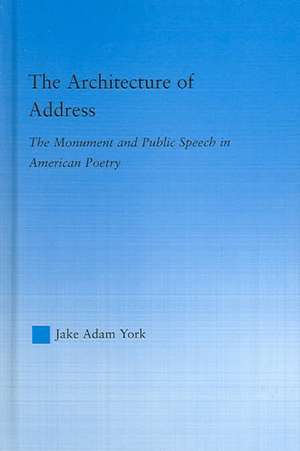
The Architecture of Address: The Monument and Public Speech in American Poetry: Literary Criticism and Cultural Theory
Autor Jake Adam Yorken Limba Engleză Hardback – 11 dec 2004
Din seria Literary Criticism and Cultural Theory
- 18%
 Preț: 1064.25 lei
 - 18%
 Preț: 674.44 lei
 - 18%
 Preț: 1011.94 lei
 - 18%
 Preț: 1012.53 lei
 - 18%
 Preț: 1114.88 lei
 - 18%
 Preț: 1014.97 lei
 - 18%
 Preț: 1065.92 lei
 - 18%
 Preț: 1114.60 lei
 - 18%
 Preț: 1114.88 lei
 - 18%
 Preț: 1118.40 lei
 - 18%
 Preț: 1063.47 lei
 - 18%
 Preț: 1068.05 lei
 - 18%
 Preț: 1063.35 lei
 - 18%
 Preț: 673.53 lei
 - 18%
 Preț: 1061.67 lei
 - 18%
 Preț: 1013.30 lei
 - 18%
 Preț: 1064.55 lei
 - 18%
 Preț: 1012.53 lei
 - 18%
 Preț: 1011.03 lei
 - 18%
 Preț: 1011.80 lei
 - 18%
 Preț: 1012.40 lei
 - 37%
 Preț: 489.04 lei
 - 34%
 Preț: 786.20 lei
 - 18%
 Preț: 1064.10 lei
 - 18%
 Preț: 1014.06 lei
 - 18%
 Preț: 1011.03 lei
 - 18%
 Preț: 1013.30 lei
 - 18%
 Preț: 1065.61 lei
 - 34%
 Preț: 786.35 lei
 - 18%
 Preț: 751.10 lei
 - 25%
 Preț: 252.78 lei
 - 18%
 Preț: 1115.49 lei
 - 18%
 Preț: 1012.11 lei
 - 32%
 Preț: 900.64 lei
 - 18%
 Preț: 1009.37 lei
 - 18%
 Preț: 1080.32 lei
 - 15%
 Preț: 669.95 lei
 -
 Preț: 370.84 lei
 - 18%
 Preț: 1064.10 lei
 - 18%
 Preț: 1063.95 lei
 - 18%
 Preț: 1017.68 lei
 - 18%
 Preț: 1067.59 lei
 - 34%
 Preț: 785.95 lei
 - 18%
 Preț: 698.62 lei
 - 18%
 Preț: 959.78 lei
 -
 Preț: 371.93 lei
 - 18%
 Preț: 1012.83 lei
 - 18%
 Preț: 1065.92 lei
 - 18%
 Preț: 957.94 lei
Preț: 789.30 lei
Preț vechi: 1195.10 lei
-34% Nou
Puncte Express: 1184
Preț estimativ în valută:
139.67€ • 162.88$ • 122.63£
139.67€ • 162.88$ • 122.63£
Carte tipărită la comandă
Livrare economică 16-30 ianuarie 26
Preluare comenzi: 021 569.72.76
Specificații
ISBN-13: 9780415970587
ISBN-10: 041597058X
Pagini: 232
Dimensiuni: 152 x 229 x 18 mm
Greutate: 0.59 kg
Ediția:1
Editura: Taylor & Francis
Colecția Routledge
Seria Literary Criticism and Cultural Theory
Locul publicării:Oxford, United Kingdom
ISBN-10: 041597058X
Pagini: 232
Dimensiuni: 152 x 229 x 18 mm
Greutate: 0.59 kg
Ediția:1
Editura: Taylor & Francis
Colecția Routledge
Seria Literary Criticism and Cultural Theory
Locul publicării:Oxford, United Kingdom
Notă biografică
Jake Adam York is currently Assistant Professor at the University of Colorado. His criticism has appeared in the Walt Whitman Quarterly Review and his poems have appeared in Shenandoah , The Southern Review , Crab Orchard Review, and other periodicals.
Cuprins
1. Introduction 2. Whitman's Ferry: Platform of Culture Whitman and the Oratory of Early Nineteenth-Century America Whitman and Nineteenth-Century Architecture The Ferry as Monument 3. Crossing Over Brooklyn Ferry: Hart Crane's The Bridge as Monument The Constuctive Principle The Architecture of Anamnesis in The Bridge The Final Figure and the Life of Monument 4. Urban Revitalization: Robert Lowell's 'For the Union Dead' and the American Tradition of Monumental Rhetoric Coordinations The Cemeteries of Culture Enabling Tradition 5. After Lowell: Some Conclusions and Final Considerations