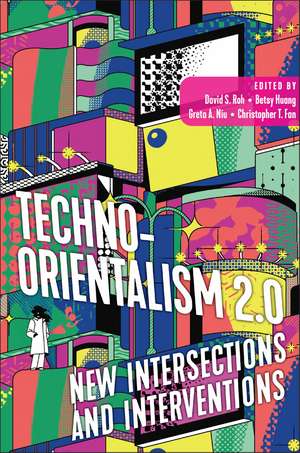
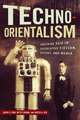
Techno-Orientalism 2.0: New Intersections and Interventions: Asian American Studies Today
Editat de David S. Roh, Betsy Huang, Greta Aiyu Niu, Christopher T. Fan Contribuţii de Justin Battin, Agnieszka Kiejziewicz, Edmond Chang, Professor Anna Romina Guevarra, Clare Kim, Won Jeon, Adhy Kim, Jung Soo Lee, Lori Kido Lopez, Kimberly McKee, Jane Park, Imran Parray, Baryon Posadas, Thomas Sarmiento, Gerald Sim, Leland Tabares, Rachel Tay, Jae Yeon Yoo, Ian Liujia Tian, Charles Tung, Shana Yeen Limba Engleză Hardback – 15 iul 2025 – vârsta ani



Preț: 816.53 lei
Preț vechi: 1060.43 lei
-23%
Puncte Express: 1225
Carte disponibilă
Livrare economică 07-21 noiembrie
Livrare express 24-30 octombrie pentru 33.15 lei
Livrare prin curier în România Termenul estimat este afișat lângă disponibilitate.
Transport gratuit pentru acest produs Plată online sau ramburs, în funcție de opțiunile comenzii.
Retur gratuit în 14 zile Comandă securizată și suport în română.
Specificații
ISBN-13: 9781978839229
ISBN-10: 1978839227
Pagini: 392
Ilustrații: 29 color and 8 B-W images
Dimensiuni: 156 x 235 x 28 mm
Greutate: 0.5 kg
Editura: Rutgers University Press
Colecția Rutgers University Press
Seria Asian American Studies Today
ISBN-10: 1978839227
Pagini: 392
Ilustrații: 29 color and 8 B-W images
Dimensiuni: 156 x 235 x 28 mm
Greutate: 0.5 kg
Editura: Rutgers University Press
Colecția Rutgers University Press
Seria Asian American Studies Today
Notă biografică
DAVID S. ROH is a professor and chair of the Department of English at the University of Utah. He is the author of Minor Transpacific: Triangulating American, Japanese, and Korean Fictions and Illegal Literature: Toward a Disruptive Creativity , and coeditor of Techno-Orientalism: Imagining Asia in Science Fiction, History, and Media (Rutgers University Press, 2015).
BETSY HUANG is a professor of English at Clark University, Massachusetts. She is the author of Contesting Genres in Contemporary Asian American Fiction and coeditor of three essay collections: Techno-Orientalism: Imagining Asia in Speculative Fiction, History, and Media (Rutgers University Press, 2015), Diversity and Inclusion in Higher Education and Societal Contexts, and Asian American Literature in Transition, 1996–2020.
GRETA AIYU NIU is an independent scholar based in Rochester, New York, and is coeditor of Techno-Orientalism: Imagining Asia in Speculative Fiction, History, and Media (Rutgers University Press, 2015).
CHRISTOPHER T. FAN is an associate professor of English at the University of California Irvine. He is the author of Asian American Fiction After 1965: Transnational Fantasies of Economic Mobility.
BETSY HUANG is a professor of English at Clark University, Massachusetts. She is the author of Contesting Genres in Contemporary Asian American Fiction and coeditor of three essay collections: Techno-Orientalism: Imagining Asia in Speculative Fiction, History, and Media (Rutgers University Press, 2015), Diversity and Inclusion in Higher Education and Societal Contexts, and Asian American Literature in Transition, 1996–2020.
GRETA AIYU NIU is an independent scholar based in Rochester, New York, and is coeditor of Techno-Orientalism: Imagining Asia in Speculative Fiction, History, and Media (Rutgers University Press, 2015).
CHRISTOPHER T. FAN is an associate professor of English at the University of California Irvine. He is the author of Asian American Fiction After 1965: Transnational Fantasies of Economic Mobility.
Cuprins
Contents
Introduction - David S. Roh, Betsy Huang, Greta A. Niu, and Christopher T. Fan
Part I Labor Reconfigurations
Chapter 1: Working Futures After Asians: Automation, AI, and the Global Labor Economy - Leland Tabares
Chapter 2: Everything, Everywhere, All at Once: Techno-Orientalism in an Age of Cybernetic Capitalism - Won Jeon
Chapter 3: Chinese Commodities: Adoption in After Yang - Kimberly D. McKee
Part II Racialization as Technology
Chapter 4: Plastinated Vitruvian Man, the Datafication of Race, and Transracial Transfer in Westworld and Altered Carbon - Charles Tung
Chapter 5: Outsiders Within: The Indigenous/Minority Question and Techno-Orientalist Gaze in India - M. Imran Parray
Chapter 6: On Forms of the Black Box: Race and Difference between STS and Global Critical Race Studies - Clare S. Kim and Anna Romina Guevarra
Part III Sinofuturism
Chapter 7: Infrastructure and/as Mediation: China 2098’s Tempro-Affective Politics - Ian Liujia Tian
Chapter 8: Techno-Orientalist Deflections: How Documentaries Frame China’s AI Threat - Gerald Sim
Chapter 9: Techno-Futurehistory and the Sojourners of Global China: A Threefold Reading of The Wandering Earth - Shana Ye
Part IV Machinic Subjects
Chapter 10: Sacrificial Clones: The Technologized Korean Woman in Shiri and Cloud Atlas - Jane Chi Hyun Park
Chapter 11: Assembling Mitski: The Aesthetics and Circuits of Techno-Ornamentalism - Rachel Tay and Jaeyeon Yoo
Part V Extensions
Chapter 12: Asian Solarpunk: Between Utopia, Collective Futures and Remedies for Climate Panic - Agnieszka Kiejziwicz and Justin Battin
Chapter 13: Animated Bodies: Project Itoh and the Afterlives of Techno-Orientalism - Baryon Posadas
Chapter 14: Settler Orientalism, Asian American Techno-Environmentalism: The Network Novel under Japanese and U.S. Empires - Adhy Kim
Chapter 15: The Alchemized Dis/abled Body as Recuperative Site in Fullmetal Alchemist - Jung Soo Lee
Part VI Optimistic Futures
Chapter 16: Recovering Asian American Futures in the Marvel Cinematic Universe - Lori K. Lopez
Chapter 17: Looking for Asianfuturism: Asian American SF and Games of Color - Edmond Y. Chang
Chapter 18: The Queer Techno-Orientalist Aesthetics of Disney’s Big Hero 6 - Thomas Sarmiento
Conclusion - David S. Roh, Betsy Huang, Greta A. Niu, Christopher T. Fan
Acknowledgements
Bibliography
Notes on Contributors
Index
The Present
Futurity: Techno-Orientalist
Infrastructures 1
DAVID S. ROH, BE TSY HUANG, GRE TA A IYU NIU, AND CHRISTOPHER T. FAN
Part I Labor
Reconfigurations
1 Working Futures
after
Asians: Automation, AI,
and the Global Labor
Economy 23
LEL AND TABARES
2 Everything
Everywhere All at Once: Techno-Orientalism
in an Age of Cybernetic Capitalism 39
WON JEON
3 Chinese Commodities: Adoption in After
Yang 51
KIMBERLY D. McKEE
Part II Racialization as Technology
4 Plastinated Vitruvian Man, the Datafication of Race,
and Transracial Transfer in Westworld and Altered Carbon 67
CHARLES M. TUNG
5 Outsiders Within: The Indigenous/Minority Question
and Techno-Orientalist
Gaze in India 83
M. IMRAN PARRAY
6 On Forms of the Black Box: Race Technology in STS
and Global Critical Race Studies 100
CL ARE S. K IM AND ANNA ROMINA GUE VARRA
Part III Sinofuturism
7 Infrastructure and/as Mediation: China 2098’s
Tempro-Affective
Politics 121
IAN L IUJI A TIAN
8 Techno-Orientalist
Deflections: How Documentaries
Frame China’s AI Threat 137
GERALD SIM
9 Techno-Futurehistory
and the Sojourners of Global
China: A Threefold Reading of The Wandering Earth 153
SHANA YE
Part IV Machinic Subjects
10 Sacrificial Clones: The Technologized Korean Woman
in Shiri and Cloud Atlas 173
JANE CHI HYUN PARK
11 Assembling Mitski: The Aesthetics and Circuits
of Techno-Ornamentalism
189
RACHEL TAY AND JAE YEON YOO
Part V Extensions
12 Asian Solarpunk: Between Utopia, Collective Futures,
and Remedies for Climate Panic 205
AGNIESZK A K IE JZIEWICZ AND JUST IN MICHAEL BAT T IN
13 Animated Bodies: Project
Itoh and the Afterlives
of Techno-Orientalism
219
BARYON TENSOR POSADAS
14 Settler Orientalism, Asian American
Techno-Environmentalism:
The Network
Novel under
Japanese
and U.S. Empires 235
ADHY K IM
15 The Alchemized Dis/abled Body as Recuperative
Site in Fullmetal Alchemist 249
JUNG SOO LEE
Part VI Optimistic Futures
16 Recovering Asian American Futures
in the Marvel
Cinematic Universe 267
LORI K IDO LOPE Z
17 Looking for Asianfuturism: Asian American Science
Fiction and Games of Color 281
EDMOND Y. CHANG
18 The Queer Techno-Orientalist
Aesthetics of Disney’s
Big Hero 6 298
THOMAS X AV IER SARMIENTO
Markets of Techno-Orientalist
Critique: A Concluding
Discussion 315
DAVID S. ROH, BE TSY HUANG, GRE TA A IYU NIU, AND CHRISTOPHER T. FAN
Acknowledgments
325
Bibliography 327
Notes on Contributors 361
Index 000
Introduction - David S. Roh, Betsy Huang, Greta A. Niu, and Christopher T. Fan
Part I Labor Reconfigurations
Chapter 1: Working Futures After Asians: Automation, AI, and the Global Labor Economy - Leland Tabares
Chapter 2: Everything, Everywhere, All at Once: Techno-Orientalism in an Age of Cybernetic Capitalism - Won Jeon
Chapter 3: Chinese Commodities: Adoption in After Yang - Kimberly D. McKee
Part II Racialization as Technology
Chapter 4: Plastinated Vitruvian Man, the Datafication of Race, and Transracial Transfer in Westworld and Altered Carbon - Charles Tung
Chapter 5: Outsiders Within: The Indigenous/Minority Question and Techno-Orientalist Gaze in India - M. Imran Parray
Chapter 6: On Forms of the Black Box: Race and Difference between STS and Global Critical Race Studies - Clare S. Kim and Anna Romina Guevarra
Part III Sinofuturism
Chapter 7: Infrastructure and/as Mediation: China 2098’s Tempro-Affective Politics - Ian Liujia Tian
Chapter 8: Techno-Orientalist Deflections: How Documentaries Frame China’s AI Threat - Gerald Sim
Chapter 9: Techno-Futurehistory and the Sojourners of Global China: A Threefold Reading of The Wandering Earth - Shana Ye
Part IV Machinic Subjects
Chapter 10: Sacrificial Clones: The Technologized Korean Woman in Shiri and Cloud Atlas - Jane Chi Hyun Park
Chapter 11: Assembling Mitski: The Aesthetics and Circuits of Techno-Ornamentalism - Rachel Tay and Jaeyeon Yoo
Part V Extensions
Chapter 12: Asian Solarpunk: Between Utopia, Collective Futures and Remedies for Climate Panic - Agnieszka Kiejziwicz and Justin Battin
Chapter 13: Animated Bodies: Project Itoh and the Afterlives of Techno-Orientalism - Baryon Posadas
Chapter 14: Settler Orientalism, Asian American Techno-Environmentalism: The Network Novel under Japanese and U.S. Empires - Adhy Kim
Chapter 15: The Alchemized Dis/abled Body as Recuperative Site in Fullmetal Alchemist - Jung Soo Lee
Part VI Optimistic Futures
Chapter 16: Recovering Asian American Futures in the Marvel Cinematic Universe - Lori K. Lopez
Chapter 17: Looking for Asianfuturism: Asian American SF and Games of Color - Edmond Y. Chang
Chapter 18: The Queer Techno-Orientalist Aesthetics of Disney’s Big Hero 6 - Thomas Sarmiento
Conclusion - David S. Roh, Betsy Huang, Greta A. Niu, Christopher T. Fan
Acknowledgements
Bibliography
Notes on Contributors
Index
The Present
Futurity: Techno-Orientalist
Infrastructures 1
DAVID S. ROH, BE TSY HUANG, GRE TA A IYU NIU, AND CHRISTOPHER T. FAN
Part I Labor
Reconfigurations
1 Working Futures
after
Asians: Automation, AI,
and the Global Labor
Economy 23
LEL AND TABARES
2 Everything
Everywhere All at Once: Techno-Orientalism
in an Age of Cybernetic Capitalism 39
WON JEON
3 Chinese Commodities: Adoption in After
Yang 51
KIMBERLY D. McKEE
Part II Racialization as Technology
4 Plastinated Vitruvian Man, the Datafication of Race,
and Transracial Transfer in Westworld and Altered Carbon 67
CHARLES M. TUNG
5 Outsiders Within: The Indigenous/Minority Question
and Techno-Orientalist
Gaze in India 83
M. IMRAN PARRAY
6 On Forms of the Black Box: Race Technology in STS
and Global Critical Race Studies 100
CL ARE S. K IM AND ANNA ROMINA GUE VARRA
Part III Sinofuturism
7 Infrastructure and/as Mediation: China 2098’s
Tempro-Affective
Politics 121
IAN L IUJI A TIAN
8 Techno-Orientalist
Deflections: How Documentaries
Frame China’s AI Threat 137
GERALD SIM
9 Techno-Futurehistory
and the Sojourners of Global
China: A Threefold Reading of The Wandering Earth 153
SHANA YE
Part IV Machinic Subjects
10 Sacrificial Clones: The Technologized Korean Woman
in Shiri and Cloud Atlas 173
JANE CHI HYUN PARK
11 Assembling Mitski: The Aesthetics and Circuits
of Techno-Ornamentalism
189
RACHEL TAY AND JAE YEON YOO
Part V Extensions
12 Asian Solarpunk: Between Utopia, Collective Futures,
and Remedies for Climate Panic 205
AGNIESZK A K IE JZIEWICZ AND JUST IN MICHAEL BAT T IN
13 Animated Bodies: Project
Itoh and the Afterlives
of Techno-Orientalism
219
BARYON TENSOR POSADAS
14 Settler Orientalism, Asian American
Techno-Environmentalism:
The Network
Novel under
Japanese
and U.S. Empires 235
ADHY K IM
15 The Alchemized Dis/abled Body as Recuperative
Site in Fullmetal Alchemist 249
JUNG SOO LEE
Part VI Optimistic Futures
16 Recovering Asian American Futures
in the Marvel
Cinematic Universe 267
LORI K IDO LOPE Z
17 Looking for Asianfuturism: Asian American Science
Fiction and Games of Color 281
EDMOND Y. CHANG
18 The Queer Techno-Orientalist
Aesthetics of Disney’s
Big Hero 6 298
THOMAS X AV IER SARMIENTO
Markets of Techno-Orientalist
Critique: A Concluding
Discussion 315
DAVID S. ROH, BE TSY HUANG, GRE TA A IYU NIU, AND CHRISTOPHER T. FAN
Acknowledgments
325
Bibliography 327
Notes on Contributors 361
Index 000
Recenzii
"Provocative theses on a series of new digital media phenomena in a globalized world unforeseen in their early edition. . . . A timely update in terms of addressing contemporary geopolitical situations and technological advances. Readers benefit greatly from Roh et al.'s adept theoretical integration of the latest post-colonial, ethnicity, labor division, STS, and media theories."
"How do we envision the so-called threat of an impending 'Asian Century'? And, as importantly, how do we feel about it? This extraordinary sequel gives us the critical insights and imaginative tools to understand a technologically driven future that is at once terrifying and desirable."
"Whereas the original defined and limned the inner workings of an emerging mode of racial discourse, Techno-Orientalism 2.0 arrives at the apex of techno-orientalism, in a time when we are inundated with the images and imaginings of a techno-orientalist future that shape and structure our present. An electrified expansion into broader networks, this volume follows the proliferating mainstream discourse of techno-orientalism by broadening its scope, looking at our present through a sharp and unblemished lens, and venturing from the heights of our futuristic imaginations to the depths of our structured material world."
"This dazzling project marks both the extraordinary success of the first edited collection in making legible techno-orientalism as a subfield of study and the critical importance of analyzing how the conditions—of emergence, of legibility, and of future possibility—animating this subfield continue to evolve given the latest geopolitical realignments between Asia and the West. By arguing that techno-orientalism has transcended its initial focus on speculative fiction and Asiatic signifiers to develop into a 'mode of revelation,' this volume generatively shifts critical attention from subjects to structures and productively demonstrates how Asian American studies has begun to think in more geographically and conceptually expansive ways about race, genre, form, and function."
"How do we envision the so-called threat of an impending 'Asian Century'? And, as importantly, how do we feel about it? This extraordinary sequel gives us the critical insights and imaginative tools to understand a technologically driven future that is at once terrifying and desirable."
"Whereas the original defined and limned the inner workings of an emerging mode of racial discourse, Techno-Orientalism 2.0 arrives at the apex of techno-orientalism, in a time when we are inundated with the images and imaginings of a techno-orientalist future that shape and structure our present. An electrified expansion into broader networks, this volume follows the proliferating mainstream discourse of techno-orientalism by broadening its scope, looking at our present through a sharp and unblemished lens, and venturing from the heights of our futuristic imaginations to the depths of our structured material world."
"This dazzling project marks both the extraordinary success of the first edited collection in making legible techno-orientalism as a subfield of study and the critical importance of analyzing how the conditions—of emergence, of legibility, and of future possibility—animating this subfield continue to evolve given the latest geopolitical realignments between Asia and the West. By arguing that techno-orientalism has transcended its initial focus on speculative fiction and Asiatic signifiers to develop into a 'mode of revelation,' this volume generatively shifts critical attention from subjects to structures and productively demonstrates how Asian American studies has begun to think in more geographically and conceptually expansive ways about race, genre, form, and function."
Descriere
Techno-Orientalism 2.0 addresses the impact of a volatile post-COVID present on speculative futures by and about Asians. The volume engages with techno-Orientalist inflections in recent high-profile and lesser-known Asian and Asian American speculative fiction, film, television, anime, art, music, journalism, architecture, state-sponsored policy and infrastructural projects, and the now-dominant China Panic.