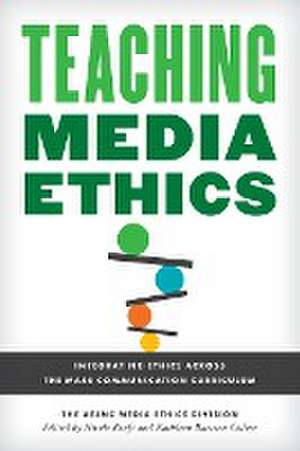
Teaching Media Ethics: Integrating Ethics Across the Mass Communication Curriculum: Master Class: Resources for Teaching Mass Communication
Autor The AEJMC Media Ethics Division Editat de Nicole Kraft, Kathleen Bartzen Culveren Limba Engleză Paperback – 2 ian 2024
The volume also includes nine chapters focused on key specializations, such as sports and social media, and critical issues, such as reporting on mental health. It offers thought-provoking chapters on diversifying the ethics curriculum, inclusive teaching practices and challenges to traditional notions of media ethics.
The only book of its kind in the realm of media ethics, this volume aims not to teach students directly but instead to "teach teachers" how to address ethics in their own classrooms and engage students effectively. It emphasizes practical advice and suggestions for activities and resources.
Teaching Media Ethics has something for instructors at all stages of their careers and should be particularly useful to graduate students and faculty who are developing their approaches to journalism and mass communication classes. The authors, leading ethicists and award-winning teachers, approached their chapters with an emphasis on making it as easy as possible to deliver teaching in ethics.


Preț: 223.57 lei
Preț vechi: 297.35 lei
-25%
Puncte Express: 335
Carte tipărită la comandă
Livrare economică 30 noiembrie-14 decembrie
Livrare prin curier în România Termenul estimat este afișat lângă disponibilitate.
Transport gratuit de la 400.00 lei Plată online sau ramburs, în funcție de opțiunile comenzii.
Retur gratuit în 14 zile Comandă securizată și suport în română.
Specificații
ISBN-13: 9781538183076
ISBN-10: 1538183072
Pagini: 198
Ilustrații: 1 table
Dimensiuni: 148 x 228 x 16 mm
Greutate: 0.3 kg
Editura: Bloomsbury Publishing
Colecția Rowman & Littlefield
Seria Master Class: Resources for Teaching Mass Communication
Locul publicării:New York, United States
ISBN-10: 1538183072
Pagini: 198
Ilustrații: 1 table
Dimensiuni: 148 x 228 x 16 mm
Greutate: 0.3 kg
Editura: Bloomsbury Publishing
Colecția Rowman & Littlefield
Seria Master Class: Resources for Teaching Mass Communication
Locul publicării:New York, United States
Cuprins
Introduction
Chapter 1: Media Ethics Defined, Patrick Lee Plaisance, Penn State University
Part I: Ethics at Every Level
Chapter 2: Undergraduate Media Ethics: An Introduction, Patrick Lee Plaisance, Penn State University
Chapter 3: Teaching Advanced Undergraduate Media Ethics, Patrick R. Johnson, University of Iowa
Chapter 4: Graduate Seminars in Media Ethics, Ryan J. Thomas, Washington State University
Chapter 5: Diversifying the Ethics Curriculum, Chad Painter, University of Dayton
Chapter 6: Inclusive Teaching as Ethical Practice, Patrick R. Johnson, University of Iowa
Part II: Ethics in Every Area of Study
Chapter 7: Developing a Combined Media Law and Ethics Course, Jack Breslin, Iona University
Chapter 8: Ethics in Introductory Reporting Courses, Lee Wilkins, University of Missouri and Wayne State University
Chapter 9: Ethics in Photography and Visuals, Alex Scott, University of Iowa
Chapter 10: Public Relations Ethics Education in Advanced Courses, Katie R. Place, Quinnipiac University; and Angela Zhang, University of Oklahoma
Chapter 11: Ethics in Broadcast News Classes, April Newton, Loyola University Maryland
Chapter 12: Ethics in Student Media, Nicole Kraft, The Ohio State University
Part III: Ethics in Specialized Topics
Chapter 13. Covering Law and Justice, Kathleen Culver, University of Wisconsin-Madison
Chapter 14: Data Ethics, Jasmine E. McNealy, University of Florida
Chapter 15: Sports Reporting, Nicole Kraft,The Ohio State University
Chapter 16: Digital Ethics, Julianne H. Newton, University of Oregon
Chapter 17: Relational Journalism, Paul S. Voakes, Paula Lynn Ellis, and Lori Bergen, University of Colorado
Chapter 18: Covering Mental Health, Suicide and Substance Use, Kathleen Culver, University of Wisconsin-Madison
Chapter 19: Social Media, Sheila Lalwani, University of Texas-Austin
Chapter 20: Science, Health and Environmental Journalism, Rhema Zlaten, Colorado Mesa Universitya
Chapter 21: Foreign Correspondence, Sheila Lalwani, University of Texas-Austin
Part IV: Ethics Beyond the Classroom
Chapter 22: Teaching the Ethics of Civic Journalism, Mark Poepsel, Southern Illinois
University-Edwardsville
Chapter 23: Media Ethics is for Everyone, Joseph Jones, West Virginia University
Index
About the Contributors
Chapter 1: Media Ethics Defined, Patrick Lee Plaisance, Penn State University
Part I: Ethics at Every Level
Chapter 2: Undergraduate Media Ethics: An Introduction, Patrick Lee Plaisance, Penn State University
Chapter 3: Teaching Advanced Undergraduate Media Ethics, Patrick R. Johnson, University of Iowa
Chapter 4: Graduate Seminars in Media Ethics, Ryan J. Thomas, Washington State University
Chapter 5: Diversifying the Ethics Curriculum, Chad Painter, University of Dayton
Chapter 6: Inclusive Teaching as Ethical Practice, Patrick R. Johnson, University of Iowa
Part II: Ethics in Every Area of Study
Chapter 7: Developing a Combined Media Law and Ethics Course, Jack Breslin, Iona University
Chapter 8: Ethics in Introductory Reporting Courses, Lee Wilkins, University of Missouri and Wayne State University
Chapter 9: Ethics in Photography and Visuals, Alex Scott, University of Iowa
Chapter 10: Public Relations Ethics Education in Advanced Courses, Katie R. Place, Quinnipiac University; and Angela Zhang, University of Oklahoma
Chapter 11: Ethics in Broadcast News Classes, April Newton, Loyola University Maryland
Chapter 12: Ethics in Student Media, Nicole Kraft, The Ohio State University
Part III: Ethics in Specialized Topics
Chapter 13. Covering Law and Justice, Kathleen Culver, University of Wisconsin-Madison
Chapter 14: Data Ethics, Jasmine E. McNealy, University of Florida
Chapter 15: Sports Reporting, Nicole Kraft,The Ohio State University
Chapter 16: Digital Ethics, Julianne H. Newton, University of Oregon
Chapter 17: Relational Journalism, Paul S. Voakes, Paula Lynn Ellis, and Lori Bergen, University of Colorado
Chapter 18: Covering Mental Health, Suicide and Substance Use, Kathleen Culver, University of Wisconsin-Madison
Chapter 19: Social Media, Sheila Lalwani, University of Texas-Austin
Chapter 20: Science, Health and Environmental Journalism, Rhema Zlaten, Colorado Mesa Universitya
Chapter 21: Foreign Correspondence, Sheila Lalwani, University of Texas-Austin
Part IV: Ethics Beyond the Classroom
Chapter 22: Teaching the Ethics of Civic Journalism, Mark Poepsel, Southern Illinois
University-Edwardsville
Chapter 23: Media Ethics is for Everyone, Joseph Jones, West Virginia University
Index
About the Contributors
Recenzii
This book is a timely and inspiring resource that encourages me to improve my courses. I would recommend several chapters to my colleagues, as the advice provided in the chapters would help us establish a solid foundation for our students on the moral responsibilities of media professionals throughout the curriculum. This book will also be an invaluable handbook for graduate students aspiring to careers in academia. It offers bothcomprehensive discussions on ethics education and practical guidance for integrating ethics into their areas of expertise or designing effective media ethics courses.
This book is essential reading for educators who wish to defend their democracy and public media from the corrosive rise of toxic and unethical media. The book prepares teachers to educate students in the complex normative areas of media practice today, as humanity struggles to build a more humane world in the future.
Teaching Media Ethics is a valuable resource for anyone who wants greater insight on the importance of integrating ethics into the media curriculum. This volume includes contributions by top scholars in media ethics to better understand how to incorporate ethics meaningfully into teaching at both the undergraduate and graduate levels.
This book is essential reading for educators who wish to defend their democracy and public media from the corrosive rise of toxic and unethical media. The book prepares teachers to educate students in the complex normative areas of media practice today, as humanity struggles to build a more humane world in the future.
Teaching Media Ethics is a valuable resource for anyone who wants greater insight on the importance of integrating ethics into the media curriculum. This volume includes contributions by top scholars in media ethics to better understand how to incorporate ethics meaningfully into teaching at both the undergraduate and graduate levels.