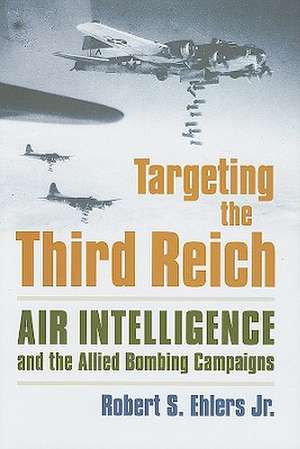
Targeting the Third Reich: Air Intelligence and the Allied Bombing Campaigns: Modern War Studies (Hardcover)
Autor Robert S. Jr. Ehlersen Limba Engleză Hardback – 31 oct 2009
Publicat în prestigioasa serie Modern War Studies (Hardcover) de către University Press of Kansas, volumul semnat de Robert S. Jr. Ehlers aduce o perspectivă proaspătă asupra istoriei celui de-al Doilea Război Mondial. Deși s-au scris numeroase pagini despre cele peste 1,4 milioane de misiuni ale bombardierelor aliate, Targeting the Third Reich se distinge prin faptul că mută atenția de la detaliile pur operaționale către rolul critic, dar adesea neglijat, al serviciilor de informații aeriene. Descoperim aici modul în care succesul campaniilor de bombardament strategic nu a depins doar de forța brută, ci de o simbioză între 'inteligența de precizie' britanică și 'bombardamentul de precizie' american.
Cine a apreciat The Strategic Bombing of Germany, 1940-1945 de Alan Levine va găsi aici aceeași rigoare în tratarea paritară a forțelor britanice și americane, dar cu un accent mult mai pronunțat pe analiza datelor de recunoaștere fotografică și pe evaluarea sistematică a daunelor. În timp ce alte lucrări oferă o privire de ansamblu asupra ofensivei, Ehlers pătrunde în mecanismul decizional al comandanților precum Arthur Harris sau Carl Spaatz, explicând cum aceștia au putut calibra atacurile asupra rafinăriilor și căilor ferate cu o precizie matematică. Autorul demonstrează că succesul împotriva infrastructurii naziste în 1944 a fost, în esență, un triumf al colectării și interpretării corecte a informațiilor din teren, transformând bombardierele în componente letale ale unei forțe de arme combinate.
Din seria Modern War Studies (Hardcover)
-
 Preț: 459.33 lei
 -
 Preț: 476.52 lei
 -
 Preț: 484.15 lei
 -
 Preț: 415.73 lei
 -
 Preț: 482.24 lei
 -
 Preț: 465.97 lei
 -
 Preț: 459.33 lei
 -
 Preț: 450.22 lei
 -
 Preț: 459.48 lei
 - 8%
 Preț: 453.02 lei
 -
 Preț: 495.15 lei
 -
 Preț: 451.63 lei
 -
 Preț: 531.93 lei
 -
 Preț: 457.65 lei
 -
 Preț: 483.60 lei
 -
 Preț: 530.06 lei
 -
 Preț: 434.64 lei
 -
 Preț: 483.76 lei
 -
 Preț: 418.49 lei
 -
 Preț: 417.39 lei
 -
 Preț: 412.96 lei
 -
 Preț: 550.10 lei
 -
 Preț: 559.36 lei
 -
 Preț: 413.90 lei
 -
 Preț: 578.63 lei
 -
 Preț: 415.73 lei
 -
 Preț: 463.20 lei
 -
 Preț: 434.23 lei
 -
 Preț: 529.53 lei
 -
 Preț: 466.89 lei
 -
 Preț: 458.92 lei
 -
 Preț: 452.64 lei
 -
 Preț: 457.45 lei
 -
 Preț: 478.74 lei
 -
 Preț: 236.82 lei
 -
 Preț: 583.57 lei
 -
 Preț: 435.58 lei
 -
 Preț: 465.77 lei
 -
 Preț: 450.16 lei
 -
 Preț: 577.81 lei
 -
 Preț: 476.45 lei
 -
 Preț: 451.75 lei
 -
 Preț: 576.99 lei
 -
 Preț: 494.45 lei
 -
 Preț: 452.55 lei
 -
 Preț: 456.74 lei
 -
 Preț: 478.37 lei
 -
 Preț: 492.61 lei
 -
 Preț: 501.59 lei
 - 23%
 Preț: 565.74 lei
Preț: 464.67 lei
Carte tipărită la comandă
Livrare economică 02-16 decembrie
Specificații
ISBN-10: 0700616829
Pagini: 422
Dimensiuni: 166 x 243 x 36 mm
Greutate: 0.83 kg
Editura: University Press of Kansas
Seria Modern War Studies (Hardcover)
Locul publicării:United States
V-ar putea interesa
-
 No Right to WinRonald W. RussellPreț: 133.81 lei
 -
 Rohna Memories IIMichael T. WalshPreț: 101.60 lei
 -
 The Mexican Armed Forces In TransitionJordi DíezPreț: 94.57 lei
 -
 The Lessons Of HistoryLaurie BurkittPreț: 218.28 lei
 -
 Steadfast HussarsRichard W. Landwehr JrPreț: 93.93 lei
 -
 The Men of the USS Arizona (BB-39)T. J. CooperPreț: 229.06 lei
 -
 King Kong DownAaron ElsonPreț: 55.91 lei
 -
 Reading the Enemy's MailU. S. Command and General Staff CollegePreț: 119.51 lei
 -
 Before I ForgetGeorge E. PhelpsPreț: 67.78 lei
 -
 Pacific CounterblowOffice of Air Force HistoryPreț: 79.53 lei
 -
 The Ragged IrregularsCheryl PulaPreț: 133.08 lei
 -
 A Wing and a PrayerCheryl PulaPreț: 136.06 lei
 -
 Maximum EffortCheryl PulaPreț: 135.04 lei
 -
 The Dogs of WarCheryl PulaPreț: 132.08 lei
 -
 Above and BeyondCheryl PulaPreț: 134.27 lei
 -
 A Fortress and a LegacyJ. Ross GreenePreț: 169.47 lei
 -
 Global Logistics and StrategyRobert W. CoakleyPreț: 295.08 lei
 -
 The Campaigns of MacArthur in the PacificDouglas MacArthurPreț: 273.62 lei
 -
 MacArthur in JapanDouglas MacArthurPreț: 193.12 lei
 -
 Battle of Savo IslandU. S. Army War CollegePreț: 77.53 lei
 -
 A Wing and a PrayerCarol ZuckertPreț: 54.10 lei
 -
 Preț: 161.52 lei
 -
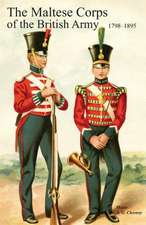 Historical Records of the Maltese Corps of the British ArmyA. G. Major ChesneyPreț: 230.46 lei
 -
 Preț: 353.35 lei
 -
 Preț: 79.56 lei
 -
 Preț: 90.78 lei
 -
 Preț: 154.62 lei
De ce să citești această carte
Recomandăm această carte pasionaților de istorie militară și analiză strategică ce doresc să înțeleagă 'creierul' din spatele operațiunilor aeriene. Cititorul câștigă o perspectivă detaliată asupra modului în care informațiile au dictat țintele și au scurtat durata războiului. Este un studiu esențial despre importanța logisticii și a informațiilor în obținerea victoriei strategice, oferind lecții valabile chiar și pentru conflictele moderne.
Descriere scurtă
Robert Ehlers reexamines these bombings through the lens of both air intelligence and operations, a dual approach that shows how the former was so vital to the latter's success. Air intelligence was essential to both targeting and damage assessment, and by demonstrating its contributions to the Combined Bomber Offensive of 1943-1945, Ehlers provides a wealth of new insight into the war.
Ehlers describes the close ties that developed between the Royal Air Force's "precision intelligence" arm and the U.S. Army Air Force's "precision bombardment" forces, telling how the RAF's photographic reconnaissance and signals intelligence steered both British and American bombers to the right targets at the right intervals with the right munitions. He shows that the greatest strength of this partnership was its ability to orchestrate all aspects of damage assessment within an effective organizational structure, so that by 1944 senior air commanders like the RAF's Arthur "Bomber" Harris and the AAF's Carl "Tooey" Spaatz could gauge the accuracy of bombing with a high degree of precision, analyze its effects on the German war effort, and determine its effectiveness in helping the Allies achieve strategic objectives.
Ehlers focuses on three key offensives in 1944 against French and Belgian rail supply lines delivering German troops and supplies to Normandy, against German oil refineries, and against railroads and waterways inside the Reich that had a disastrous effect on the Nazi war effort. In the process, he underscores the degree to which bombers constituted part of a highly effective combined-arms force, giving Allied armies crucial advantages on the battlefield. Drawing on a huge collection of bomb-damage assessment photographs and a wealth of other archival sources, he shows that the success of these and other efforts can be traced directly to the success of air intelligence.
Providing a deeper and more accurate understanding of the bomber campaigns' role in the Allied victory, Ehlers's study testifies to the strategic importance of these efforts in that war and provides a tool for understanding the importance of intelligence operations in future conflicts."