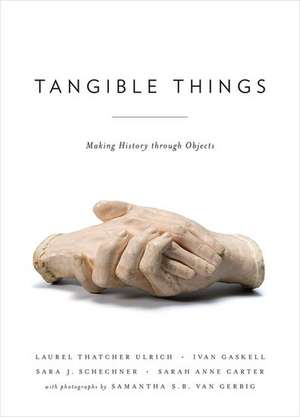
Tangible Things: Making History through Objects
Autor Laurel Thatcher Ulrich, Sarah Anne Carter, Ivan Gaskell, Sara Schechner, Samantha van Gerbigen Limba Engleză Paperback – 2 apr 2015
Descoperim în Tangible Things o pledoarie pentru interdisciplinaritate, unde granițele rigide dintre istorie, antropologie, științe naturale și arte sunt dizolvate prin analiza obiectului material. Notăm cu interes cum autorii, coordonați de Laurel Thatcher Ulrich, utilizează colecțiile vaste ale Universității Harvard pentru a demonstra că un fragment de papirus egiptean sau un joc de societate din secolul XX pot servi drept punți la fel de valide către trecut ca documentele scrise. Volumul deconstruiește categoriile taxonomice din secolul al XIX-lea care separă încă muzeele de artă de cele de știință, propunând o metodologie de cercetare centrată pe obiect. Putem afirma că această lucrare transformă lucrurile ordinare în surse istorice complexe, oferind cititorului instrumentele necesare pentru a reevalua chiar și obiectele din propriile mansarde. Acoperă aceeași arie metodologică ca Writing Material Culture History de Dr Anne Gerritsen, dar cu o abordare mult mai practică și aplicată, bazată pe studii de caz concrete și pe experiența directă a organizării unei expoziții. În contextul operei lui Laurel Thatcher Ulrich, Tangible Things continuă explorarea „muncii tăcute a oamenilor obișnuiți” începută în A Midwife's Tale și rafinează analiza obiectelor domestice utilizată în The Age of Homespun. Dacă lucrările anterioare se concentrau pe narațiuni biografice sau textile, volumul de față extinde spectrul la scara întregii culturi materiale globale, menținând rigoarea academică într-un format accesibil și bogat ilustrat.
Preț: 357.92 lei
Carte disponibilă
Livrare economică 21 august-04 septembrie
Specificații
ISBN-10: 019938228X
Pagini: 280
Ilustrații: 200 illustrations
Dimensiuni: 251 x 178 x 18 mm
Greutate: 0.59 kg
Editura: Oxford University Press
Colecția OUP USA
Locul publicării:New York, United States
V-ar putea interesa
-
 Scouting for Boys: A Handbook for Instruction in Good CitizenshipRobert Baden-PowellPreț: 83.14 lei
 -
 The Making of Victorian SexualityMichael Mason-18%Preț: 323.53 lei394.15 lei
 -
 The Imperial Harem: Women and Sovereignty in the Ottoman EmpireLeslie P. Peirce-27%Preț: 460.95 lei628.72 lei
 -
 Mona Lisa: The People and the PaintingMartin Kemp-20%Preț: 194.01 lei241.71 lei
 -
 Heartthrobs: A History of Women and DesireCarol Dyhouse-20%Preț: 139.97 lei175.20 lei
 -
 -20%Preț: 90.28 lei113.32 lei
 -
 Magic Mineral to Killer Dust: Turner & Newall and the Asbestos HazardGeoffrey Tweedale-20%Preț: 518.05 lei646.06 lei
 -
 The Oxford Illustrated History of ScienceIwan Rhys Morus-22%Preț: 182.56 lei233.73 lei
 -
 A Midwife's TaleLaurel Thatcher Ulrich-20%Preț: 95.63 lei120.25 lei
 -
 -20%Preț: 222.07 lei277.57 lei
 -
 -18%Preț: 104.37 lei127.85 lei
De ce să citești această carte
Recomandăm această carte celor interesați de muzeologie, istorie socială sau antropologie. Cititorul câștigă o nouă perspectivă asupra modului în care lumea materială modelează memoria colectivă. Este o resursă esențială pentru studenți și curatori, oferind un model de colaborare instituțională și o metodă practică de a „citi” istoria dincolo de textele scrise, susținută de expertiza unui premiu Pulitzer.
Despre autor
Laurel Thatcher Ulrich (n. 1938) este o istorică americană de renume, profesor la Universitatea Harvard și laureată a Premiului Pulitzer pentru lucrarea A Midwife's Tale. Cariera sa este marcată de un interes profund pentru istoria femeilor și a vieții cotidiene în America timpurie, fiind celebră pentru abordarea sa care valorifică experiențele private și obiectele casnice ca surse istorice majore. Distinsă cu bursa „MacArthur Genius”, Ulrich a influențat istoriografia modernă prin capacitatea de a extrage narațiuni complexe din fragmente aparent banale ale trecutului, temă centrală și în Tangible Things.