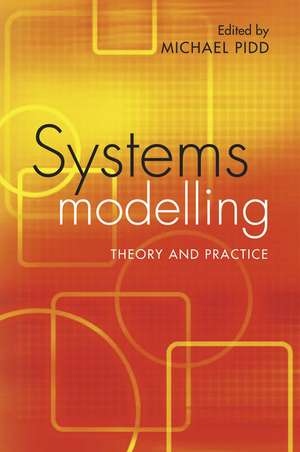
Systems Modelling
Autor Pidd Editat de Michael Pidden Limba Engleză Paperback – 19 mar 2004
Preț: 438.56 lei
Preț vechi: 569.56 lei
-23%
Puncte Express: 658
Carte tipărită la comandă
Livrare economică 11-25 noiembrie
Livrare prin curier în România Termenul estimat este afișat lângă disponibilitate.
Transport gratuit pentru acest produs Plată online sau ramburs, în funcție de opțiunile comenzii.
Retur gratuit în 14 zile Comandă securizată și suport în română.
Specificații
ISBN-13: 9780470867310
ISBN-10: 0470867310
Pagini: 240
Dimensiuni: 152 x 229 x 14 mm
Greutate: 0.4 kg
Ediția:New.
Editura: Wiley
Locul publicării:Chichester, United Kingdom
ISBN-10: 0470867310
Pagini: 240
Dimensiuni: 152 x 229 x 14 mm
Greutate: 0.4 kg
Ediția:New.
Editura: Wiley
Locul publicării:Chichester, United Kingdom
V-ar putea interesa
-
 Management Science in PracticeWilliamsPreț: 462.96 lei
 -
 -23%Preț: 446.69 lei580.11 lei
 -
 Can Do WritingDaniel GrahamPreț: 133.00 lei
 -
 The Portable MBAKenneth M EadesPreț: 246.51 lei
 -
 -23%Preț: 445.44 lei578.50 lei
 -
 The Open-Book Management Field BookJohn P SchusterPreț: 284.03 lei
 -
 Preț: 141.45 lei
 -
 Writing to Make a DifferenceDalya F. MassachiPreț: 250.11 lei
 -
 Preț: 366.91 lei
 -
 Measuring the Performance of Public ServicesMichael Pidd-11%Preț: 549.98 lei617.96 lei
 -
 Richards, C: BTEC Level 3 National Business Student Book 2Catherine RichardsPreț: 278.77 lei
 -
 Preț: 107.16 lei
 -
 Preț: 96.07 lei
 -
 Ferdinand PiëchRita Stiens-15%Preț: 528.42 lei621.67 lei
Public țintă
Final year undergraduates on business and specialist OR courses; MBA students; thinking practitioners.Notă biografică
Mchael Pidd is Professor of Management Science at Lancaster University and a Past President of the Operational Research Society. His research interests focus on the development of usable models in management science and computer simulation and he has published widely in many academic journals and books. His authored books include the highly regarded Tools for Thinking: Modelling in Management Science, now in its second edition, and Computer Simulation in Management Science, now in its fourth edition, (both published by John Wiley & Sons).
Cuprins
List of contributors. Preface.
Acknowledgements.
CHAPTER 1. Complementarity in systems modelling (Michael Pidd).
1.1 Systems modelling.
1.2 Messes and wicked problems.
1.3 Hard and soft approaches.
1.4 What do we mean by complementarity?
References.
CHAPTER 2. Insights from complexity: organisational change and systems modelling (Michael Lyons).
2.1 Introduction.
2.2 Complex adaptive systems and complexity.
2.3 Complexity and management.
2.4 Working with systemic problems.
2.5 The simulation of complexity.
2.6 Conclusion: complementarity intrinsic to complexity?
References.
CHAPTER 3. 'Classic' OR and 'soft' OR - an asymmetric complementarity (Peter Checkland and Sue Holwell).
3.1 Introduction.
3.2 Classic OR methodology.
3.3 Soft systems methodology.
3.4 'Hard' and 'soft' perspectives.
3.5 The relation between 'ha rd' and 'soft' perspectives: an asymmetric complementarity.
3.6 Conclusion.
References.
CHAPTER 4. The effectiveness of high-dependency care (Roth Kowalczyk).
4.1 Introduction.
4.2 The issues.
4.3 Effective high dependency care provision.
4.4 Methods and methodology.
4.5 Analysing the introduction of high dependency care.
4.6 Effects.
4.7 Conclusions.
References.
CHAPTER 5. Complementarity in practice (George Paterson).
5.1 Introduction.
5.2 Organisational setting for or/ms practice.
5.3 Types of assistance available.
5.4 OR/MS in relation to other consulting offerings.
5.5 Models and modelling.
5.6 Examples from the oil and gas industry.
5.7 Complementarity of hard and soft.
References.
CHAPTER 6. The complementary use of hard and soft OR in developing tax policy (Joyce Brown and Ceri Cooper).
6.1 Introduction.
6.2 Background.
6.3 The hard OR in the tax study.
6.4 The soft OR.
6.5 Complementarity.
Acknowledgements.
References.
CHAPTER 7. Mental models and learning in system dynamics practice (John Morecroft).
7.1 Introduction.
7.2 Mental models, transitional objects and formal models.
7.3 Models of business and social systems.
7.4 The BBC world service modelling project.
7.5 The impact on managerial thinking of the world service project.
7.6 Discussion.
References.
CHAPTER 8. Using causal mapping - individual and group, traditional and new (Fran Ackermann and Colin Eden).
8.1 Background to mapping.
8.2 Modes of use.
8.3 Applications of mapping.
8.4 Some considerations in usage for problem 'solving' and strategy development.
8.5 Organizational learning and forensic analysis through mapping.
8.6 Some considerations in usage for organisational learning.
8.7 Summary.
References.
CHAPTER 9. Use of 'soft-or' models by clients - what do they want from them? (Colin Eden and Fran Ackermann).
9.1 Introduction.
9.2 The nature of clients.
9.4 Delivering 'added value': problem structuring in groups - modelling as "structuring", negotiating, and agreeing.
9.5 Flexibility of tools and techniques - having a wide range and being able to use them contingently.
9.6 Visual interactive modelling means workshops which means facilitation.
9.7 Issues of closure.
9.8 Summary.
References.
CHAPTER 10. The status of models in defence systems engineering (Sean Price and Philip John).
10.1 Introduction.
10.2 What is systems engineering?
10.3 The nature of modern systems challenges.
10.4 Traditional problem domain boundaries.
10.5 The uses of models.
10.6 The status of models in systems engineering.
10.7 Conclusions.
References.
CHAPTER 11. Complementarity in ministry of defence or practice (Alan P Robinson, George A Pickburn and Roger A Forder).
11.1 Introduction.
11.2 A high-level study.
11.3 Equipment acquisition studies.
11.4 The falcon communication system.
11.5 Defence logistics: "from factory to foxhole".
11.6 The strategic assessment method.
11.7 OA in the MoD.
11.8 Models, methods and strategy in mod OA.
11.9 Complementarity in MoD OA.
11.10 Final thoughts.
References.
CHAPTER 12. Bringing it all together (Michael Pidd).
12.1 A personal reprise.
12.2 So, what can we learn?
References.
Index.
Acknowledgements.
CHAPTER 1. Complementarity in systems modelling (Michael Pidd).
1.1 Systems modelling.
1.2 Messes and wicked problems.
1.3 Hard and soft approaches.
1.4 What do we mean by complementarity?
References.
CHAPTER 2. Insights from complexity: organisational change and systems modelling (Michael Lyons).
2.1 Introduction.
2.2 Complex adaptive systems and complexity.
2.3 Complexity and management.
2.4 Working with systemic problems.
2.5 The simulation of complexity.
2.6 Conclusion: complementarity intrinsic to complexity?
References.
CHAPTER 3. 'Classic' OR and 'soft' OR - an asymmetric complementarity (Peter Checkland and Sue Holwell).
3.1 Introduction.
3.2 Classic OR methodology.
3.3 Soft systems methodology.
3.4 'Hard' and 'soft' perspectives.
3.5 The relation between 'ha rd' and 'soft' perspectives: an asymmetric complementarity.
3.6 Conclusion.
References.
CHAPTER 4. The effectiveness of high-dependency care (Roth Kowalczyk).
4.1 Introduction.
4.2 The issues.
4.3 Effective high dependency care provision.
4.4 Methods and methodology.
4.5 Analysing the introduction of high dependency care.
4.6 Effects.
4.7 Conclusions.
References.
CHAPTER 5. Complementarity in practice (George Paterson).
5.1 Introduction.
5.2 Organisational setting for or/ms practice.
5.3 Types of assistance available.
5.4 OR/MS in relation to other consulting offerings.
5.5 Models and modelling.
5.6 Examples from the oil and gas industry.
5.7 Complementarity of hard and soft.
References.
CHAPTER 6. The complementary use of hard and soft OR in developing tax policy (Joyce Brown and Ceri Cooper).
6.1 Introduction.
6.2 Background.
6.3 The hard OR in the tax study.
6.4 The soft OR.
6.5 Complementarity.
Acknowledgements.
References.
CHAPTER 7. Mental models and learning in system dynamics practice (John Morecroft).
7.1 Introduction.
7.2 Mental models, transitional objects and formal models.
7.3 Models of business and social systems.
7.4 The BBC world service modelling project.
7.5 The impact on managerial thinking of the world service project.
7.6 Discussion.
References.
CHAPTER 8. Using causal mapping - individual and group, traditional and new (Fran Ackermann and Colin Eden).
8.1 Background to mapping.
8.2 Modes of use.
8.3 Applications of mapping.
8.4 Some considerations in usage for problem 'solving' and strategy development.
8.5 Organizational learning and forensic analysis through mapping.
8.6 Some considerations in usage for organisational learning.
8.7 Summary.
References.
CHAPTER 9. Use of 'soft-or' models by clients - what do they want from them? (Colin Eden and Fran Ackermann).
9.1 Introduction.
9.2 The nature of clients.
9.4 Delivering 'added value': problem structuring in groups - modelling as "structuring", negotiating, and agreeing.
9.5 Flexibility of tools and techniques - having a wide range and being able to use them contingently.
9.6 Visual interactive modelling means workshops which means facilitation.
9.7 Issues of closure.
9.8 Summary.
References.
CHAPTER 10. The status of models in defence systems engineering (Sean Price and Philip John).
10.1 Introduction.
10.2 What is systems engineering?
10.3 The nature of modern systems challenges.
10.4 Traditional problem domain boundaries.
10.5 The uses of models.
10.6 The status of models in systems engineering.
10.7 Conclusions.
References.
CHAPTER 11. Complementarity in ministry of defence or practice (Alan P Robinson, George A Pickburn and Roger A Forder).
11.1 Introduction.
11.2 A high-level study.
11.3 Equipment acquisition studies.
11.4 The falcon communication system.
11.5 Defence logistics: "from factory to foxhole".
11.6 The strategic assessment method.
11.7 OA in the MoD.
11.8 Models, methods and strategy in mod OA.
11.9 Complementarity in MoD OA.
11.10 Final thoughts.
References.
CHAPTER 12. Bringing it all together (Michael Pidd).
12.1 A personal reprise.
12.2 So, what can we learn?
References.
Index.
Descriere
Examines theoretical aspects of the hard vs soft debate in the world of management science. This work considers how the two different schools of thought can be brought together in a fresh approach, integrating elements of both disciplines, and explores practical aspects of this with real world examples.