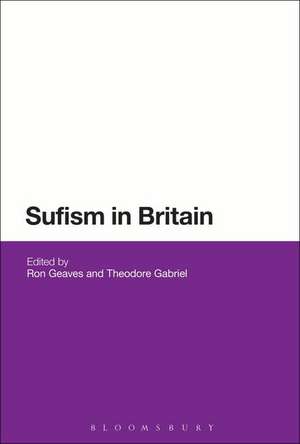
Sufism in Britain
Editat de Professor Ron Geaves, Dr Theodore Gabrielen Limba Engleză Paperback – 21 mai 2015
Through examining the theory and history involved, as well as a series of case studies, Sufism in Britain charts the processes of change and offers a significant contribution to the political and religious re-organisation of the Muslim presence in Britain, and the West.
Preț: 265.75 lei
Preț vechi: 358.73 lei
-26%
Puncte Express: 399
Carte tipărită la comandă
Livrare economică 28 noiembrie-12 decembrie
Livrare prin curier în România Termenul estimat este afișat lângă disponibilitate.
Transport gratuit de la 400.00 lei Plată online sau ramburs, în funcție de opțiunile comenzii.
Retur gratuit în 14 zile Comandă securizată și suport în română.
Specificații
ISBN-13: 9781474237604
ISBN-10: 1474237606
Pagini: 280
Dimensiuni: 156 x 234 x 25 mm
Greutate: 0.4 kg
Editura: Bloomsbury Publishing
Colecția Bloomsbury Academic
Locul publicării:London, United Kingdom
ISBN-10: 1474237606
Pagini: 280
Dimensiuni: 156 x 234 x 25 mm
Greutate: 0.4 kg
Editura: Bloomsbury Publishing
Colecția Bloomsbury Academic
Locul publicării:London, United Kingdom
V-ar putea interesa
-
 The Sufi Book of LifeNeil Douglas-KlotzPreț: 104.18 lei
 -
 The Masnavi, Book OneJalal al-Din Rumi-18%Preț: 53.72 lei65.36 lei
 -
 Key Words in ChristianityProfessor Ron Geaves-19%Preț: 167.08 lei205.94 lei
 -
 Key Words in HinduismProfessor Ron Geaves-11%Preț: 136.89 lei154.30 lei
 -
 Key Words in Religious StudiesProfessor Ron Geaves-12%Preț: 170.86 lei194.22 lei
 -
 Living PresenceKabir Edmund HelminskiPreț: 152.30 lei
 -
 SufismLlewellyn Vaughan-LeePreț: 88.74 lei
 -
 RumiJonathan StarPreț: 59.24 lei
 -
 The Rumi DaybookKabir Edmund Helminski-18%Preț: 118.05 lei144.50 lei
 -
 The Study of Religion: An Introduction to Key Ideas and MethodsGeorge D. Chryssides-22%Preț: 241.96 lei311.98 lei
 -
 Al-Ghazali on Vigilance and Self-examinationAbu Hamid al-GhazaliPreț: 112.07 lei
 -
 The Fragrant Scent'Abd Al-Rahman Al-'AydarusPreț: 106.10 lei
 -
 Root Speaks to Bud: Fulfilling the Purpose of LifeWilliam Hassan Suhrawardi Gebel PhD-12%Preț: 153.46 lei173.53 lei
Cuprins
PART 1: Theory
1. Expressions of Spirituality in Islam: Unity and diversity in Sufi thought and practice
Theodore Gabriel and Ron Geaves
2. Transformation and Trends among British Sufis
Ron Geaves
3. Universal Sufis in the UK: Sufism for Everyone?
Roy Jackson
PART II: History
4. Shaykh Abdullah Ali al-Hakimi, the 'Alawi Tariqa and British-Yemenis
Mohammad S Seddon,
5. Sufism in Britain: The Da'wa of Shaykh 'Abdalqadir as-Sufi
Yasin Dutton
6. The One or the Many? Transnational Sufism and Locality in the British Budshishiyya
Marta Dominguez-Diaz
7. Conversion Narratives among the Alami and Rifa'i Tariqa in Britain
Julianne Hazen
PART III: Case Studies
8. Online Sufism - Young British Muslims, their internet 'selves' and virtual reality
Sariya Cheruvallil-Contractor
9. The Rise of the "Traditional Islam" Network(s): Neo-Sufism and British Muslim Youth
Sadek Hamid
10. What is the Naqshbandi-Haqqani tariqa? Notes on Developments and a Critique of Typologies
Simon Stjernholm
11. Reliving the 'Classical Islam': emergence and working of the Minhajul Quran movement in the UK
Amer Morgahi
12. "Ours is not a caravan of despair":the influence and presence of the Turkish Sunni Nurcu Movement of Hojaeffendi Fethullah Gülen in the UK
Ian G. Williams
Notes
Bibliography
Index
1. Expressions of Spirituality in Islam: Unity and diversity in Sufi thought and practice
Theodore Gabriel and Ron Geaves
2. Transformation and Trends among British Sufis
Ron Geaves
3. Universal Sufis in the UK: Sufism for Everyone?
Roy Jackson
PART II: History
4. Shaykh Abdullah Ali al-Hakimi, the 'Alawi Tariqa and British-Yemenis
Mohammad S Seddon,
5. Sufism in Britain: The Da'wa of Shaykh 'Abdalqadir as-Sufi
Yasin Dutton
6. The One or the Many? Transnational Sufism and Locality in the British Budshishiyya
Marta Dominguez-Diaz
7. Conversion Narratives among the Alami and Rifa'i Tariqa in Britain
Julianne Hazen
PART III: Case Studies
8. Online Sufism - Young British Muslims, their internet 'selves' and virtual reality
Sariya Cheruvallil-Contractor
9. The Rise of the "Traditional Islam" Network(s): Neo-Sufism and British Muslim Youth
Sadek Hamid
10. What is the Naqshbandi-Haqqani tariqa? Notes on Developments and a Critique of Typologies
Simon Stjernholm
11. Reliving the 'Classical Islam': emergence and working of the Minhajul Quran movement in the UK
Amer Morgahi
12. "Ours is not a caravan of despair":the influence and presence of the Turkish Sunni Nurcu Movement of Hojaeffendi Fethullah Gülen in the UK
Ian G. Williams
Notes
Bibliography
Index
Recenzii
In this excellent volume experienced contributors present a nuanced picture of Sufism in England. They describe its engagement with classical culture and with modern Salafi and Wahhabi teachings, emerging as its own unique, contemporary and thoroughly Islamic phenomenon. A special treat for those interested in the adaptation of Islam to modern Western society, the volume offers an opportunity to better understand both the spiritual dimension and the lived circumstances of Sufism in Britain today.
Sufism, which emphasises the universal love of God, has a wide appeal to Muslims and all seekers of the Divine, but is often ignored by the media. This scholarly and important book, which recalls the history of Sufism in Britain and describes its renewed vitality today, will redress the balance and encourage greater appreciation of the spiritual riches of Islam.
This is an invaluable book. The contributors bring their observations, analysis and rigour to the study of Sufism in Britain in a single volume. A reader is comfortably carried from one experience to the next and in the process is able to assess Sufis' changing interpretations and priorities, and the challenges they pose to other strands of thought as well as to normative Sufi self-understanding. The shared knowledge and insight the book offers merits a far reaching audience.
Sufism, which emphasises the universal love of God, has a wide appeal to Muslims and all seekers of the Divine, but is often ignored by the media. This scholarly and important book, which recalls the history of Sufism in Britain and describes its renewed vitality today, will redress the balance and encourage greater appreciation of the spiritual riches of Islam.
This is an invaluable book. The contributors bring their observations, analysis and rigour to the study of Sufism in Britain in a single volume. A reader is comfortably carried from one experience to the next and in the process is able to assess Sufis' changing interpretations and priorities, and the challenges they pose to other strands of thought as well as to normative Sufi self-understanding. The shared knowledge and insight the book offers merits a far reaching audience.