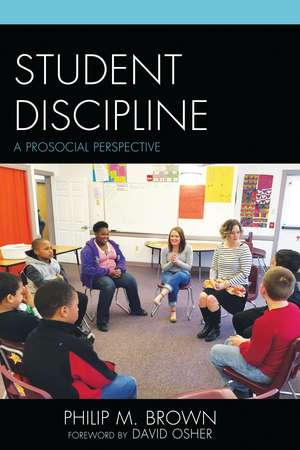
Student Discipline: A Prosocial Perspective
Editat de Philip M. Brownen Limba Engleză Paperback – 3 feb 2016
From PBIS and restorative justice to mindfulness and the importance of play, from academic integrity to peer group support, we examine the science and evidence-informed programs that support a prosocial approach to school discipline. Eight schools from across the country that have struggled and learned to be beacons of prosocial school approaches are highlighted through summaries and links to their stories. Proactive responses to the U.S. Department of Education's Guiding Principles on School Discipline are provided by education law experts from the National School Climate Center and the New Jersey Principal's and Supervisor's Association.
Preț: 254.91 lei
Preț vechi: 333.83 lei
-24%
Puncte Express: 382
Carte tipărită la comandă
Livrare economică 07-21 decembrie
Livrare prin curier în România Termenul estimat este afișat lângă disponibilitate.
Transport gratuit de la 400.00 lei Plată online sau ramburs, în funcție de opțiunile comenzii.
Retur gratuit în 14 zile Comandă securizată și suport în română.
Specificații
ISBN-13: 9781475813982
ISBN-10: 1475813988
Pagini: 172
Dimensiuni: 154 x 229 x 13 mm
Greutate: 0.27 kg
Editura: Bloomsbury Publishing
Colecția Rowman & Littlefield
Locul publicării:New York, United States
ISBN-10: 1475813988
Pagini: 172
Dimensiuni: 154 x 229 x 13 mm
Greutate: 0.27 kg
Editura: Bloomsbury Publishing
Colecția Rowman & Littlefield
Locul publicării:New York, United States
Cuprins
Foreword
Preface
Acknowledgments
Introduction
Chapter 1: School Discipline: A Prosocial Perspective
Philip M. Brown
Chapter 2: Developing and Revising a Code of Student Conduct to Support Your School Mission and Improve Your School Climate
Philip M. Brown
Chapter 3: Systemic Approaches
The Achieving with Integrity Project: Positive Approaches to Dealing with Academic Dishonesty
Jason M. Stephens and David B. Wangaard
Restorative Justice and Restorative Practices
Philip M. Brown with John Bailie
The Virginia Student Threat Assessment Program
Philip M. Brown
Positive Behavior Interventions and Supports: A Multi-Tiered Behavior Intervention Framework
Sharon Lohrmann
Chapter 4: Curriculum and Instructional Approaches
The Second Step Program
Philip M. Brown with Second Step Staff
The Learning to Breathe Program
Patricia Broderick
Chapter 5: Programmatic Approaches
The Caring School Community Program
Peter Brunn
The Playworks Program
Jill Vialet
The Responsive Classroom® Program
Mary Beth Forton
The Ripple Effects Program
Alice Ray
Chapter 6: Targeted Approaches
The Peer Group Connection Program
Sherry Barr
Alternative Education Programs
Robert Eichorn
Chapter 7: School Profiles: Different Approaches to Establishing Prosocial Discipline
Philip M. Brown with Eight School Leaders
Chapter 8:The U.S. Department of Education's Guiding Principles on School Discipline
Jessica Savage
The Impact of the U.S. Department of Education Discipline Guidelines:
Understanding, Liability, and Responsible Action
David Nash
References
Preface
Acknowledgments
Introduction
Chapter 1: School Discipline: A Prosocial Perspective
Philip M. Brown
Chapter 2: Developing and Revising a Code of Student Conduct to Support Your School Mission and Improve Your School Climate
Philip M. Brown
Chapter 3: Systemic Approaches
The Achieving with Integrity Project: Positive Approaches to Dealing with Academic Dishonesty
Jason M. Stephens and David B. Wangaard
Restorative Justice and Restorative Practices
Philip M. Brown with John Bailie
The Virginia Student Threat Assessment Program
Philip M. Brown
Positive Behavior Interventions and Supports: A Multi-Tiered Behavior Intervention Framework
Sharon Lohrmann
Chapter 4: Curriculum and Instructional Approaches
The Second Step Program
Philip M. Brown with Second Step Staff
The Learning to Breathe Program
Patricia Broderick
Chapter 5: Programmatic Approaches
The Caring School Community Program
Peter Brunn
The Playworks Program
Jill Vialet
The Responsive Classroom® Program
Mary Beth Forton
The Ripple Effects Program
Alice Ray
Chapter 6: Targeted Approaches
The Peer Group Connection Program
Sherry Barr
Alternative Education Programs
Robert Eichorn
Chapter 7: School Profiles: Different Approaches to Establishing Prosocial Discipline
Philip M. Brown with Eight School Leaders
Chapter 8:The U.S. Department of Education's Guiding Principles on School Discipline
Jessica Savage
The Impact of the U.S. Department of Education Discipline Guidelines:
Understanding, Liability, and Responsible Action
David Nash
References
Recenzii
Disciplinary practices support learning or tragically undermine children's healthy development and success. Today, too much of disciplinary policy and practice is punitive, unhelpful and 'feeds' the high school to prison pipeline. Student Discipline: A Prosocial Perspective is a terribly important book for practice and policy leaders who are invested in making schools a place that support life as well as school success. I highly recommend this book to you.
Phil Brown and his colleagues provide needed inspiration and guidance for schools that wish to move away from a focus on control and obedience to student-centered concerns like belonging and autonomy. The set of readings lights the path towards creating school cultures that emphasize prosocial development instead of punishment, active citizenship instead of self-protective concern. It's a sure bet for educators!
A prosocial education approach to discipline returns all educators to the central question of how to guide students toward exemplary behavior. No longer can codes of conduct simply define infractions and penalties. Phil Brown has gathered diverse approaches toward the goal of showing how we can and must aspire to character-building outcomes of our discipline policies and practices, steeped in equity and respect for human dignity.
Phil Brown's new book Student Discipline: A Prosocial Perspective is an excellent resource for educators concerned about discipline and classroom management. Dr. Brown articulates that discipline needs to be looked at as a life-long developmental process and not just a system of rules and punishment. Certainly conventional wisdom has led to failed policies such as zero tolerance with disproportionate consequences, particularly on students of color. His book offers a comprehensive look at a variety of successful programs and the latest research from neurobiology. The book includes eight school profiles with different approaches to prosocial discipline. The educator looking to learn what works best will find much to compare, discuss and digest here.
Phil Brown and his colleagues provide needed inspiration and guidance for schools that wish to move away from a focus on control and obedience to student-centered concerns like belonging and autonomy. The set of readings lights the path towards creating school cultures that emphasize prosocial development instead of punishment, active citizenship instead of self-protective concern. It's a sure bet for educators!
A prosocial education approach to discipline returns all educators to the central question of how to guide students toward exemplary behavior. No longer can codes of conduct simply define infractions and penalties. Phil Brown has gathered diverse approaches toward the goal of showing how we can and must aspire to character-building outcomes of our discipline policies and practices, steeped in equity and respect for human dignity.
Phil Brown's new book Student Discipline: A Prosocial Perspective is an excellent resource for educators concerned about discipline and classroom management. Dr. Brown articulates that discipline needs to be looked at as a life-long developmental process and not just a system of rules and punishment. Certainly conventional wisdom has led to failed policies such as zero tolerance with disproportionate consequences, particularly on students of color. His book offers a comprehensive look at a variety of successful programs and the latest research from neurobiology. The book includes eight school profiles with different approaches to prosocial discipline. The educator looking to learn what works best will find much to compare, discuss and digest here.