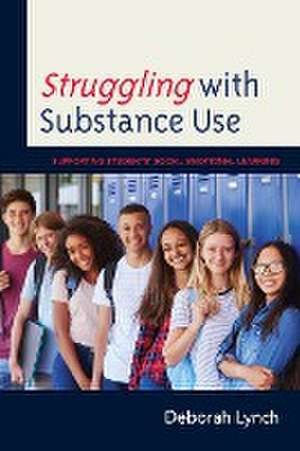
Struggling with Substance Use: Supporting Students’ Social Emotional Learning
Autor Deborah Lynchen Limba Engleză Paperback – 14 noi 2022
Preț: 140.84 lei
Puncte Express: 211
Carte disponibilă
Livrare economică 16-30 noiembrie
Livrare express 31 octombrie-06 noiembrie pentru 26.38 lei
Livrare prin curier în România Termenul estimat este afișat lângă disponibilitate.
Transport gratuit de la 400.00 lei Plată online sau ramburs, în funcție de opțiunile comenzii.
Retur gratuit în 14 zile Comandă securizată și suport în română.
Specificații
ISBN-13: 9781475866100
ISBN-10: 1475866100
Pagini: 232
Ilustrații: 20 b/w illustrations;2 tables
Dimensiuni: 150 x 228 x 13 mm
Greutate: 0.35 kg
Editura: Bloomsbury Publishing
Colecția Rowman & Littlefield
Locul publicării:New York, United States
ISBN-10: 1475866100
Pagini: 232
Ilustrații: 20 b/w illustrations;2 tables
Dimensiuni: 150 x 228 x 13 mm
Greutate: 0.35 kg
Editura: Bloomsbury Publishing
Colecția Rowman & Littlefield
Locul publicării:New York, United States
Cuprins
Preface
Introduction
Chapter 1. Understanding Adolescent Substance Use
Chapter 2. Understanding Co-Occurring Disorders: Trauma and Adolescent Substance Use
Chapter 3. Understanding Co-Occurring Disorders: ADHD and Adolescent Substance Use
Chapter 4. Understanding Co-Occurring Disorders: Conduct Disorders and Adolescent Substance Use
Chapter 5. Understanding Co-Occurring Disorders: Depression/Anxiety and Adolescent Substance Use
Chapter 6. Understanding the Role of the Family and Adolescent Substance Use
Chapter 7. Understanding the Role of Peers and Adolescent Substance Use
Chapter 8. Understanding the Role of the School in Addressing Student Substance Use
Chapter 9. Understanding the Role of the Community in Addressing Adolescent Substance Use
Chapter 10. Making a Difference: Connection, Engagement, Resilience, and Hope
Appendix A: Selected Reviews of Evidence-based Programs
Appendix B: NIDA Principles of Adolescent Substance Use Disorder Treatment
About the Author
Introduction
Chapter 1. Understanding Adolescent Substance Use
Chapter 2. Understanding Co-Occurring Disorders: Trauma and Adolescent Substance Use
Chapter 3. Understanding Co-Occurring Disorders: ADHD and Adolescent Substance Use
Chapter 4. Understanding Co-Occurring Disorders: Conduct Disorders and Adolescent Substance Use
Chapter 5. Understanding Co-Occurring Disorders: Depression/Anxiety and Adolescent Substance Use
Chapter 6. Understanding the Role of the Family and Adolescent Substance Use
Chapter 7. Understanding the Role of Peers and Adolescent Substance Use
Chapter 8. Understanding the Role of the School in Addressing Student Substance Use
Chapter 9. Understanding the Role of the Community in Addressing Adolescent Substance Use
Chapter 10. Making a Difference: Connection, Engagement, Resilience, and Hope
Appendix A: Selected Reviews of Evidence-based Programs
Appendix B: NIDA Principles of Adolescent Substance Use Disorder Treatment
About the Author
Recenzii
After my years in the field working with dual-diagnosis, I can honestly say that a book written by an educator with knowledge in substance use disorders is the perfect supplemental resource for all educators. Research shows us the importance of understanding the impact of substance use and mental health from an early age, and allowing our educators to increase their awareness and understanding will provide the additional support our children truly need.
Deborah Lynch clearly has not only an excellent grasp of the research but a passionate desire to offer help, support, knowledge, and training to others. Though it's presented through the lens of school, Struggling with Substance Use: Supporting Students' Social Emotional Learning is a useful book for social workers, clergy, community workers, and others who are impacted by addiction.
Every day in substance abuse treatment we see living examples of the trauma and co-occurring disorders that Struggling with Substance Use: Supporting Students' Social Emotional Learning alerts readers to. Educators, social workers, and policy makers will change the futures of the most vulnerable by reading and responding to this exceptional well-researched book.
This book reminds educatorsthat no matter how well versed we think we are in the matters of educating students, there is still so much more to learn. Lynch's analysis of the research suggests that the prevalence of school aged youth using substances is more pervasive than one would imagine. These facts reveal how important it is for educators to become more cognizant of the presence of substances, risk factors, and evidenced-based prevention strategies. For teachers seeking to become better informed, Struggling with Substance Use will strengthen and improve their ability to support students. It is paramount that all who are involved in supporting those struggling with substance use have this information. As a matter of fact, it should become required reading.
Deborah Lynch clearly has not only an excellent grasp of the research but a passionate desire to offer help, support, knowledge, and training to others. Though it's presented through the lens of school, Struggling with Substance Use: Supporting Students' Social Emotional Learning is a useful book for social workers, clergy, community workers, and others who are impacted by addiction.
Every day in substance abuse treatment we see living examples of the trauma and co-occurring disorders that Struggling with Substance Use: Supporting Students' Social Emotional Learning alerts readers to. Educators, social workers, and policy makers will change the futures of the most vulnerable by reading and responding to this exceptional well-researched book.
This book reminds educatorsthat no matter how well versed we think we are in the matters of educating students, there is still so much more to learn. Lynch's analysis of the research suggests that the prevalence of school aged youth using substances is more pervasive than one would imagine. These facts reveal how important it is for educators to become more cognizant of the presence of substances, risk factors, and evidenced-based prevention strategies. For teachers seeking to become better informed, Struggling with Substance Use will strengthen and improve their ability to support students. It is paramount that all who are involved in supporting those struggling with substance use have this information. As a matter of fact, it should become required reading.