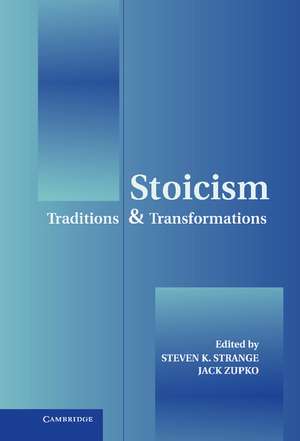
Stoicism
Editat de Steven K. Strange, Jack Zupkoen Limba Engleză Hardback – 25 iul 2014
Preț: 701.14 lei
Preț vechi: 815.28 lei
-14%
Puncte Express: 1052
Carte tipărită la comandă
Livrare economică 24 noiembrie-08 decembrie
Livrare prin curier în România Termenul estimat este afișat lângă disponibilitate.
Transport gratuit pentru acest produs Plată online sau ramburs, în funcție de opțiunile comenzii.
Retur gratuit în 14 zile Comandă securizată și suport în română.
Specificații
ISBN-13: 9780521827096
ISBN-10: 0521827094
Pagini: 310
Dimensiuni: 157 x 235 x 23 mm
Greutate: 0.66 kg
Ediția:New.
Editura: Cambridge University Press
Locul publicării:New York, United States
ISBN-10: 0521827094
Pagini: 310
Dimensiuni: 157 x 235 x 23 mm
Greutate: 0.66 kg
Ediția:New.
Editura: Cambridge University Press
Locul publicării:New York, United States
V-ar putea interesa
-
 -29%Preț: 402.95 lei564.60 lei
 -
 -31%Preț: 530.89 lei769.91 lei
 -
 -21%Preț: 518.39 lei659.74 lei
 -
 Plato on Pleasure and the Good LifeDaniel Russell-19%Preț: 324.24 lei399.80 lei
 -
 Aristotle on TeleologyMonte Ransome Johnson-21%Preț: 395.89 lei500.79 lei
 -
 Topics in Stoic PhilosophyKaterina Ierodiakonou-28%Preț: 358.64 lei500.62 lei
 -
 Order in Multiplicity: Homonymy in the Philosophy of AristotleChristopher Shields-28%Preț: 425.69 lei594.22 lei
 -
 -13%Preț: 269.99 lei309.51 lei
 -
 Ancient Philosophical PoeticsMalcolm HeathPreț: 185.16 lei
 -
 Archytas of TarentumHuffman CarlPreț: 399.62 lei
 -
 The Origins of European ThoughtRichard Broxton OniansPreț: 355.67 lei
 -
 Preț: 319.52 lei
 -
 The Cambridge Companion to EpicureanismJames WarrenPreț: 269.40 lei
 -
 The Cambridge Companion to Ancient ScepticismRichard BettPreț: 246.32 lei
 -
 The Development of Dialectic from Plato to AristotleJakob Leth Fink-14%Preț: 807.90 lei939.42 lei
 -
 Plato's Cosmology and Its Ethical DimensionsGabriela Roxana CaronePreț: 317.90 lei
 -
 Plato's UniverseGregory VlastosPreț: 211.27 lei
 -
 Preț: 204.88 lei
Cuprins
Introduction Steven K. Strange and Jack Zupko; 1. The Socratic imprint of Epictetus' philosophy A. A. Long; 2. The Stoics on the voluntariness of the passions Steven K. Strange; 3. Stoicism and the Apostle Paul: a philosophical reading Troels Engberg-Pedersen; 4. Moral judgment in Seneca Brad Inwood; 5. Stoic first movements in Christianity Richard Sorabji; 6. Where were the Stoics in the Middle Ages? Sten Ebbesen; 7. Abelard's Stoicism and its consequences Calvin Normore; 8. Constance and coherence Jacqueline Lagrée; 9. On the happy life: Descartes vis-à-vis Seneca Donald Rutherford; 10. Psychotherapy and moral perfection: Spinoza and the Stoics on the prospect of happiness Firmin DeBrabander; 11. Duties of justice, duties of material aid: Cicero's problematic legacy Martha Nussbaum; 12. Stoic emotion Lawrence Becker.
Recenzii
"...twelve excellent essays...All papers are of high quality. The collection as a whole...may be very well used as a starting-point by readers who wish to enter the field."
-Joachim Lukoschus, Nijmegen, Netherlands, The Classical Bulletin
-Joachim Lukoschus, Nijmegen, Netherlands, The Classical Bulletin
Descriere
This volume, first published in 2004, asks how did Stoicism influence Western thought after Greek and Roman antiquity?