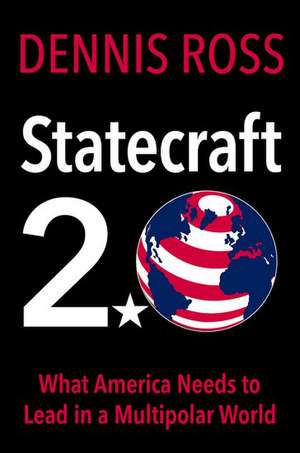
Statecraft 2.0: What America Needs to Lead in a Multipolar World
Autor Dennis Rossen Limba Engleză Paperback – 13 mai 2025
Notăm cu interes apariția celei de-a doua ediții a lucrării Statecraft 2.0, un volum esențial pentru studenții la științe politice, cercetătorii în relații internaționale și practicienii din diplomație care doresc să înțeleagă noua paradigmă a puterii globale. Într-o eră în care hegemonia americană post-1991 este contestată activ de ascensiunea Chinei și de revizionismul Rusiei, Dennis Ross argumentează că Statele Unite nu își mai pot permite erori strategice. Premisa centrală a cărții este necesitatea imperioasă de a armoniza obiectivele politice cu mijloacele disponibile — fie ele diplomatice, economice, cibernetice sau militare. Descoperim aici o analiză riguroasă a eșecurilor din Afganistan și Irak, pe care autorul le folosește ca avertisment împotriva obiectivelor slab definite. Remarcăm structura pragmatică a volumului, care distilează lecții din succese istorice, precum unificarea Germaniei, și le aplică provocărilor contemporane: schimbările climatice, pandemiile și securitatea cibernetică. Această lucrare extinde cadrul propus de First Among Equals de Emma Ashford cu date noi din realitatea geopolitică a ultimilor ani, oferind o perspectivă mai aplicată asupra instrumentelor de stat. Față de abordarea teoretică din Force and Statecraft, Ross mizează pe o experiență de teren vastă, oferind un ghid de supraviețuire strategică într-o lume unde „excepționalismul american” nu mai este suficient pentru a menține ordinea internațională.
Preț: 125.60 lei
Preț vechi: 152.91 lei
-18%
Carte disponibilă
Livrare economică 13-24 noiembrie
Livrare express 31 octombrie-06 noiembrie pentru 64.04 lei
Specificații
ISBN-10: 0197698921
Pagini: 496
Dimensiuni: 155 x 231 x 38 mm
Greutate: 0.61 kg
Ediția:2nd edition
Editura: Oxford University Press
Colecția OUP USA
Locul publicării:New York, United States
De ce să citești această carte
Această ediție a Statecraft 2.0 este o lectură fundamentală pentru oricine dorește să înțeleagă mecanismele puterii în secolul XXI. Cititorul câștigă acces la expertiza unui diplomat de carieră care a modelat politica externă a SUA timp de decenii. Este un manual de strategie care explică de ce unele intervenții eșuează lamentabil în timp ce altele reușesc, oferind soluții concrete pentru gestionarea relațiilor cu marii rivali globali.
Despre autor
Dennis Ross este un diplomat american de renume, recunoscut pentru rolul său cheie ca emisar pentru Orientul Mijlociu în administrațiile George H. W. Bush și Bill Clinton. În prezent membru al Washington Institute for Near East Policy, Ross este autorul unor lucrări de referință precum The Missing Peace și Doomed to Succeed, aceasta din urmă fiind premiată cu National Jewish Book Award. Expertiza sa se concentrează pe medierea conflictelor și pe analiza relațiilor dintre SUA și Israel, teme pe care le explorează și în volumul Be Strong and of Good Courage.