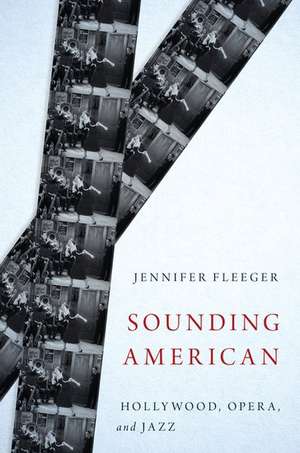
Sounding American: Hollywood, Opera, and Jazz
Autor Jennifer Fleegeren Limba Engleză Paperback – 29 mai 2014
Preț: 286.15 lei
Preț vechi: 362.42 lei
-21%
Puncte Express: 429
Carte tipărită la comandă
Livrare economică 19-25 noiembrie
Livrare prin curier în România Termenul estimat este afișat lângă disponibilitate.
Transport gratuit de la 400.00 lei Plată online sau ramburs, în funcție de opțiunile comenzii.
Retur gratuit în 14 zile Comandă securizată și suport în română.
Specificații
ISBN-13: 9780199366491
ISBN-10: 0199366497
Pagini: 240
Ilustrații: 14 halftones
Dimensiuni: 155 x 231 x 18 mm
Greutate: 0.32 kg
Editura: Oxford University Press
Colecția OUP USA
Locul publicării:New York, United States
ISBN-10: 0199366497
Pagini: 240
Ilustrații: 14 halftones
Dimensiuni: 155 x 231 x 18 mm
Greutate: 0.32 kg
Editura: Oxford University Press
Colecția OUP USA
Locul publicării:New York, United States
V-ar putea interesa
-
 A Dictionary of Opera CharactersJoyce Bourne-12%Preț: 90.69 lei102.65 lei
 -
 The Castrato and His WifeHelen BerryPreț: 178.02 lei
 -
 Funeral Games in Honor of Arthur Vincent LouriéKlára Móricz-31%Preț: 662.60 lei961.08 lei
 -
 Halfway HomeRonan TynanPreț: 109.55 lei
 -
 Preț: 76.26 lei
 -
 George Tsypin Opera Factory: Invisible CityGeorge TsypinPreț: 276.71 lei
 -
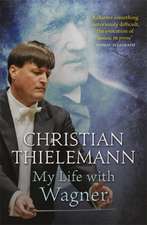 My Life with WagnerChristian Thielemann-26%Preț: 91.39 lei123.20 lei
 -
 The Knowledge: OperaDennis MarksPreț: 71.55 lei
Recenzii
An intellectually robust work, Sounding American not only makes an important contribution to histories of film music, but also revises in significant ways our accepted definition of the classical Hollywood score. Best of all, it makes way for additional questions about the many forms and functions of music heard by moviegoers during a privileged period of technological change.
Jennifer Fleeger has produced nothing less than a thorough re-theorization of the early history of music for films. She is now the peer of the most revered scholars in the field of film music studies.
Essential scholarship not only explaining the coming of sound to Hollywood cinema, but also a major contribution to the role music plays in the Classic text. Brilliantly brings together technological history and musical analysis.
Jennifer Fleeger has produced nothing less than a thorough re-theorization of the early history of music for films. She is now the peer of the most revered scholars in the field of film music studies.
Essential scholarship not only explaining the coming of sound to Hollywood cinema, but also a major contribution to the role music plays in the Classic text. Brilliantly brings together technological history and musical analysis.
Notă biografică
Jennifer Fleeger is an Assistant Professor in the Department of Media and Communication Studies at Ursinus College. Her second book, Mismatched Women: The Voice Meets the Machine, will also appear in Oxford's Music/Media Series.