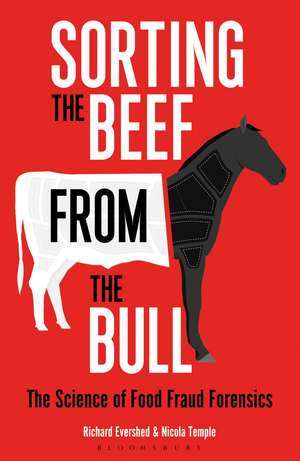
Sorting the Beef from the Bull: The Science of Food Fraud Forensics
Autor Richard Evershed, Nicola Templeen Limba Engleză Paperback – 8 mar 2017
Considerăm că Sorting the Beef from the Bull reprezintă o incursiune fascinantă la intersecția dintre chimia analitică, biologia moleculară și etica lanțurilor de aprovizionare globale. Autorii Richard Evershed și Nicola Temple nu se limitează la o simplă expunere a scandalurilor alimentare, ci demonstrează modul în care metodele științifice avansate devin singura barieră în fața unei industrii a fraudei tot mai inventive. Analiza lor pornește de la premisa că distanțarea noastră de sursele de hrană a creat breșe pe care profitul necinstit le exploatează prin substituții periculoase, de la melamină în laptele pentru sugari până la ingrediente neașteptate ascunse în condimente.
Găsim în această carte o structură riguroasă, organizată pe categorii de produse, care facilitează înțelegerea vulnerabilităților specifice fiecărui sector. Primele capitole, „A creaminal record” și „What's your beef?”, stabilesc fundalul tehnic pentru analiza lactatelor și a cărnii, în timp ce secțiunile dedicate „amprentării” peștelui și viitorului criminalisticii fructelor indică o progresie către tehnologii de monitorizare în timp real. Această abordare extinde cadrul propus de Horse Who Came to Dinner de Glenn Taylor cu date noi din peisajul post-2013, oferind o perspectivă mai largă asupra modului în care standardele europene de testare s-au adaptat după criza cărnii de cal.
Suntem de părere că volumul reușește să explice concepte complexe de criminalistică alimentară fără a sacrifica ritmul narativ. Tonul este unul de alertă documentată, evidențiind faptul că, pe măsură ce metodele de detecție devin mai fine, și falsificatorii își rafinează tehnicile. Ilustrațiile alb-negru punctează momentele cheie ale procesului de investigație, transformând lectura într-un ghid esențial pentru înțelegerea integrității a ceea ce punem în farfurie.
Preț: 58.90 lei
Preț vechi: 68.72 lei
-14%
Carte disponibilă
Livrare economică 05-19 noiembrie
Specificații
ISBN-10: 1472911350
Pagini: 320
Ilustrații: Black and white images throughout
Dimensiuni: 129 x 198 x 24 mm
Greutate: 0.22 kg
Editura: Bloomsbury Publishing
Colecția Bloomsbury Sigma
Locul publicării:London, United Kingdom
V-ar putea interesa
-
 The Science of Cooking: Every Question Answered to Perfect your CookingDr. Stuart Farrimond-19%Preț: 164.19 lei203.22 leiRecomandat
 -
 Adventures in FermentationJohnny DrainPreț: 166.52 lei
 -
 -21%Preț: 157.42 lei198.93 lei
 -
 -24%Preț: 270.01 lei355.53 lei
 -
 Food UnwrappedDaniel Tapper-19%Preț: 86.07 lei106.25 lei
 -
 -27%Preț: 67.53 lei92.14 lei
 -
 Food and CrimeChris GarciaPreț: 200.47 lei
 -
 100 Things to Know About FoodAlice JamesPreț: 76.05 lei
 -
 Modern Gastronomy: A to ZFerran Adrià-9%Preț: 666.16 lei732.03 lei
 -
 Preț: 155.31 lei
 -
 -27%Preț: 86.81 lei118.43 lei
 -
 -27%Preț: 533.41 lei726.41 lei
 -
 The FraudPaul HoldenPreț: 154.82 lei
 -
 Horse Who Came to DinnerGlenn TaylorPreț: 212.40 lei
 -
 Serving UpZoe AdjonyohPreț: 92.43 lei
 -
 -19%Preț: 111.02 lei136.91 lei
 -
 Art FraudSusie Hodge-17%Preț: 121.80 lei147.08 lei
 -
 Fakes, Scams & ForgeriesBrian Innes-14%Preț: 129.12 lei150.78 lei
 -
 Forensic EnforcementGlenn Taylor-5%Preț: 217.09 lei228.52 lei
 -
 Preț: 97.03 lei
De ce să citești această carte
Recomandăm această carte oricărui cititor preocupat de siguranța alimentară și de culisele industriei de retail. Veți câștiga o înțelegere clară a modului în care știința demască produsele contrafăcute și veți învăța să recunoașteți punctele critice ale sistemului nostru de aprovizionare. Este un instrument indispensabil pentru a deveni un consumator informat, capabil să navigheze într-o piață unde eticheta nu spune întotdeauna întregul adevăr.
Caracteristici
Notă biografică
Descriere scurtă
Cuprins
Recenzii
The truth, as this eye-opening book shows, is that food crime is a global problem.
This is a thoroughly practical book. It's not all about science and global supply chains, it's also engagingly down to earth.
Evershed and Temple's book does more than detail the food industry's lengthy crime sheet. It also explores how the fraud is committed, how it can be overcome and, sadly, how the fraudsters are staying ahead.
Fascinating and eye-opening, Sorting the Beef from the Bull is full of examples of how unsuspecting consumers around the world are being fooled by fraudsters. Everyone who cares about the quality of food should read this informative, enthralling book.
Nicola and Richard have opened up the complex world of food fraud into a comprehensive and well-researched journey through the food groups, alerting us to the scurrilous scams of pirates and profiteers. The technical complexity in identifying tricks of the trade are tantalisingly described within the context of stories, which bring fascination and relevance to the most ignored and pervasive mysteries of our daily lives.