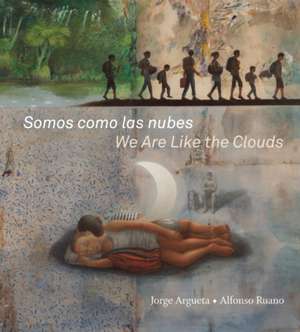
Somos Como Las Nubes / We Are Like the Clouds
Autor Jorge Argueta Ilustrat de Alfonso Ruano Traducere de Elisa Amadoen Limba Engleză Hardback – 11 oct 2016 – vârsta până la 12 ani
În paginile volumului Somos como las nubes / We Are Like the Clouds, copiii se vor întâlni cu micii protagoniști care, deși aflați în situații limită, privesc lumea cu aceeași puritate și speranță ca orice alt tânăr cititor. Subliniem modul în care Jorge Argueta reușește să transforme o realitate politică dură într-o experiență profund umană, accesibilă copiilor începând cu vârsta de 7-8 ani. Personajele sale nu sunt doar cifre într-o statistică a migrației, ci voci care vorbesc despre bunici, despre teama de violență și despre visul unui loc unde pot dormi liniștiți. Notăm cu interes structura poetică a cărții, unde versurile bilingve (engleză-spaniolă) oferă un ritm blând unei călătorii altfel anevoioase. Ca și Two White Rabbits, această lucrare reușește să educe și să emoționeze fără a deveni didactică, folosind metafore vizuale pentru a explica de ce mii de copii aleg să meargă pe jos mii de kilometri. Ilustrațiile magistrale ale lui Alfonso Ruano adaugă o dimensiune de realism magic, transformând norii în simboluri ale libertății și mișcării continue. Această operă se înscrie natural în parcursul literar al lui Argueta, completând temele explorate în A Movie in My Pillow / Una Película En Mi Almohada sau Xochitl and the Flowers / Xóchitl, La Niña de Las Flores. Dacă în lucrările anterioare accentul cădea pe adaptarea la o nouă cultură sau pe nostalgia grădinilor părăsite, aici autorul se întoarce la momentul critic al plecării, oferind o perspectivă necesară asupra crizei refugiaților, explicată pe înțelesul celor mici.
Preț: 115.03 lei
Carte disponibilă
Livrare economică 16-30 noiembrie
Specificații
ISBN-10: 1554988497
Pagini: 36
Ilustrații: Color illustrations throughout
Dimensiuni: 217 x 238 x 15 mm
Greutate: 0.35 kg
Editura: GROUNDWOOD BOOKS
V-ar putea interesa
-
 Very Last First TimeJan AndrewsPreț: 111.89 lei
 -
 Chin Chiang and the Dragon's DanceIan WallacePreț: 68.88 lei
 -
 The CompositionAntonio SkármetaPreț: 49.99 lei
 -
 Agua, Aguita / Water, Little WaterJorge ArguetaPreț: 111.43 lei
 -
 Wann sehen wir uns wieder?Rose LagercrantzPreț: 111.17 lei
De ce să citești această carte
Recomandăm această carte părinților care doresc să cultive empatia și toleranța. Este un instrument prețios pentru a discuta despre teme complexe precum migrația și drepturile omului într-un mod delicat. Cititorul câștigă o perspectivă profundă asupra rezilienței umane, totul prin intermediul unei poezii vibrante și al unor ilustrații de o frumusețe rară care fac subiectul mai ușor de asimilat emoțional.
Despre autor
Jorge Argueta este un poet și scriitor premiat, originar din El Salvador, numit Poet Laureat al orașului San Francisco, locul care i-a devenit casă. Având experiența personală a exilului în urma războiului civil din anii '80, Argueta și-a dedicat o mare parte din carieră documentării experienței imigranților prin literatură pentru copii. Stilul său se remarcă prin utilizarea formelor poetice bilingve, reușind să păstreze vie legătura culturală cu țara natală în timp ce construiește punți de înțelegere în noua sa comunitate.
Descriere scurtă
Why are young people leaving their country to walk to the United States to seek a new, safe home? Over 100,000 such children have left Central America. This book of poetry helps us to understand why and what it is like to be them.
This powerful book by award-winning Salvadoran poet Jorge Argueta describes the terrible process that leads young people to undertake the extreme hardships and risks involved in the journey to what they hope will be a new life of safety and opportunity. A refugee from El Salvador's war in the eighties, Argueta was born to explain the tragic choice confronting young Central Americans today who are saying goodbye to everything they know because they fear for their lives. This book brings home their situation and will help young people who are living in safety to understand those who are not.
Compelling, timely and eloquent, this book is beautifully illustrated by master artist Alfonso Ruano who also illustrated The Composition, considered one of the 100 Greatest Books for Kids by Scholastic's Parent and Child Magazine.
Correlates to the Common Core State Standards in English Language Arts:
CCSS.ELA-LITERACY.RL.2.1
Ask and answer such questions as who, what, where, when, why, and how to demonstrate understanding of key details in a text.
CCSS.ELA-LITERACY.RL.2.4
Describe how words and phrases (e.g., regular beats, alliteration, rhymes, repeated lines) supply rhythm and meaning in a story, poem, or song.
CCSS.ELA-LITERACY.RL.2.7
Use information gained from the illustrations and words in a print or digital text to demonstrate understanding of its characters, setting, or plot.
CCSS.ELA-LITERACY.RL.3.4
Determine the meaning of words and phrases as they are used in a text, distinguishing literal from nonliteral language.
CCSS.ELA-LITERACY.RL.3.5
Refer to parts of stories, dramas, and poems when writing or speaking about a text, using terms such as chapter, scene, and stanza; describe how each successive part builds on earlier sections.
CCSS.ELA-LITERACY.RL.3.7
Explain how specific aspects of a text's illustrations contribute to what is conveyed by the words in a story (e.g., create mood, emphasize aspects of a character or setting)
CCSS.ELA-LITERACY.RL.4.1
Refer to details and examples in a text when explaining what the text says explicitly and when drawing inferences from the text.
CCSS.ELA-LITERACY.RL.4.2
Determine a theme of a story, drama, or poem from details in the text; summarize the text.
CCSS.ELA-LITERACY.RL.4.5
Explain major differences between poems, drama, and prose, and refer to the structural elements of poems (e.g., verse, rhythm, meter) and drama (e.g., casts of characters, settings, descriptions, dialogue, stage directions) when writing or speaking about a text.
CCSS.ELA-LITERACY.RL.4.7
Make connections between the text of a story or drama and a visual or oral presentation of the text, identifying where each version reflects specific descriptions and directions in the text.
CCSS.ELA-LITERACY.RL.5.2
Determine a theme of a story, drama, or poem from details in the text, including how characters in a story or drama respond to challenges or how the speaker in a poem reflects upon a topic; summarize the text.
CCSS.ELA-LITERACY.RL.5.4
Determine the meaning of words and phrases as they are used in a text, including figurative language such as metaphors and similes.
CCSS.ELA-LITERACY.RL.5.7
Analyze how visual and multimedia elements contribute to the meaning, tone, or beauty of a text (e.g., graphic novel, multimedia presentation of fiction, folktale, myth, poem).
CCSS.ELA-LITERACY.RL.6.1
Cite textual evidence to support analysis of what the text says explicitly as well as inferences drawn from the text.
CCSS.ELA-LITERACY.RL.6.2
Determine a theme or central idea of a text and how it is conveyed through particular details; provide a summary of the text distinct from personal opinions or judgments.
CCSS.ELA-LITERACY.RL.6.4
Determine the meaning of words and phrases as they are used in a text, including figurative and connotative meanings; analyze the impact of a specific word choice on meaning and tone
CCSS.ELA-LITERACY.RL.6.5
Analyze how a particular sentence, chapter, scene, or stanza fits into the overall structure of a text and contributes to the development of the theme, setting, or plot.
CCSS.ELA-LITERACY.RL.6.7
Compare and contrast the experience of reading a story, drama, or poem to listening to or viewing an audio, video, or live version of the text, including contrasting what they "see" and "hear" when reading the text to what they perceive when they listen or watch.
CCSS.ELA-LITERACY.RL.6.9
Compare and contrast texts in different forms or genres (e.g., stories and poems; historical novels and fantasy stories) in terms of their approaches to similar themes and topics.
Recenzii
"Argueta and Ruano present a unique and much-needed perspective on the reasons driving young people to immigrate to the U.S. … extremely vital." — Booklist, starred review