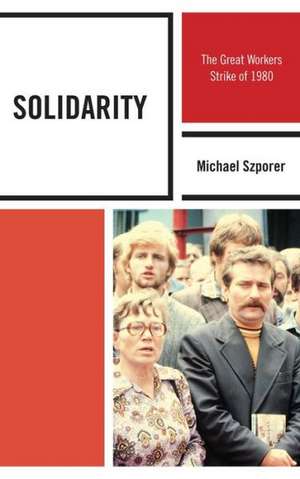
Solidarity: The Great Workers Strike of 1980: The Harvard Cold War Studies Book Series
Autor Michael M. Szporer, Ph.D Cuvânt înainte de Mark Krameren Limba Engleză Paperback – 18 mar 2014
Solidarity:The Great Workers Strike of 1980 tells the story of this pivotal period in Poland's history from the perspective of those who lived it. Through unique personal interviews with the individuals who helped breathe life into the Solidarity movement, Michael Szporer brings home the momentous impact these events had on the people involved and subsequent history that changed the face of Europe. This movement, which began as a strike, had major consequences that no one could have foreseen at the start. In this book, the individuals who shaped history speak with their own voices about the strike that changed the course of history.
| Toate formatele și edițiile | Preț | Express |
|---|---|---|
| Paperback (1) | 332.64 lei 6-8 săpt. | |
| Bloomsbury Publishing – 18 mar 2014 | 332.64 lei 6-8 săpt. | |
| Hardback (1) | 694.05 lei 6-8 săpt. | |
| Bloomsbury Publishing – 6 iul 2012 | 694.05 lei 6-8 săpt. |
Din seria The Harvard Cold War Studies Book Series
- 31%
 Preț: 418.43 lei
 - 31%
 Preț: 384.89 lei
 - 22%
 Preț: 343.60 lei
 - 26%
 Preț: 243.92 lei
 - 22%
 Preț: 295.48 lei
 - 31%
 Preț: 364.44 lei
 - 25%
 Preț: 249.25 lei
 - 34%
 Preț: 675.49 lei
 - 31%
 Preț: 365.57 lei
 - 31%
 Preț: 424.00 lei
 - 21%
 Preț: 339.48 lei
 - 34%
 Preț: 524.86 lei
 - 28%
 Preț: 381.41 lei
 - 34%
 Preț: 695.99 lei
 - 34%
 Preț: 586.02 lei
 - 18%
 Preț: 338.17 lei
 - 34%
 Preț: 694.92 lei
 - 22%
 Preț: 345.74 lei
 - 34%
 Preț: 694.44 lei
 - 34%
 Preț: 671.24 lei
 - 31%
 Preț: 383.39 lei
 - 34%
 Preț: 584.94 lei
 - 34%
 Preț: 706.27 lei
 - 34%
 Preț: 499.99 lei
 - 34%
 Preț: 841.99 lei
 - 22%
 Preț: 345.77 lei
 - 27%
 Preț: 401.01 lei
 - 19%
 Preț: 349.13 lei
 - 34%
 Preț: 937.24 lei
 - 30%
 Preț: 678.82 lei
 - 34%
 Preț: 675.49 lei
 - 31%
 Preț: 675.98 lei
 - 31%
 Preț: 693.32 lei
 - 31%
 Preț: 674.99 lei
 - 31%
 Preț: 646.63 lei
 - 34%
 Preț: 689.23 lei
Preț: 332.64 lei
Preț vechi: 425.26 lei
-22%
Puncte Express: 499
Preț estimativ în valută:
58.89€ • 68.57$ • 51.16£
58.89€ • 68.57$ • 51.16£
Carte tipărită la comandă
Livrare economică 23 februarie-09 martie
Preluare comenzi: 021 569.72.76
Specificații
ISBN-13: 9780739192801
ISBN-10: 0739192809
Pagini: 358
Ilustrații: illustrations
Dimensiuni: 150 x 226 x 24 mm
Greutate: 0.62 kg
Editura: Bloomsbury Publishing
Colecția Lexington Books
Seria The Harvard Cold War Studies Book Series
Locul publicării:New York, United States
ISBN-10: 0739192809
Pagini: 358
Ilustrații: illustrations
Dimensiuni: 150 x 226 x 24 mm
Greutate: 0.62 kg
Editura: Bloomsbury Publishing
Colecția Lexington Books
Seria The Harvard Cold War Studies Book Series
Locul publicării:New York, United States
Cuprins
PART I: INTRODUCTION
Solidarity Songs
Acknowledgments
Chapter 1: The Solidarnosc Era in Historical Perspective: Labor Protests, Polish Communism, and the Soviet Bloc, 1956-1981 by Mark Kramer
PART II: THE STRIKE
Chapter 2: "The People were the Hero": Conversation with Jerzy Borowczak
Chapter 3: The Making of a Solidarity Revolution: Conversation with Bogdan Borusewicz
Chapter 4: Hoeing the Moon: Conversation with Bogdan Felski
Chapter 5: Moments of Conscience: Conversation with Andrzej Gwiazda and Joanna Duda Gwiazda
Chapter 6: A Time for my Convictions: Conversation with Aleksander Hall
Chapter 7: The Morality of Truth: Conversation with Adam Hodysz
Chapter 8: Looking for Alternatives: Conversation with Piotr Kapczynski and Anna Mlynik
Chapter 9: "We were all equal at the Shipyard": Conversation with Zenon Kwoka
Chapter 10: The Revolution that Evolved: Conversation with Bogdan Lis
Chapter 11: Solidarity of Attainable Goals: Conversation with Jacek Merkel
Chapter 12: Woman of Iron: Conversation with Anna Walentynowicz
Chapter 13: The Price of Freedom: Conversation with Lech Walesa
Chapter 14: The Soup that Became a Downpour: Conversations with Krzysztof Wyszkowski and his older brother Blazej Wyszkowski
PART III: THE DEMOCRATIC OPPOSITION
Chapter 15: The Making of NOWA: Conversation with Grzegorz Boguta
Chapter 16: The Fringe of the Possible: Conversation with Andrzej Celinski
Chapter 17: The Godfather of the Polish Opposition: Conversation with Jacek Kuron
Chapter 18: The Spirit of Gazeta Wyborcza: Conversation with Adam Michnik
Chapter 19: The Solidarity of my Generation: Conversation with Henryk Wujec
PART IV: THE EXPERTS
Chapter 20: The Berlin Wall Started Falling in the Gdansk Shipyard: Conversation with Bronislaw Geremek
Chapter 21: Lining Up Democracy: Conversation with Tadeusz Mazowiecki
Chapter 22: Always Right: Conversation with Jadwiga Staniszkis
PART V: ASSESSMENTS
Chapter 23: The Controversy over Lech Walesa: A Review
Chapter 24: Managing Religion in Communist-Era Poland: Catholic Priests versus the Secret Police
Chapter 25: Anna Walentynowicz and the Legacy of Solidarity in Poland
PART VI: APPENDIX
Chapter 26: Chronology
Chapter 27: Declassified Documents from the Russian State Archive of Recent History Translated and introduced by Mark Kramer
Works Cited
Solidarity Songs
Acknowledgments
Chapter 1: The Solidarnosc Era in Historical Perspective: Labor Protests, Polish Communism, and the Soviet Bloc, 1956-1981 by Mark Kramer
PART II: THE STRIKE
Chapter 2: "The People were the Hero": Conversation with Jerzy Borowczak
Chapter 3: The Making of a Solidarity Revolution: Conversation with Bogdan Borusewicz
Chapter 4: Hoeing the Moon: Conversation with Bogdan Felski
Chapter 5: Moments of Conscience: Conversation with Andrzej Gwiazda and Joanna Duda Gwiazda
Chapter 6: A Time for my Convictions: Conversation with Aleksander Hall
Chapter 7: The Morality of Truth: Conversation with Adam Hodysz
Chapter 8: Looking for Alternatives: Conversation with Piotr Kapczynski and Anna Mlynik
Chapter 9: "We were all equal at the Shipyard": Conversation with Zenon Kwoka
Chapter 10: The Revolution that Evolved: Conversation with Bogdan Lis
Chapter 11: Solidarity of Attainable Goals: Conversation with Jacek Merkel
Chapter 12: Woman of Iron: Conversation with Anna Walentynowicz
Chapter 13: The Price of Freedom: Conversation with Lech Walesa
Chapter 14: The Soup that Became a Downpour: Conversations with Krzysztof Wyszkowski and his older brother Blazej Wyszkowski
PART III: THE DEMOCRATIC OPPOSITION
Chapter 15: The Making of NOWA: Conversation with Grzegorz Boguta
Chapter 16: The Fringe of the Possible: Conversation with Andrzej Celinski
Chapter 17: The Godfather of the Polish Opposition: Conversation with Jacek Kuron
Chapter 18: The Spirit of Gazeta Wyborcza: Conversation with Adam Michnik
Chapter 19: The Solidarity of my Generation: Conversation with Henryk Wujec
PART IV: THE EXPERTS
Chapter 20: The Berlin Wall Started Falling in the Gdansk Shipyard: Conversation with Bronislaw Geremek
Chapter 21: Lining Up Democracy: Conversation with Tadeusz Mazowiecki
Chapter 22: Always Right: Conversation with Jadwiga Staniszkis
PART V: ASSESSMENTS
Chapter 23: The Controversy over Lech Walesa: A Review
Chapter 24: Managing Religion in Communist-Era Poland: Catholic Priests versus the Secret Police
Chapter 25: Anna Walentynowicz and the Legacy of Solidarity in Poland
PART VI: APPENDIX
Chapter 26: Chronology
Chapter 27: Declassified Documents from the Russian State Archive of Recent History Translated and introduced by Mark Kramer
Works Cited
Recenzii
Szporer (communications, arts, and humanities, Univ. of Maryland Univ. College) has put together a collection of 25 eyewitness accounts of intellectuals and workers who were involved with the creation of the Solidarity trade union and the advent of the workers strike at the Gdansk Shipyard in summer 1980. In effect, the book consists of the author asking questions and recording the answers of leading participants who organized the first non-Communist workers union and strike behind the Iron Curtain. The book is a fascinating and valuable documentary of how a group of workers and intellectuals formed a workers union in defiance of the Polish Communist and Soviet-backed government, and then leveraged the union into a political challenge to the Soviet Bloc. Surprisingly, the Solidarity leaders did not have the support of the Polish Roman Catholic Church at first; all they had was their unity of purpose and their courage. The book has an appendix that includes a chronology of events and some documents from the Russian archives related to Solidarity. Summing Up: Recommended.
Michael Szporer's Solidarity the Great Workers Strike of 1980 is a fascinating story, told in many voices, of the world's largest strike to date which signaled the fall of the Soviet empire. Solidarity's peaceful revolution is the beginning of the 21st century, a correction of the lie perpetrated by the October Revolution. It is a story of people mobilizing a nation and taking down a totalitarian ideology with minimum loss of life. While at the time I closely followed the ups and downs of the events in Poland, I found the inside story of the movement that changed our world very revealing and remarkably human. I highly recommend this brilliant work to anyone interested in the real history of a major event that contributed to ending the Cold War.
Michael Szporer's Solidarity: The Great Worker's Strike of 1980 is a very valuable contribution to the history of the first successful anti-Communist movement in the Soviet camp. It consists mainly of interviews with leading figures in this movement elucidating their thinking and their moods.
A marvelous historical record of the great workers' protest that led to the downfall of 'workers' state,' first in Poland, then in the Soviet Union. Through documents, photographs, and interviews with leading participants, including Lech Walesa, Michael Szporer sheds important new light on the Gdansk shipyard strike of August 1980 and the role it played in the collapse of communism. Solidarity advisor Bronislaw Geremek is correct to conclude that the Berlin wall 'started falling in the Gdansk shipyard.'
Most Americans don't understand how or why the Cold War ended. But Michael Szporer's definitive book on the brave Polish 'Solidarity' underground will both inform and inspire them. Pope John Paul II told the Poles, 'Be not afraid!' and they proceeded to free not only Poland but all of Eastern Europe.
The book is and will be a very important, if not the main source document on the process of the formation of free trade unions (WZZ) in Poland in 1980, and the opinion of their leaders on the effects of creeping, the Polish revolution of 1980-89.
Michael Szporer's Solidarity the Great Workers Strike of 1980 is a fascinating story, told in many voices, of the world's largest strike to date which signaled the fall of the Soviet empire. Solidarity's peaceful revolution is the beginning of the 21st century, a correction of the lie perpetrated by the October Revolution. It is a story of people mobilizing a nation and taking down a totalitarian ideology with minimum loss of life. While at the time I closely followed the ups and downs of the events in Poland, I found the inside story of the movement that changed our world very revealing and remarkably human. I highly recommend this brilliant work to anyone interested in the real history of a major event that contributed to ending the Cold War.
Michael Szporer's Solidarity: The Great Worker's Strike of 1980 is a very valuable contribution to the history of the first successful anti-Communist movement in the Soviet camp. It consists mainly of interviews with leading figures in this movement elucidating their thinking and their moods.
A marvelous historical record of the great workers' protest that led to the downfall of 'workers' state,' first in Poland, then in the Soviet Union. Through documents, photographs, and interviews with leading participants, including Lech Walesa, Michael Szporer sheds important new light on the Gdansk shipyard strike of August 1980 and the role it played in the collapse of communism. Solidarity advisor Bronislaw Geremek is correct to conclude that the Berlin wall 'started falling in the Gdansk shipyard.'
Most Americans don't understand how or why the Cold War ended. But Michael Szporer's definitive book on the brave Polish 'Solidarity' underground will both inform and inspire them. Pope John Paul II told the Poles, 'Be not afraid!' and they proceeded to free not only Poland but all of Eastern Europe.
The book is and will be a very important, if not the main source document on the process of the formation of free trade unions (WZZ) in Poland in 1980, and the opinion of their leaders on the effects of creeping, the Polish revolution of 1980-89.