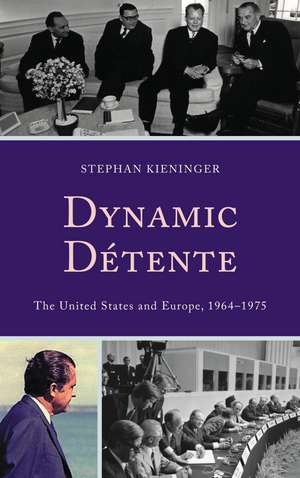
Dynamic Détente: The United States and Europe, 1964–1975: The Harvard Cold War Studies Book Series
Autor Stephan Kieningeren Limba Engleză Paperback – 9 mai 2018
Din seria The Harvard Cold War Studies Book Series
- 30%
 Preț: 440.53 lei
 - 32%
 Preț: 385.96 lei
 - 28%
 Preț: 348.26 lei
 - 34%
 Preț: 886.19 lei
 - 34%
 Preț: 672.95 lei
 - 34%
 Preț: 384.58 lei
 - 26%
 Preț: 260.20 lei
 - 34%
 Preț: 676.51 lei
 - 34%
 Preț: 383.22 lei
 - 34%
 Preț: 446.94 lei
 - 37%
 Preț: 501.33 lei
 - 24%
 Preț: 310.63 lei
 - 29%
 Preț: 385.88 lei
 - 36%
 Preț: 732.62 lei
 - 33%
 Preț: 705.77 lei
 - 27%
 Preț: 356.99 lei
 - 23%
 Preț: 356.24 lei
 - 33%
 Preț: 730.68 lei
 - 32%
 Preț: 553.08 lei
 - 31%
 Preț: 403.74 lei
 - 37%
 Preț: 725.40 lei
 - 34%
 Preț: 707.86 lei
 - 27%
 Preț: 256.79 lei
 - 29%
 Preț: 807.88 lei
 - 26%
 Preț: 346.49 lei
 - 25%
 Preț: 422.73 lei
 - 20%
 Preț: 368.85 lei
 - 26%
 Preț: 359.36 lei
 - 32%
 Preț: 617.02 lei
 - 36%
 Preț: 986.20 lei
 - 29%
 Preț: 714.55 lei
 - 29%
 Preț: 711.55 lei
 - 36%
 Preț: 732.52 lei
 - 33%
 Preț: 729.81 lei
 - 29%
 Preț: 710.51 lei
 - 33%
 Preț: 674.78 lei
 - 32%
 Preț: 616.38 lei
Preț: 363.68 lei
Preț vechi: 485.78 lei
-25%
Puncte Express: 546
Carte tipărită la comandă
Livrare economică 26 noiembrie-10 decembrie
Livrare prin curier în România Termenul estimat este afișat lângă disponibilitate.
Transport gratuit de la 400.00 lei Plată online sau ramburs, în funcție de opțiunile comenzii.
Retur gratuit în 14 zile Comandă securizată și suport în română.
Specificații
ISBN-13: 9781498532433
ISBN-10: 1498532438
Pagini: 388
Ilustrații: 26 b/w photos;
Dimensiuni: 148 x 226 x 26 mm
Greutate: 0.58 kg
Editura: Bloomsbury Publishing
Colecția Lexington Books
Seria The Harvard Cold War Studies Book Series
Locul publicării:New York, United States
ISBN-10: 1498532438
Pagini: 388
Ilustrații: 26 b/w photos;
Dimensiuni: 148 x 226 x 26 mm
Greutate: 0.58 kg
Editura: Bloomsbury Publishing
Colecția Lexington Books
Seria The Harvard Cold War Studies Book Series
Locul publicării:New York, United States
Cuprins
Introduction: The United States and the Power of Dynamic Détente Policies
Part I: The Evolution of America's Transformation Strategy, 1947-1968
Chapter 1: The Origins of America's Transformation Approach in the Cold War, 1947-1963
Chapter 2: "Thawing the Cold War": Lyndon Johnson, Bridge Building, and the Search for Détente, 1964-1966
Chapter 3: Peaceful Engagement and Plans for Europe's Transformation, 1966-1968
Part II: Setbacks and Survival: The Longevity of America's Transformation Policy during the Nixon and Ford Years, 1969-1976
Chapter 4: Power Politics: Richard Nixon's and Henry Kissinger's Concept for Détente
Chapter 5: SALT: "Diverting the Arms Race into the Permitted Channels," 1969-1976
Chapter 6: "Do you want it done or do you want to have it talked about?": NATO's Policy on MBFR, 1970-1975
Chapter 7: Ostpolitik and the Idea for a European Security Conference: Catalysts for the Continuation of the Transformation Policy, 1969-1972
Chapter 8: Transformation or Status Quo?: CSCE, MBFR
Part I: The Evolution of America's Transformation Strategy, 1947-1968
Chapter 1: The Origins of America's Transformation Approach in the Cold War, 1947-1963
Chapter 2: "Thawing the Cold War": Lyndon Johnson, Bridge Building, and the Search for Détente, 1964-1966
Chapter 3: Peaceful Engagement and Plans for Europe's Transformation, 1966-1968
Part II: Setbacks and Survival: The Longevity of America's Transformation Policy during the Nixon and Ford Years, 1969-1976
Chapter 4: Power Politics: Richard Nixon's and Henry Kissinger's Concept for Détente
Chapter 5: SALT: "Diverting the Arms Race into the Permitted Channels," 1969-1976
Chapter 6: "Do you want it done or do you want to have it talked about?": NATO's Policy on MBFR, 1970-1975
Chapter 7: Ostpolitik and the Idea for a European Security Conference: Catalysts for the Continuation of the Transformation Policy, 1969-1972
Chapter 8: Transformation or Status Quo?: CSCE, MBFR
Recenzii
Kieninger's account is persuasively argued and deeply researched.... Dynamic Détente is rooted in impressive archival and primary-source research in American state files and personal papers and a handful of German and North Atlantic Treaty Organization records.... [A] fine contribution to a growing body of work on U.S.-European relations and U.S. policy making that highlights the origins, complexities, and contradictions of détente
This book is a tremendous achievement. On the basis of a multi-archival approach, Kieninger shows the importance of continuity in U.S. foreign policy from the 1960s to the 1970s. The East-West 'bridge-builders' in Washington, DC, skillfully managed to survive the change of administration from Johnson to Nixon. Kieninger also demonstrates persuasively that détente was in fact a progressive and dynamic policy that decisively contributed to bringing about the end of the Cold War. The book is well-written and full of insights, and convincingly reinterprets the prevalent narrative of the Cold War in the 1970s and 1980s.
Through exhaustive and extraordinarily thorough research, Stephan Kieninger's Dynamic Détente demonstrates the persistence of a 'transformative strategy' of détente across three different American presidential administrations, and the importance of this approach in bringing about the end of the Cold War. His book is a masterful contribution to the understanding of the détente period and a significant addition to the historiography of the Cold War. It also holds implications for contemporary policymakers, as they weigh the balance between policies of détente and confrontation in confronting their adversaries.
In this comprehensive assessment of U.S.-European relations during the 1960s and 1970s, Stephan Kieninger reveals the long-term roots and transformational impact of the dynamic conception of détente embraced by the Johnson administration, 'bridge-builders' in the State Department, and several Western European allies of Washington. Deeply researched and solidly argued, Dynamic Détente offers a nuanced and original analysis of the origins, contradictions, and effects of superpower détente. This is essential reading for anyone who wants to understand the Cold War and its final, peaceful demise.
Dynamic Détente is an outstanding achievement of 'new Cold War history,' based on truly extensive multi-archival research. It offers a fresh and fascinating analysis of the complex process of formulating Western policies leading up to the signing of the Helsinki Final Act by attaching equal importance to the actors of an emerging triangle: the Nixon-Kissinger tandem, the bridge builders in the U.S. State Department, and the West European proponents of transformation strategy.
This book is a tremendous achievement. On the basis of a multi-archival approach, Kieninger shows the importance of continuity in U.S. foreign policy from the 1960s to the 1970s. The East-West 'bridge-builders' in Washington, DC, skillfully managed to survive the change of administration from Johnson to Nixon. Kieninger also demonstrates persuasively that détente was in fact a progressive and dynamic policy that decisively contributed to bringing about the end of the Cold War. The book is well-written and full of insights, and convincingly reinterprets the prevalent narrative of the Cold War in the 1970s and 1980s.
Through exhaustive and extraordinarily thorough research, Stephan Kieninger's Dynamic Détente demonstrates the persistence of a 'transformative strategy' of détente across three different American presidential administrations, and the importance of this approach in bringing about the end of the Cold War. His book is a masterful contribution to the understanding of the détente period and a significant addition to the historiography of the Cold War. It also holds implications for contemporary policymakers, as they weigh the balance between policies of détente and confrontation in confronting their adversaries.
In this comprehensive assessment of U.S.-European relations during the 1960s and 1970s, Stephan Kieninger reveals the long-term roots and transformational impact of the dynamic conception of détente embraced by the Johnson administration, 'bridge-builders' in the State Department, and several Western European allies of Washington. Deeply researched and solidly argued, Dynamic Détente offers a nuanced and original analysis of the origins, contradictions, and effects of superpower détente. This is essential reading for anyone who wants to understand the Cold War and its final, peaceful demise.
Dynamic Détente is an outstanding achievement of 'new Cold War history,' based on truly extensive multi-archival research. It offers a fresh and fascinating analysis of the complex process of formulating Western policies leading up to the signing of the Helsinki Final Act by attaching equal importance to the actors of an emerging triangle: the Nixon-Kissinger tandem, the bridge builders in the U.S. State Department, and the West European proponents of transformation strategy.