
Software Engineering: Pearson Studium - IT
Autor Ian Sommervillede Limba Germană Hardback – oct 2018
Ecosistemul metodologiilor prezentate în Software Engineering acoperă spectrul complet al dezvoltării moderne, de la metode agile și Extreme Programming până la arhitecturi complexe de sisteme de tranzacții și control încorporat. Observăm o schimbare de paradigmă în această a 10-a ediție actualizată, unde Ian Sommerville elimină distincția artificială dintre dezvoltare și evoluție, tratând ciclul de viață al software-ului ca pe un proces continuu de re-engineering. Structura în șase părți este optimizată pentru a integra fiabilitatea nu ca o extensie ulterioară, ci ca un pilon central prezent în fiecare etapă de proiectare. Credem că valoarea tehnică a volumului rezidă în analiza detaliată a sistemelor socio-tehnice, unde software-ul este evaluat în contextul hardware-ului, al utilizatorilor și al politicilor organizaționale. Dacă UML für IT-Berufe de Dirk Hardy v-a oferit cadrul teoretic al modelării și traducerea diagramelor în cod C#, lucrarea lui Sommerville oferă instrumentele practice pentru gestionarea proiectelor de mare anvergură. În timp ce Best Practice Software-Engineering se concentrează pe eficiența componentelor, acest manual extinde perspectiva asupra arhitecturilor de aplicații, oferind soluții concrete pentru sisteme informatice și structuri de control. Fiecare capitol este calibrat pentru a răspunde cerințelor actuale din industrie, abordând prototiparea și dezvoltarea iterativă fără a neglija rigoarea necesară sistemelor critice. Această ediție în limba germană, publicată sub egida Pearson Studium - IT, rămâne un standard tehnic pentru înțelegerea modului în care componentele software interacționează în ecosisteme hardware complexe.



Preț: 468.38 lei
Preț vechi: 585.47 lei
-20%
Carte disponibilă
Livrare economică 12-18 noiembrie
Livrare express 31 octombrie-06 noiembrie pentru 52.12 lei
Specificații
ISBN-10: 3868943447
Pagini: 896
Dimensiuni: 169 x 239 x 47 mm
Greutate: 1.44 kg
Ediția:10., aktualisierte Auflage
Editura: Pearson Studium ein Imprint von Pearson Deutschland
Colecția Pearson Studium - IT
Seria Pearson Studium - IT
V-ar putea interesa
-
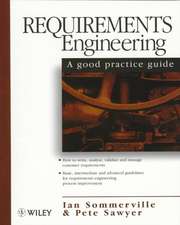 Requirements EngineeringIan Sommerville-20%Preț: 527.79 lei659.74 lei
 -
 Software Engineering, Global EditionIan Sommerville-20%Preț: 633.41 lei791.76 lei
 -
 Trust in Technology: A Socio-Technical PerspectiveKaren Clarke-20%Preț: 675.88 lei844.84 lei
 -
 What's Inside My Computer?Christine Zuchora-Walske-18%Preț: 44.14 lei53.60 lei
 -
 Programmieren in C. ANSI C (2. A.)Brian W. Kernighan-20%Preț: 220.07 lei275.09 lei
 -
 Software Engineering - ESEC '93Ian Sommerville-20%Preț: 334.25 lei417.82 lei
 -
 Software Configuration ManagementIan Sommerville-20%Preț: 322.59 lei403.23 lei
 -
 Professionell entwickeln mit JavaScriptPhilip Ackermann-20%Preț: 373.13 lei466.41 lei
 -
 Der Weg zum Java-ProfiMichael Inden-20%Preț: 446.15 lei557.69 lei
De ce să citești această carte
Recomandăm această lucrare inginerilor software și studenților care doresc să treacă de la simpla programare la managementul sistemelor complexe. Cititorul câștigă o înțelegere profundă a arhitecturilor scalabile și a metodelor agile, învățând să proiecteze sisteme fiabile care integrează factori umani și organizaționali. Este resursa esențială pentru cei care vor să stăpânească ingineria bazată pe componente și reutilizarea strategică a codului.
Despre autor
Ian Sommerville este un reper academic în domeniul informaticii, fiind profesor emerit de inginerie software la Universitatea din St Andrews. Cariera sa este marcată de cercetări fundamentale în domeniul fiabilității sistemelor și al ingineriei cerințelor. Prin manualul său, Software Engineering, care a ajuns la a zecea ediție și a fost tradus în numeroase limbi, Sommerville a format generații de specialiști, punând accent pe abordarea sistemică și pe integrarea tehnologiei în contextul social și organizațional real.
Notă biografică
Ian Sommerville ist emeritierter Professor der Universität von Saint Andrews in Schottland. Seit den 1980er Jahren konzentrierte sich seine Forschungs- und Lehrtätigkeit auf das Gebiet des Software- und Systems-Engineering. Sein Forschungsschwerpunkt im Software-Engineering lag auf den Herausforderungen, die sich beim Entwickeln komplexer, verlässlicher Systeme stellen.