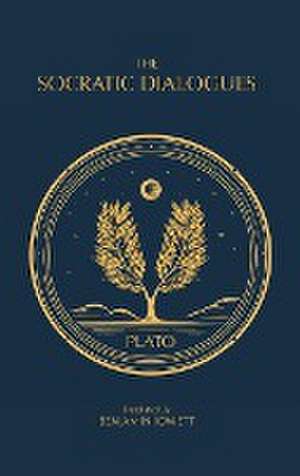
Socratic Dialogues: The Complete Works of Plato
Autor Plato Traducere de Benjamin Jowetten Limba Engleză Hardback – 24 ian 2024
| Toate formatele și edițiile | Preț | Express |
|---|---|---|
| Paperback (2) | 70.93 lei 43-57 zile | |
| BROADVIEW PR – 23 sep 2024 | 88.27 lei 22-36 zile | |
| CREATESPACE – | 70.93 lei 43-57 zile | |
| Hardback (1) | 171.68 lei 43-57 zile | |
| Fili Public – 24 ian 2024 | 171.68 lei 43-57 zile |
Preț: 171.68 lei
Puncte Express: 258
Preț estimativ în valută:
30.36€ • 34.81$ • 26.24£
30.36€ • 34.81$ • 26.24£
Carte tipărită la comandă
Livrare economică 27 aprilie-11 mai
Specificații
ISBN-13: 9788794559010
ISBN-10: 8794559015
Pagini: 386
Dimensiuni: 237 x 160 x 30 mm
Greutate: 0.74 kg
Editura: Fili Public
Seria The Complete Works of Plato
ISBN-10: 8794559015
Pagini: 386
Dimensiuni: 237 x 160 x 30 mm
Greutate: 0.74 kg
Editura: Fili Public
Seria The Complete Works of Plato
Recenzii
These five dialogues depict the life, death, and philosophical methods of Socrates, as portrayed by his student and philosophical successor, Plato. Meno offers some of the clearest and most compelling examples of the Socratic method in application. In Euthyphro, Socrates examines the concept of piety and displays his propensity for questioning Athenian authorities. Next, in the Apology, we find Socrates defending himself in court against charges of impiety and corruption of the youth. Crito shows Socrates choosing to accept the resulting death sentence rather than escape Athens and avoid execution. And in Phaedo, Socrates reflects on the immortality of the soul before carrying out his own sentence.
“There is no better introduction to philosophy than Plato, and no better introduction to Plato than these five dialogues in this fresh, lively translation by Cathal Woods and Ryan Pack. The translation is faithful to the original in clear, readable English. Students will be able to follow Plato’s arguments, even when they are subtle, and the dramatic force and humour of the dialogues come through very well. Andrew Bailey’s introduction is excellent, providing the historical, religious, political, and philosophical context without overwhelming the reader. The notes are clear, helpful, and non-intrusive, and the dialogues have been given (properly) in dramatic order. This edition will become the standard.” — Steven Baldner, St. Francis Xavier University
Praise for the included translations and introductions:
“This new translation … is a lively and accessible account of the end of Socrates’ life. The text animates the paramount questions of piety, wisdom, justice, and the soul as they are addressed in the dialogues. Included is an introduction that provides an excellent and concise analysis of Socrates’ substantive philosophical positions.” — Ann Ward, University of Regina
“ … a new translation and fresh reappraisal of the dialogues that comprise the last days of Socrates. The book’s accessible analysis and critical suggestions make it a must-read for anyone interested in ancient Greek philosophy and, more importantly, basic philosophical questions.” — Andre Archie, Colorado State University
“There is no better introduction to philosophy than Plato, and no better introduction to Plato than these five dialogues in this fresh, lively translation by Cathal Woods and Ryan Pack. The translation is faithful to the original in clear, readable English. Students will be able to follow Plato’s arguments, even when they are subtle, and the dramatic force and humour of the dialogues come through very well. Andrew Bailey’s introduction is excellent, providing the historical, religious, political, and philosophical context without overwhelming the reader. The notes are clear, helpful, and non-intrusive, and the dialogues have been given (properly) in dramatic order. This edition will become the standard.” — Steven Baldner, St. Francis Xavier University
Praise for the included translations and introductions:
“This new translation … is a lively and accessible account of the end of Socrates’ life. The text animates the paramount questions of piety, wisdom, justice, and the soul as they are addressed in the dialogues. Included is an introduction that provides an excellent and concise analysis of Socrates’ substantive philosophical positions.” — Ann Ward, University of Regina
“ … a new translation and fresh reappraisal of the dialogues that comprise the last days of Socrates. The book’s accessible analysis and critical suggestions make it a must-read for anyone interested in ancient Greek philosophy and, more importantly, basic philosophical questions.” — Andre Archie, Colorado State University
Descriere
Descriere de la o altă ediție sau format:
These five dialogues depict the life, death, and philosophical methods of Socrates, as portrayed by his student and philosophical successor, Plato. Meno offers some of the clearest and most compelling examples of the Socratic method in application. In Euthyphro, Socrates examines the concept of piety and displays his propensity for questioning Athenian authorities. Next, in the Apology, we find Socrates defending himself in court against charges of impiety and corruption of the youth. Crito shows Socrates choosing to accept the resulting death sentence rather than escape Athens and avoid execution. And in Phaedo, Socrates reflects on the immortality of the soul before carrying out his own sentence.
These five dialogues depict the life, death, and philosophical methods of Socrates, as portrayed by his student and philosophical successor, Plato. Meno offers some of the clearest and most compelling examples of the Socratic method in application. In Euthyphro, Socrates examines the concept of piety and displays his propensity for questioning Athenian authorities. Next, in the Apology, we find Socrates defending himself in court against charges of impiety and corruption of the youth. Crito shows Socrates choosing to accept the resulting death sentence rather than escape Athens and avoid execution. And in Phaedo, Socrates reflects on the immortality of the soul before carrying out his own sentence.
Cuprins
Introduction
Meno
- Who Were Plato and Socrates?
- What Was Plato’s Overall Philosophical Project?
- What Is the Structure of These Dialogues?
- Some Useful Background Information
- How Important and Influential Are These Dialogues?
- Timeline
- Suggestions for Further Reading
Meno
- Introduction
- Cast of Characters
- Meno
- Suggestions for Critical Reflection
- Introduction
- Cast of Characters
- Euthyphro
- Suggestions for Critical Reflection
- Introduction
- Cast of Characters
- Apology
- Suggestions for Critical Reflection
- Introduction
- Cast of Characters
- Crito
- Suggestions for Critical Reflection
- Introduction
- Cast of Characters
- Phaedo
- Suggestions for Critical Reflection