
Sigmund Freud’s Inner Divisions: Personal and Theoretical: The History of Psychoanalysis Series
Autor Ken Fuchsmanen Limba Engleză Hardback – 22 ian 2026
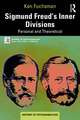
Ken Fuchsman undertakes a close reading of how what Freud wrote during self-analysis reflected his inner personal divisions. This book explores how Freud’s psychological divisions led to intellectual contradictions in his psychoanalytic doctrines, showing that the limits of his theory are rooted in inner conflicts that prevented his science of the unconscious from being truly comprehensive. It also considers how Freud’s ideas were shaped by his internal struggles, discoveries, and denials, revealing how these inner tensions permeated his psychoanalytic theories on experience, science, civilization’s higher achievements, love, and even the Oedipus complex itself.
Sigmund Freud’s Inner Divisions will be of great interest to psychoanalysts in practice and in training, and to academics and scholars of the history of psychology, psychobiography, and intellectual history.
Din seria The History of Psychoanalysis Series
-
 Preț: 327.03 lei
 -
 Preț: 336.10 lei
 -
 Preț: 316.24 lei
 -
 Preț: 315.84 lei
 -
 Preț: 318.89 lei
 -
 Preț: 370.23 lei
 - 5%
 Preț: 401.64 lei
 -
 Preț: 314.19 lei
 -
 Preț: 313.72 lei
 - 5%
 Preț: 251.25 lei
 -
 Preț: 359.87 lei
 -
 Preț: 349.25 lei
 -
 Preț: 385.36 lei
 -
 Preț: 292.17 lei
 -
 Preț: 313.60 lei
 -
 Preț: 369.23 lei
 - 8%
 Preț: 443.70 lei
 - 5%
 Preț: 409.05 lei
 -
 Preț: 316.55 lei
 -
 Preț: 375.58 lei
 -
 Preț: 367.79 lei
 -
 Preț: 311.23 lei
 -
 Preț: 442.62 lei
 - 15%
 Preț: 430.52 lei
 -
 Preț: 326.80 lei
 -
 Preț: 327.14 lei
 - 5%
 Preț: 369.54 lei
 - nou
 Preț: 1342.98 lei
Preț: 1339.85 lei
Preț vechi: 1633.96 lei
-18%
Puncte Express: 2010
Carte tipărită la comandă
Livrare economică 07-21 decembrie
Livrare prin curier în România Termenul estimat este afișat lângă disponibilitate.
Transport gratuit pentru acest produs Plată online sau ramburs, în funcție de opțiunile comenzii.
Retur gratuit în 14 zile Comandă securizată și suport în română.
Specificații
ISBN-13: 9781041074700
ISBN-10: 1041074700
Pagini: 120
Dimensiuni: 156 x 234 mm
Greutate: 0.38 kg
Ediția:1
Editura: Taylor & Francis
Colecția Routledge
Seria The History of Psychoanalysis Series
Locul publicării:Oxford, United Kingdom
ISBN-10: 1041074700
Pagini: 120
Dimensiuni: 156 x 234 mm
Greutate: 0.38 kg
Ediția:1
Editura: Taylor & Francis
Colecția Routledge
Seria The History of Psychoanalysis Series
Locul publicării:Oxford, United Kingdom
Public țintă
Postgraduate, Professional Practice & Development, and Professional ReferenceCuprins
Acknowledgements
Introduction
PART I
Chapter 1 – Freud and Fathers: Sigmund Freud’s Inner Struggles
Chapter 2 – Fathers and Sons: Freud’s Discovery of the Oedipus Complex
Chapter 3 – The Evolution of Freud’s Views of Parental/Paternal Authority
Chapter 4 – Freud and the Vienna Psychoanalytic Society
PART II
Chapter 5 – Biology and Experience in Freud’s Thought
Chapter 6 - Freud, Psychoanalysis, and Science
Chapter 7 Psychoanalytic Mental Structure and Civilization’s Higher Achievements
Chapter 8 – The Freudian Psychology of Love
Chapter 9 - What Does Freud Mean by the Oedipus Complex?
Introduction
PART I
Chapter 1 – Freud and Fathers: Sigmund Freud’s Inner Struggles
Chapter 2 – Fathers and Sons: Freud’s Discovery of the Oedipus Complex
Chapter 3 – The Evolution of Freud’s Views of Parental/Paternal Authority
Chapter 4 – Freud and the Vienna Psychoanalytic Society
PART II
Chapter 5 – Biology and Experience in Freud’s Thought
Chapter 6 - Freud, Psychoanalysis, and Science
Chapter 7 Psychoanalytic Mental Structure and Civilization’s Higher Achievements
Chapter 8 – The Freudian Psychology of Love
Chapter 9 - What Does Freud Mean by the Oedipus Complex?
Recenzii
“It is a delight to travel with Ken Fuchsman as he insightfully engages with Sigmund Freud, both the man and the thinker. Fuchsman shows how Freud’s internal struggles and conflicts produced contradictions, reversals, and lacunae in his theories. Any reader, no matter how familiar with the creator of psychoanalysis, will come away from this consistently arresting exploration with a renewed appreciation of Freud’s contributions and a deeper sense of where and how Freud went wrong.”
James W. Anderson, PhD, Professor of Clinical Psychiatry and Behavioral Sciences at Northwestern University, former president of the Chicago Psychoanalytic Society
“In this book, Dr Ken Fuchsman examines Sigmund Freud's self-analysis and his relationship with his father. After claiming that his father Jakob had sexually abused his siblings, Sigmund Freud retracted his statements and considered these facts as “childhood fantasies”. The theoretical elaboration then saw fantasies take precedence over reality and fathers exonerated. It is the theoretical consequences on psychoanalysis of what looks like a denial of reality that Dr. Fuchsman examines brilliantly. Let us also remember that Sophocles, in the tragedy of Oedipus Rex that Sigmund Freud chooses as a reference, obscures one of the elements of the many versions of the Oedipus myth, namely the rape committed by Laios on the young Chrysippos, hence the curse that followed…”
Brigitte Demeure, PhD in History, Master in intercultural studies, former vice-president of the A2IP (Association Internaitonale Interactions de la Psychanlyse) and president of the French Society of Psychohistory.
“Ken Fuchsman, an eminent psychohistorian, has written a compelling and wide ranging book on Freud highlighting the relationship between Freud’s inner conflicts and his theoretical project. The Freud of this book is one who wrestles with his own divided allegiances, which spilled over into his conceptual confusions, the fragmentary nature of his ideas, and internal contradictions in his writings. While Fuchsman sees Freud as an innovative, original, and deep thinker in Western intellectual history, praising him as someone who modified and changed his ideas throughout his long lifetime, the Freud of this volume is conceptually confused, whose ideas are often incoherent, and who often contradicted himself. As a skeptic, and as neither a devotee or basher of Freud, Fuchsman views the father of psychoanalysis as limited and rather unscientific in developing the foundations of psychoanalysis. He is particularly good at deconstructing Freud’s evolution from rebellious son to authoritative (and authoritarian father), from liberal to conservative, and from someone committed to empirical aspects of psychoanalytic methodology to one in his late period who was dogmatic and intolerant of criticism and dissent. Fuchsman has rewarding commentary on the Oedipus complex, the death instinct, paternal authority, the scientific status of psychoanalysis, the role of splits in the history of psychoanalysis, many of which he attributes to Freud’s inner conflicts and to unresolved ambivalences in his personality. Freud, of course, was an initiator of discourse on the role of psycho- sexuality, early childhood development, the role of the internal struggle between consciousness and the unconscious, the untamable nature of desire, and the lifelong struggle for recognition and mutual recognition. Fuchsman has an excellent command of the secondary literature on Freud (a kind of industry), and an astute but critical approach to Freud’s primary texts. I can recommend this volume to students of Freud, to psychohistorians, and to mental health professionals who may not have a grasp of the personal origins of many of Freud’s significant ideas.”
David James Fisher, Ph.D. is a psychoanalyst in practice for 46 years. He is a Senior Faculty Member at the New Center for Psychoanalysis and a member of the Board of Directors. He is also a Training and Supervising Analyst at the Institute of Contemporary Psychoanalysis also in Los Angeles. He writings work at the intersection of cultural history and the history of psychoanalysis. He has published four books. The Subversive Edge of Psychoanalysis was published by Routledge in 2025.
James W. Anderson, PhD, Professor of Clinical Psychiatry and Behavioral Sciences at Northwestern University, former president of the Chicago Psychoanalytic Society
“In this book, Dr Ken Fuchsman examines Sigmund Freud's self-analysis and his relationship with his father. After claiming that his father Jakob had sexually abused his siblings, Sigmund Freud retracted his statements and considered these facts as “childhood fantasies”. The theoretical elaboration then saw fantasies take precedence over reality and fathers exonerated. It is the theoretical consequences on psychoanalysis of what looks like a denial of reality that Dr. Fuchsman examines brilliantly. Let us also remember that Sophocles, in the tragedy of Oedipus Rex that Sigmund Freud chooses as a reference, obscures one of the elements of the many versions of the Oedipus myth, namely the rape committed by Laios on the young Chrysippos, hence the curse that followed…”
Brigitte Demeure, PhD in History, Master in intercultural studies, former vice-president of the A2IP (Association Internaitonale Interactions de la Psychanlyse) and president of the French Society of Psychohistory.
“Ken Fuchsman, an eminent psychohistorian, has written a compelling and wide ranging book on Freud highlighting the relationship between Freud’s inner conflicts and his theoretical project. The Freud of this book is one who wrestles with his own divided allegiances, which spilled over into his conceptual confusions, the fragmentary nature of his ideas, and internal contradictions in his writings. While Fuchsman sees Freud as an innovative, original, and deep thinker in Western intellectual history, praising him as someone who modified and changed his ideas throughout his long lifetime, the Freud of this volume is conceptually confused, whose ideas are often incoherent, and who often contradicted himself. As a skeptic, and as neither a devotee or basher of Freud, Fuchsman views the father of psychoanalysis as limited and rather unscientific in developing the foundations of psychoanalysis. He is particularly good at deconstructing Freud’s evolution from rebellious son to authoritative (and authoritarian father), from liberal to conservative, and from someone committed to empirical aspects of psychoanalytic methodology to one in his late period who was dogmatic and intolerant of criticism and dissent. Fuchsman has rewarding commentary on the Oedipus complex, the death instinct, paternal authority, the scientific status of psychoanalysis, the role of splits in the history of psychoanalysis, many of which he attributes to Freud’s inner conflicts and to unresolved ambivalences in his personality. Freud, of course, was an initiator of discourse on the role of psycho- sexuality, early childhood development, the role of the internal struggle between consciousness and the unconscious, the untamable nature of desire, and the lifelong struggle for recognition and mutual recognition. Fuchsman has an excellent command of the secondary literature on Freud (a kind of industry), and an astute but critical approach to Freud’s primary texts. I can recommend this volume to students of Freud, to psychohistorians, and to mental health professionals who may not have a grasp of the personal origins of many of Freud’s significant ideas.”
David James Fisher, Ph.D. is a psychoanalyst in practice for 46 years. He is a Senior Faculty Member at the New Center for Psychoanalysis and a member of the Board of Directors. He is also a Training and Supervising Analyst at the Institute of Contemporary Psychoanalysis also in Los Angeles. He writings work at the intersection of cultural history and the history of psychoanalysis. He has published four books. The Subversive Edge of Psychoanalysis was published by Routledge in 2025.
Notă biografică
Ken Fuchsman is Emeritus faculty from the University of Connecticut, where he taught American history, interdisciplinary studies, the nature of being human, and the family in interdisciplinary perspective, and was Executive Programme Director of the Bachelor of General Studies Programme. Along with Michael Maccoby, Dr Fuchsman co-edited Psychoanalytic and Historical Perspectives on the Leadership of Donald Trump (Routledge).
Descriere
Sigmund Freud’s Inner Divisions shows how the limits of Freud’s theory are linked to his inner conflicts, particularly those relating to his father.