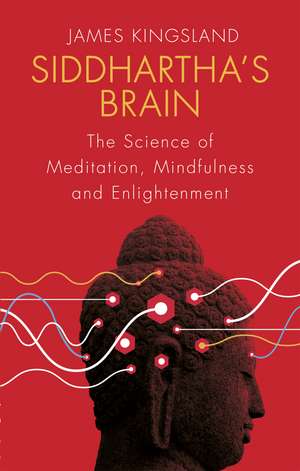
Siddhartha's Brain: The Science of Meditation, Mindfulness and Enlightenment
Autor James Kingslanden Limba Engleză Paperback – 4 ian 2018
Imaginați-vă un tânăr ascet așezat la umbra unui smochin pe malul râului Neranjara, acum mai bine de două milenii, încercând să descifreze mecanismele suferinței umane. În Siddhartha's Brain, descoperim că ceea ce Siddhartha Gautama a intuit prin introspecție profundă este astăzi validat de scanările RMN și studiile de neuroplasticitate. James Kingsland ne propune o călătorie fascinantă care transformă „iluminarea” dintr-un concept mistic într-o stare biologică măsurabilă și accesibilă. Apreciem în mod deosebit modul în care autorul, cu rigoarea unui jurnalist științific de la The Guardian, demonstrează că mindfulness-ul nu este o modă New Age, ci un instrument evolutiv vital pentru sănătatea noastră mentală.
Pe aceeași linie cu The Science of Meditation de Daniel Goleman, acest volum reușește să traducă concepte complexe în termeni clari, dar păstrează un accent mai pronunțat pe biografia istorică a lui Buddha ca studiu de caz neuroștiințific. Spre deosebire de Buddha's Brain de Rick Hanson, care oferă tehnici practice imediate, Kingsland se concentrează pe „marea imagine”, explicând de ce creierul nostru, modelat de presiunile supraviețuirii preistorice, are nevoie de „reboot-ul” meditației pentru a face față distragerilor tehnologice actuale. Această abordare continuă explorarea începută în cealaltă lucrare a sa, Am I Dreaming?, unde autorul analiza stările alterate de conștiință ca mecanisme de recalibrare a tiparelor noastre de gândire. Rezultatul este o analiză lucidă a modului în care ne putem sculpta propriul creier pentru a atinge echilibrul emoțional.
Preț: 66.80 lei
Preț vechi: 91.71 lei
-27%
Carte disponibilă
Livrare economică 05-19 noiembrie
Specificații
ISBN-10: 1472136349
Pagini: 336
Ilustrații: B/W. 8 integrated illustrations
Dimensiuni: 136 x 201 x 21 mm
Greutate: 0.23 kg
Editura: Little Brown
Colecția Robinson
Locul publicării:London, United Kingdom
De ce să citești această carte
Recomandăm această carte oricărui cititor sceptic care caută dovezi concrete în spatele practicilor de meditație. Veți înțelege nu doar cum să practicați mindfulness, ci și procesele biologice care au loc în cortexul prefrontal în acele momente. Este o lectură esențială pentru cei care vor să își recapete capacitatea de concentrare și să gestioneze anxietatea modernă prin metode validate de știința contemporană și tradiția milenară.
Despre autor
James Kingsland este un jurnalist științific și medical cu o experiență de peste 25 de ani, fiind o voce respectată în publicații de renume precum New Scientist, Nature și The Guardian. În calitate de editor la blogul „Notes & Theories” și autor al platformei „Plastic Brain”, Kingsland s-a specializat în intersectarea neuroștiinței cu psihologia budistă. Expertiza sa îi permite să navigheze cu ușurință între datele clinice riguroase și filosofia orientală, oferind publicului o perspectivă informată și echilibrată asupra potențialului minții umane.
Descriere
Can meditation and mindfulness exercise make us sharper, smarter, healthier, happier?
In Siddhartha's Brain, James Kingsland reveals that a complete scientific theory of how these practices work is now within our grasp and may be the key to treating a wide range of afflictions of the human mind.
Some twenty-five centuries ago, an Indian sage called Siddhartha Gautama - the man who would become known as the Buddha - developed a programme for improving mental well-being which has been passed down to us by generations of monks and nuns. Today, secular mindfulness courses are proving their worth for tackling many of the problems associated with the demands of our frenetic, technology-driven modern world.
Research has shown that mindfulness can be used to treat stress, anxiety, depression, chronic pain, hypertension and drug addiction, as well as improving concentration, empathy, emotion regulation and the quality of interpersonal relationships. There have even been hints that it could enhance immune function, slow cellular ageing and help keep dementia at bay.
Taking us on a journey back to the time of the Buddha to track changes in his brain as he travels the path leading to enlightenment, Siddhartha's Brain explains how meditation and mindfulness transform the human mind.
Recenzii
In Siddhartha's Brain, James Kingsland reveals that a complete scientific theory of how these practices work is now within our grasp and may be the key to treating a wide range of afflictions of the human mind.
Some twenty-five centuries ago, an Indian sage called Siddhartha Gautama - the man who would become known as the Buddha - developed a programme for improving mental well-being which has been passed down to us by generations of monks and nuns. Today, secular mindfulness courses are proving their worth for tackling many of the problems associated with the demands of our frenetic, technology-driven modern world.
Research has shown that mindfulness can be used to treat stress, anxiety, depression, chronic pain, hypertension and drug addiction, as well as improving concentration, empathy, emotion regulation and the quality of interpersonal relationships. There have even been hints that it could enhance immune function, slow cellular ageing and help keep dementia at bay.
Taking us on a journey back to the time of the Buddha to track changes in his brain as he travels the path leading to enlightenment, Siddhartha's Brain explains how meditation and mindfulness transform the human mind.
Textul de pe ultima copertă
In the fifth century BCE, in northern India, Siddhartha, the wandering sage who became the Buddha, developed a program, rooted in meditation and mindfulness, for mastering the mind and achieving lasting peace and contentment. Twenty-five centuries later, humans have transformed everything about our world—except our brains, which remain the same powerful yet flawed instruments possessed by our ancestors. What if the solution we seek to the psychological problems of life in the digital age—distraction, anxiety, addiction, loss of deep meaning—had already been worked out by the Buddha in ancient India? Veteran Guardian science journalist and practicing Buddhist James Kingsland reveals how scientists are now unlocking the remarkable secrets of Siddhartha’s brain.
Moving effortlessly between science and scripture, Kingsland charts Siddhartha’s spiritual journey and explains how new research by leading neuroscientists and clinical psychologists—many of whom are interviewed in these pages—suggests that mindfulness practice reconfigures our brains to make us sharper, smarter, healthier, and happier, and that it can help treat stress, anxiety, depression, chronic pain, hypertension, and substance abuse. There have even been hints that meditation can enhance immune function, slow cellular aging, and keep dementia at bay. Featuring six guided meditations, Siddhartha’s Brain is a practical and inspiring odyssey of mind and spirit.