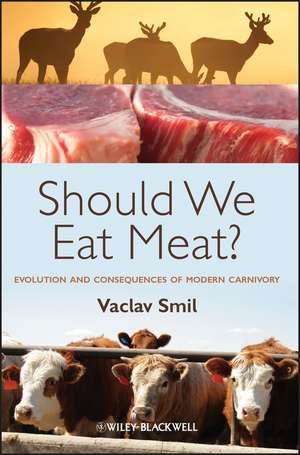
Should We Eat Meat?: Gates Notes - Cărți recomandate de Bill Gates
Autor Vaclav Smilen Limba Engleză Paperback – 3 mai 2013
Observăm în literatura academică curentă o polarizare accentuată între studiile care demonizează consumul de carne și cele care ignoră costurile ecologice ale producției industriale. Should We Eat Meat? vine să completeze exact această lacună, oferind o analiză riguroasă, bazată pe date, care refuză simplificările ideologice. Remarcăm modul în care Vaclav Smil structurează lucrarea, pornind de la rolul proteinelor animale în evoluția creierului uman și ajungând la ineficiențele sistemelor contemporane de creștere a animalelor. Spre deosebire de lucrările anterioare ale autorului, precum Energy and Civilization, unde accentul cădea pe fluxurile energetice globale, acest volum se concentrează pe intersecția dintre fiziologia umană și sustenabilitatea planetară. Cititorii familiarizați cu Meathooked de Marta Zaraska vor aprecia aici rigoarea statistică superioară și perspectiva istorică de ansamblu care depășește sfera psihologiei consumului. Structura cărții este exemplară pentru un curriculum universitar: primele capitole definesc beneficiile nutriționale și contextul evolutiv din Paleolitic, în timp ce nucleul volumului analizează „carnivoria masivă” a Occidentului și impactul său asupra resurselor de apă și atmosferă. Apreciem echilibrul cu care Smil tratează subiectul, oferind la final o viziune pentru un consum rațional, unde sursele alternative de proteine și tratamentul uman al animalelor devin piloni centrali. Este o lucrare ce păstrează precizia din Numbers Don't Lie, aplicată însă unei teme fundamentale pentru supraviețuirea civilizației noastre.
Din seria Gates Notes - Cărți recomandate de Bill Gates
-
 Preț: 51.55 lei
 - 17%
 Preț: 79.75 lei
 - 30%
 Preț: 74.37 lei
 -
 Preț: 94.74 lei
 - 18%
 Preț: 89.19 lei
 - 18%
 Preț: 75.99 lei
 - 29%
 Preț: 75.84 lei
 - 25%
 Preț: 71.32 lei
 - 26%
 Preț: 68.73 lei
 -
 Preț: 77.73 lei
 - 25%
 Preț: 59.70 lei
 - 27%
 Preț: 100.33 lei
 - 19%
 Preț: 76.47 lei
 - 20%
 Preț: 62.29 lei
 - 26%
 Preț: 63.88 lei
 - 27%
 Preț: 88.72 lei
 -
 Preț: 93.57 lei
 -
 Preț: 93.44 lei
 - 27%
 Preț: 68.49 lei
 -
 Preț: 127.12 lei
 - 26%
 Preț: 79.79 lei
 -
 Preț: 162.18 lei
 - 28%
 Preț: 78.42 lei
 - 39%
 Preț: 258.62 lei
 - 25%
 Preț: 92.95 lei
 - 27%
 Preț: 67.62 lei
 - 24%
 Preț: 61.54 lei
 - 31%
 Preț: 64.35 lei
 - 13%
 Preț: 97.98 lei
 - 17%
 Preț: 78.23 lei
 -
 Preț: 123.24 lei
 - 17%
 Preț: 79.69 lei
 - 24%
 Preț: 60.93 lei
 - 19%
 Preț: 75.55 lei
 - 30%
 Preț: 65.99 lei
 - 23%
 Preț: 72.02 lei
 -
 Preț: 192.78 lei
 - 26%
 Preț: 62.80 lei
 - 33%
 Preț: 61.38 lei
 -
 Preț: 112.08 lei
 - 26%
 Preț: 69.06 lei
 -
 Preț: 83.67 lei
 - 19%
 Preț: 76.57 lei
 -
 Preț: 108.89 lei
 -
 Preț: 162.66 lei
 -
 Preț: 109.86 lei
 -
 Preț: 134.77 lei
 -
 Preț: 136.44 lei
 -
 Preț: 304.58 lei
Preț: 284.65 lei
Carte disponibilă
Livrare economică 27 octombrie-10 noiembrie
Livrare express 13-17 octombrie pentru 29.95 lei
Specificații
ISBN-10: 1118278720
Pagini: 288
Dimensiuni: 152 x 229 x 16 mm
Greutate: 0.41 kg
Ediția:New.
Editura: John Wiley and Sons Ltd
Seria Gates Notes - Cărți recomandate de Bill Gates
Locul publicării:Chichester, United Kingdom
V-ar putea interesa
-
 All the Light We Cannot SeeAnthony DoerrPreț: 74.10 lei
 -
 How To Travel With A SalmonUmberto Eco-32%Preț: 61.63 lei90.66 lei
 -
 ElasticLeonard Mlodinow-31%Preț: 63.46 lei92.62 lei
 -
 White NoiseDon DelilloPreț: 107.02 lei
 -
 -30%Preț: 74.37 lei106.48 lei
 -
 Leading Without AuthorityKeith Ferrazzi-19%Preț: 98.48 lei121.87 lei
 -
 Stuff MattersMark Miodownik-26%Preț: 63.88 lei85.96 lei
 -
 Energy and CivilizationVaclav Smil-24%Preț: 127.92 lei168.15 lei
 -
 The Island of the Colour-blindOliver Sacks-41%Preț: 53.20 lei90.71 lei
 -
 Trump: The Art of the DealDonald J. TrumpPreț: 121.52 lei
 -
 Madness and CivilizationMichel FoucaultPreț: 105.39 lei
 -
 -19%Preț: 76.57 lei94.02 lei
 -
 On Immunity: An InoculationEula BissPreț: 93.57 lei
 -
 Tomorrow 3.0Michael C. MungerPreț: 146.14 lei
 -
 Preț: 304.58 lei
 -
 Preț: 85.49 lei
 -
 Changing MindsHoward GardnerPreț: 149.97 lei
 -
 The Doctor Will See You NowTamer Seckin MDPreț: 201.11 lei
 -
 PurposehoodAmmar CharaniPreț: 189.51 lei
 -
 River Out of Eden: A Darwinian View of LifeProf Richard Dawkins-27%Preț: 67.19 lei92.61 lei
 -
 The Ride of a LifetimeRobert Iger-20%Preț: 110.74 lei138.12 lei
 -
 SimpleDiana Henry-35%Preț: 152.13 lei234.04 lei
 -
 -26%Preț: 80.32 lei108.51 lei
 -
 Preț: 149.00 lei
Public țintă
Academic institutions: food science, nutrition, agriculture, environmental science, Food manufacturers and livestock producers, Governmental research and regulatory agencies throughout the world, Advanced undergraduate and graduate students in the fieldDe ce să citești această carte
Recomandăm această carte studenților și profesioniștilor din științele nutriției și ecologiei care caută o bază factuală solidă în locul retoricii activiste. Cititorul câștigă o înțelegere profundă a modului în care dieta noastră a modelat civilizația și, mai important, primește un model viabil pentru un viitor alimentar sustenabil, fără a recurge la extreme ideologice.
Despre autor
Vaclav Smil este un om de știință și analist politic ceho-canadian, în prezent profesor emerit la Universitatea din Manitoba. Renumit pentru cercetările sale interdisciplinare care combină energia, mediul și politicile publice, Smil a devenit unul dintre cei mai respectați gânditori contemporani, fiind autorul preferat al lui Bill Gates. Opera sa vastă, care include titluri precum How the World Really Works sau Grand Transitions, se distinge prin utilizarea masivă a datelor pentru a demonta mituri moderne și pentru a explica realitățile fundamentale ale funcționării lumii noastre, de la agricultură la producția industrială.
Descriere
Meat eating is often a contentious subject, whether considering the technical, ethical, environmental, political, or health–related aspects of production and consumption.
This book is a wide–ranging and interdisciplinary examination and critique of meat consumption by humans, throughout their evolution and around the world. Setting the scene with a chapter on meat s role in human evolution and its growing influence during the development of agricultural practices, the book goes on to examine modern production systems, their efficiencies, outputs, and impacts. The major global trends of meat consumption are described in order to find out what part its consumption plays in changing modern diets in countries around the world. The heart of the book addresses the consequences of the "massive carnivory" of western diets, looking at the inefficiencies of production and at the huge impacts on land, water, and the atmosphere. Health impacts are also covered, both positive and negative. In conclusion, the author looks forward at his vision of rational meat eating , where environmental and health impacts are reduced, animals are treated more humanely, and alternative sources of protein make a higher contribution.
Should We Eat Meat? is not an ideological tract for or against carnivorousness but rather a careful evaluation of meat′s roles in human diets and the environmental and health consequences of its production and consumption. It will be of interest to a wide readership including professionals and academics in food and agricultural production, human health and nutrition, environmental science, and regulatory and policy making bodies around the world.
Cuprins
Preface ix 1 Meat in Nutrition 3
Meat Eating and Health: Benefits and Concerns 4
Meat and its nutrients 6
Meat as a source of food energy 11
High–quality protein and human growth 17
Carnivory and civilizational diseases 20
Diseased meat 24
2 Meat in Human Evolution 31
Hunting Wild Animals: Meat in Human Evolution 33
Primates and hominins 35
Meat consumption during the Paleolithic period 39
Extinction of the late Pleistocene megafauna 42
Hunting in different ecosystems 45
Wild meat in sedentary societies 49
Traditional Societies: Animals, Diets and Limits 51
Domestication of animals 53
Population densities and environmental imperatives 56
Long stagnation of typical meat intakes 59
Avoidances, taboos and proscriptions 63
Meat as a prestige food 66
3 Meat in Modern Societies 71
Dietary Transitions: Modernization of Tastes 72
Urbanization and industrialization 74
Long–distance meat trade 77
Meat in the Western dietary transition 81
Transitions in modernizing economies 84
Globalization of tastes 86
Output and Consumption: Modern Meat Chain 89
Changing life cycles 91
Slaughtering of animals 94
Processing meat 98
Consuming and wasting meat 102
Making sense of meat statistics 107
4 What It Takes to Produce Meat 113
Modern Meat Production: Practices and Trends 117
Meat from pastures and mixed farming 118
Confined animal feeding 122
Animal feedstuffs 127
Productivity efficiencies and changes 135
Treatment of animals 141
Meat: An Environmentally Expensive Food 145
Animal densities and aggregate zoomass 147
Changing animal landscapes 150
Intensive production of feedstuffs 155
Water use and water pollution 160
Meat and the atmosphere 168
5 Possible Futures 177
Toward Rational Meat Eating: Alternatives and Adjustments 181
Meatless diets 183
Meat substitutes and cultured meat 188
Protein from other animal foodstuffs 192
Less meaty diets 200
A large potential for rational meat production 203
Prospects for Change 210
References 217
Index 251
Recenzii
Notă biografică
Dr Vaclav Smil is Distinguished Professor Emeritus in the Faculty of Environment at the University of Manitoba. His interdisciplinary research interests encompass a broad area of energy, environmental, food, population, economic, historical, and public policy studies. Dr Smil has published in more than 30 books, over 400 papers, and contributed to more than 30 edited volumes