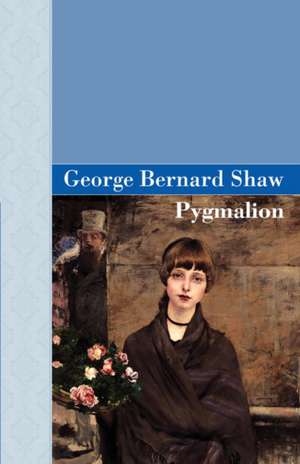
Shaw, G: Pygmalion
en Limba Engleză Hardback – 29 mai 2008
Recomandăm această ediție a piesei Pygmalion cititorilor pasionați de fineturi lingvistice și critică socială, celor care savurează dialogul ascuțit și personajele care refuză să fie simple piese într-un experiment. Considerăm că forța acestui text nu rezidă doar în transformarea spectaculoasă a Elizei Doolittle, ci în modul în care George Bernard Shaw demonstrează că limbajul este, în fond, o barieră de clasă aproape insurmontabilă. Imaginați-vă tensiunea socială și rigurozitatea lingvistică din Lerner and Loewe's My Fair Lady, mutată într-un decor de realism didactic, unde muzica este înlocuită de observația tăioasă asupra ipocriziei britanice. Ne-a atras atenția în mod deosebit prefața autorului, care dezvăluie rădăcinile reale ale personajului Henry Higgins în figura foneticianului Henry Sweet. Shaw nu scrie doar o comedie de moravuri, ci un manifest despre cum modul de a vorbi îi condamnă pe oameni la disprețul semenilor lor. Spre deosebire de alte lucrări ale sale, precum Major Barbara, unde dezbaterea ideologică vizează religia și capitalismul, în Pygmalion autorul se concentrează pe identitate și autodeterminare. Este o lucrare definitorie pentru stilul „shavian”, situându-se alături de Arms and the Man prin modul în care satirizează convențiile romantice. Ritmul este alert, susținut de replici care funcționează ca niște dueluri intelectuale, iar structura sa, deși clasică, rămâne surprinzător de modernă prin refuzul unui final convențional.
Preț: 167.43 lei
Cartea nu mai face parte din oferta noastră
Specificații
ISBN-10: 1605120812
Pagini: 128
Dimensiuni: 140 x 216 x 11 mm
Greutate: 0.3 kg
Editura: Akasha Publishing, LLC
Locul publicării:United States
V-ar putea interesa
-
 The Adventures Of Huckleberry FinnMark TwainPreț: 28.01 lei
 -
 CLASSICS HOUND OF BASKERVILLESArthur Conan DoylePreț: 28.01 lei
 -
 Gangsta GrannyDavid WalliamsPreț: 87.91 lei
 -
 The Prince and the PauperMark TwainPreț: 28.01 lei
 -
 To the LighthouseVirginia WoolfPreț: 28.01 lei
 -
 Absalom, Absalom!William Faulkner-25%Preț: 60.13 lei79.83 lei
 -
 ParadiseToni Morrison-25%Preț: 59.72 lei79.37 lei
 -
 Wide Sargasso SeaJean RhysPreț: 70.88 lei
 -
 Henry and JuneAnais Nin-26%Preț: 58.90 lei79.10 lei
 -
 Mourning Becomes ElectraEugene O'NeillPreț: 113.48 lei
 -
 The DressmakerKate AlcottPreț: 130.15 lei
 -
 Oscar Wilde Stories For ChildrenOscar Wilde-27%Preț: 36.54 lei49.97 lei
 -
 -27%Preț: 67.60 lei92.11 lei
 -
 Great ExpectationsCharles DickensPreț: 51.08 lei
 -
 Preț: 55.37 lei
 -
 Academic Vocabulary in Use Edition with AnswersMichael MccarthyPreț: 203.29 lei
 -
 Why Waiting WorksRob B. KowalskiPreț: 102.41 lei
 -
 The Giving TreeShel SilversteinPreț: 93.57 lei
 -
 Much Ado About NothingWilliam ShakespearePreț: 28.01 lei
De ce să citești această carte
Cititorul va câștiga o perspectivă fascinantă asupra modului în care educația și limbajul ne modelează locul în societate. Este o lectură esențială pentru cei care doresc să înțeleagă rădăcinile celebrei adaptări „My Fair Lady”, dar și pentru cei care apreciază umorul fin și critica socială care rămâne relevantă și după un secol de la publicare.
Despre autor
George Bernard Shaw (1856–1950) a fost un dramaturg irlandez, critic și activist politic, laureat al Premiului Nobel pentru Literatură în 1925. Stabilit la Londra, Shaw a devenit o figură centrală a teatrului occidental, scriind peste șaizeci de piese. Influențat de Ibsen, a introdus un nou realism în dramaturgia de limbă engleză, folosind scena ca platformă pentru ideile sale despre socialism, eugenie și reforma alfabetului. Printre cele mai cunoscute lucrări ale sale se numără Man and Superman și Saint Joan, Shaw fiind recunoscut pentru capacitatea sa unică de a îmbina satira contemporană cu alegoria istorică.
Descriere scurtă
Descriere
When George Bernard Shaw wrote "Pygmalion" more than a half century ago, it seemed unlikely that his little play would eventually be converted into one of the great musicals of our time, "My Fair Lady," and a motion picture that captured numerous Academy Awards. Yet such popularity should not have been surprising since succeeding generations of readers and playgoers find continual relevance in the story of a speech therapist who successfully converts an untutored flower girl into a darling of high society. The extraordinary wit of the master dramatist of the twentieth century has not lost its sharp edge as it cuts away at the artificially of class distinctions and the callousness of indifference to human worth.
Textul de pe ultima copertă
In Shaw's clever adaptation, Professor Henry Higgins, a linguistic expert, takes on a bet that he can transform an awkward cockney flower seller into a refined young lady simply by polishing her manners and changing the way she speaks. In the process of convincing society that his creation is a mysterious royal figure, the Professor also falls in love with his elegant handiwork.
The irresistible theme of the emerging butterfly, together with Shaw's brilliant dialogue and splendid skills as a playwright, have made Pygmalion one of the most popular comedies in the English language. A staple of college drama courses, it is still widely performed.