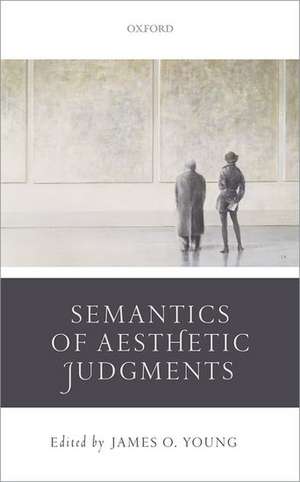
Semantics of Aesthetic Judgements
Editat de James O. Youngen Limba Engleză Hardback – 2 feb 2017
În cadrul programelor de studii aprofundate de filozofie, analiza limbajului estetic ocupă un loc central, pendulând între subiectivismul radical și realismul valoric. Putem afirma că volumul Semantics of Aesthetic Judgements, editat de James O. Young, reprezintă o intervenție necesară în acest peisaj academic, forțând o punte de legătură între două discipline care adesea comunică deficitar: filozofia limbajului și estetica teoretică.
Remarcăm centrarea argumentației pe o distincție semantică fină: sunt predicatele estetice (precum „glorios” sau „echilibrat”) echivalente cu cele ale gustului personal (precum „gustos”)? În timp ce filozofii limbajului tind să le asimileze raportărilor subiective, filozofii artei insistă că aceste judecăți vizează proprietăți intrinseci ale operei. Volumul de față pune sub lupă această tensiune, analizând dacă dezacordul în artă este unul „fără vină” sau dacă un receptor poate, în mod obiectiv, să greșească în evaluarea unei lucrări.
Această lucrare acoperă aceeași arie tematică precum Perspectives on Taste de Jeremy Wyatt, însă Semantics of Aesthetic Judgements adoptă o abordare mai specifică, axată pe analiza logică a predicatelor, spre deosebire de viziunea interdisciplinară și experimentală a lui Wyatt. De asemenea, față de abordarea axată pe exemple practice din Aesthetic Value de Alan Goldman, volumul editat de Young este mai riguros din punct de vedere formal, fiind orientat către fundamentele semantice ale valorii. Suntem de părere că structura sa, ce reunește contribuții ale unor cercetători contemporani de vârf, oferă un ritm analitic susținut, esențial pentru înțelegerea modului în care limbajul modelează experiența artistică.
Preț: 482.01 lei
Preț vechi: 698.40 lei
-31%
Carte tipărită la comandă
Livrare economică 05-16 iunie
Specificații
ISBN-10: 0198714599
Pagini: 228
Dimensiuni: 146 x 224 x 19 mm
Greutate: 0.4 kg
Editura: OUP OXFORD
Colecția OUP Oxford
Locul publicării:Oxford, United Kingdom
V-ar putea interesa
-
 -5%Preț: 103.23 lei108.74 lei
 -
 -27%Preț: 847.57 lei1161.06 lei
 -
 The Oxford Handbook of the Economics of ReligionRachel M. McCleary-34%Preț: 982.73 lei1491.70 lei
 -
 The God Dialogues: A Philosophical JourneyTorin Alter-14%Preț: 258.91 lei302.24 lei
 -
 The Limits of MoralityShelly Kagan-11%Preț: 338.84 lei380.72 lei
 -
 Epistemological DisjunctivismDuncan PritchardPreț: 197.37 lei
 -
 Charles Batteux: The Fine Arts Reduced to a Single PrincipleJames O. Young-31%Preț: 495.34 lei717.65 lei
 -
 Parerga and Paralipomena: Volume 1: Six Long Philosophical EssaysArthur Schopenhauer-15%Preț: 332.70 lei390.96 lei
 -
 -14%Preț: 647.03 lei752.36 lei
 -
 The Oxford Handbook of Philosophy of TimeCraig Callender-25%Preț: 284.59 lei377.42 lei
 -
 Critique of Pure MusicJames O. Young-31%Preț: 473.00 lei688.74 lei
 -
 Philosophy of Science Matters: The Philosophy of Peter AchinsteinGregory J. Morgan-11%Preț: 376.99 lei423.59 lei
 -
 -14%Preț: 679.16 lei789.72 lei
 -
 Art and KnowledgeJames O. YoungPreț: 387.72 lei
 -
 Breaking Open the CreedsRichard W KropfPreț: 75.06 lei
 -
 The Legacy of Pierre Teilhard de ChardinJames SalmonPreț: 106.42 lei
 -
 POLITICAJOHANNES ALTHUSIUS-8%Preț: 82.32 lei89.92 lei
 -
 Understanding Plato's RepublicGerasimos SantasPreț: 275.60 lei
 -
 Cultural Appropriation and the ArtsJames O YoungPreț: 271.73 lei
 -
 The Ethics of Cultural AppropriationJO YoungPreț: 262.87 lei
 -
 The Political Discourse of Carl Schmitt: A Mystic of OrderMontserrat Herrero-25%Preț: 350.65 lei469.27 lei
 -
 The Kant DictionaryDr Lucas Thorpe-26%Preț: 197.39 lei266.24 lei
 -
 LyingSam HarrisPreț: 84.63 lei
 -
 Menschliches, AllzumenschlichesFriedrich NietzschePreț: 116.54 lei
De ce să citești această carte
Recomandăm această carte studenților și cercetătorilor în filozofie care doresc să depășească dihotomia simplistă dintre „frumos” și „îmi place”. Cititorul va câștiga o înțelegere tehnică asupra modului în care argumentăm valoarea unei opere de artă, învățând să distingă între reacția subiectivă și proprietățile estetice obiective. Este un instrument teoretic esențial pentru oricine dorește să stăpânească logica criticii de artă.
Despre autor
James O. Young este profesor și șeful Departamentului de Filozofie la Universitatea din Victoria, fiind o autoritate în filozofia limbajului și a artei. Cariera sa este marcată de o explorare constantă a intersecției dintre realism și expresia artistică, teme vizibile în lucrările sale anterioare Global Anti-realism și Art and Knowledge. Interesul său pentru istoria esteticii este reflectat și în editarea unor texte fundamentale precum cele ale lui Charles Batteux sau Anne Le Févre Dacier. În prezentul volum, Young își folosește expertiza pentru a coordona o dezbatere critică asupra naturii judecății estetice.