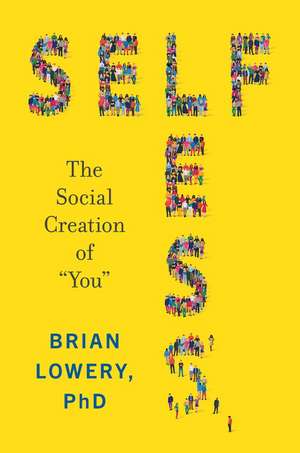
Selfless
Autor Brian Loweryen Limba Engleză Hardback – 28 mar 2023
În volumul Selfless, Brian Lowery propune o schimbare radicală de paradigmă, mutând discuția despre identitate de la introspecția izolată către dinamica relațională. Apreciem modul în care autorul, profesor la Stanford, demonstrează aplicabilitatea practică a acestei teorii în înțelegerea mecanismelor sociale complexe. Dacă în mod tradițional privim „sinele” ca pe o voce internă autonomă, Lowery utilizează date din psihologia socială pentru a argumenta că suntem, de fapt, produsele interacțiunilor noastre, de la tranzacțiile trecătoare la legăturile profunde. Descoperim aici o analiză riguroasă a modului în care structurile de putere și inegalitățile de gen sau rasă nu sunt doar factori externi, ci elemente care ne modelează însăși arhitectura identității. Stilul este precis și ancorat în cercetare, evitând abstracțiunile inutile pentru a explica de ce evoluăm odată cu schimbarea cercurilor sociale sau de ce rezistăm uneori schimbărilor pe care ni le dorim. Reținem perspectiva sa asupra „mitului individualismului”, care este deconstruit pentru a face loc unei înțelegeri mai nuanțate a interdependenței umane. Această lucrare completează perspectiva oferită de Self and Identity de Megan E. Birney, adăugând o dimensiune critică asupra modului în care status quo-ul este menținut inconștient de către cei aflați în poziții de putere. În timp ce alte manuale introductive se concentrează pe mecanismele cognitive de bază ale identității, Selfless extinde cadrul către sociologia politică și structurile sistemice, oferind un instrument teoretic esențial pentru cei care studiază psihologia colectivă sau științele sociale.
Preț: 163.87 lei
Carte disponibilă
Livrare economică 18 noiembrie-02 decembrie
Livrare express 03-07 noiembrie pentru 52.96 lei
Specificații
ISBN-10: 006291300X
Pagini: 272
Dimensiuni: 145 x 213 x 29 mm
Greutate: 0.35 kg
Editura: Harper Collins Publ. USA
Colecția Harper
De ce să citești această carte
Recomandăm această carte cititorilor care doresc să depășească viziunea clasică a „sinelui ca insulă”. Veți câștiga o înțelegere profundă a modului în care relațiile vă definesc acțiunile și deciziile. Este o lectură esențială pentru studenții la sociologie și psihologie, dar și pentru oricine este interesat de felul în care structurile sociale ne dictează identitatea personală, oferind claritate asupra evoluției propriului caracter în context social.
Despre autor
Brian Lowery este profesor de comportament organizațional la Universitatea Stanford și un reputat psiholog social. Expertiza sa academică se concentrează pe modul în care indivizii percep și gestionează ierarhiile sociale și inegalitățile. Dincolo de activitatea de cercetare, Lowery a contribuit activ în spațiul editorial ca editor coordonator pentru PreachingToday.com și a deținut roluri de coordonare ministerială în diverse comunități creștine din Illinois. Această dualitate între rigoarea academică de la Stanford și experiența directă în comunități îi permite să abordeze tema identității sociale cu o profunzime rară, îmbinând datele empirice cu o înțelegere acută a dinamicii umane.
Descriere scurtă
There’s nothing we spend more time with, but understand less, than ourselves. You’ve been with yourself every waking moment of your life. But who—or, rather, what—are you? In Selfless, Brian Lowery argues for the radical idea that the “self” as we know it—that “voice in your head”—is a social construct, created in our relationships and social interactions. We are unique because our individual pattern of relationships is unique. We change because our relationships change. Your self isn’t just you, it’s all around you.
Lowery uses this research-driven perspective of selfhood to explore questions of inequity, race, gender, politics, and power structures, transforming our perceptions of how the world is and how it could be. His theory offers insight into how powerful people manage their environment in sophisticated, often unconscious, ways to maintain the status quo; explains our competing drives for deep social connection and personal freedom; and answers profound, personal questions such as: Why has my sense of self evolved over time? Why do I sometimes stop short of changes that I want to make in life?
In Selfless, Lowery persuasively breaks down common assumptions and beliefs; his insights are humbling. Despite what many may think, we aren’t islands unto ourselves; we are the creation of the many hands that touch us. We don’t just exist in communities, we are created and shaped by them. Our highs and lows are not only our own but belong to others as well. By recognizing that we are products of relationships—from fleeting transactions to deep associations—we shatter the myth of individualism and free ourselves to make our lives and the world accordingly.
Recenzii
“This powerful book is guaranteed to change the way you see yourself and the world around you. Lowery masterfully weaves science and stories together to expose that we are all selfless – shaped in each moment and over years by our social situations. Selfless is a gift – an engaging and important book that will help you better understand the influence of the web of relationships you inhabit.” — Katy Milkman, author of How to Change