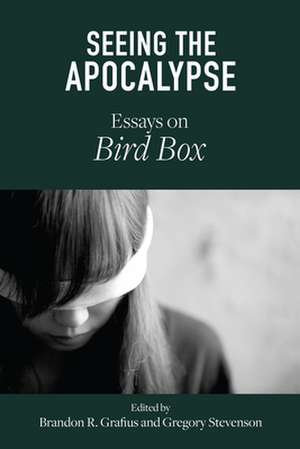
Seeing the Apocalypse: Essays on Bird Box: Critical Conversations in Horror Studies
Editat de Brandon R. Grafius, Gregory Stevenson Contribuţii de Rachel Elizabeth Barraclough, Amy Hagenrater-Gooding, Heidi Ippolito, Marya Kuratova, Ken Junior Lipenga, Leland Merritt, Dragoslav Momcilovic, Paul Muhlhauser, Andrew Slade, Rebecca L. Willoughbyen Limba Engleză Hardback – 22 apr 2021



Preț: 524.82 lei
Preț vechi: 815.71 lei
-36%
Puncte Express: 787
Carte tipărită la comandă
Livrare economică 01-15 decembrie
Livrare prin curier în România Termenul estimat este afișat lângă disponibilitate.
Transport gratuit pentru acest produs Plată online sau ramburs, în funcție de opțiunile comenzii.
Retur gratuit în 14 zile Comandă securizată și suport în română.
Specificații
ISBN-13: 9781611462982
ISBN-10: 1611462983
Pagini: 212
Dimensiuni: 164 x 228 x 20 mm
Greutate: 0.44 kg
Editura: Bloomsbury Publishing
Colecția Lehigh University Press
Seria Critical Conversations in Horror Studies
Locul publicării:New York, United States
ISBN-10: 1611462983
Pagini: 212
Dimensiuni: 164 x 228 x 20 mm
Greutate: 0.44 kg
Editura: Bloomsbury Publishing
Colecția Lehigh University Press
Seria Critical Conversations in Horror Studies
Locul publicării:New York, United States
Cuprins
Introduction: The Body's Apocalyptic Vulnerability
Brandon Grafius and Gregory Stevenson
1Bird Box and the Imperative of Sight
Ken Junior Lipenga
2Feeling the (Post)Apocalypse: The Affective Dimensions of Bird Box
Rachel Elizabeth Barraclough
3The Blind Leading the Blindfolded: Representing Disability in Contemporary Horror Films
Rebecca L. Willoughby
4Making the End of the World Great Again: Birdbox, Borders, and the Refugee Crisis
Leland Merritt
5Mother, Monster Within/Monster, Mother Without: Bird Box and Maternal Fear
Amy Hagenrater-Gooding
6Bird Box, WR Bion, and the Sublime
Andrew Slade
7"It's Too Bad We're Not Horses": The Animal as Witness in Bird Box
Dragoslav Momcilovic
8The Horror of Smartphones and Voice Assistants: Technophobia and Disability in Bird Box and A Quiet Place
Paul Muhlhauser and Marya Kuratova
9Consumed by Memes: How Bird Box Reflects the Current Acceptance and Anxiety Toward Internet-Distributed Film and Television
Heidi Ippolito
Brandon Grafius and Gregory Stevenson
1Bird Box and the Imperative of Sight
Ken Junior Lipenga
2Feeling the (Post)Apocalypse: The Affective Dimensions of Bird Box
Rachel Elizabeth Barraclough
3The Blind Leading the Blindfolded: Representing Disability in Contemporary Horror Films
Rebecca L. Willoughby
4Making the End of the World Great Again: Birdbox, Borders, and the Refugee Crisis
Leland Merritt
5Mother, Monster Within/Monster, Mother Without: Bird Box and Maternal Fear
Amy Hagenrater-Gooding
6Bird Box, WR Bion, and the Sublime
Andrew Slade
7"It's Too Bad We're Not Horses": The Animal as Witness in Bird Box
Dragoslav Momcilovic
8The Horror of Smartphones and Voice Assistants: Technophobia and Disability in Bird Box and A Quiet Place
Paul Muhlhauser and Marya Kuratova
9Consumed by Memes: How Bird Box Reflects the Current Acceptance and Anxiety Toward Internet-Distributed Film and Television
Heidi Ippolito
Recenzii
Bird Box was more than just a popular Netflix film, it was a global phenomenon. Seeing the Apocalypse: Essays on Bird Box brings together an interdisciplinary group of scholars to shed light on the ways the film connected with social anxieties around disability, community, technology, and other issues. This volume provides invaluable insights into not only Bird Box but also the broader trend of apocalyptic horror in the 21st century.
Josh Malerman's novel Bird Box and Susanne Biers' Netflix adaptation became a cultural phenomenon in 2018. Editors Grafius and Stevenson have gathered a remarkable set of essays that explore how Bird Box participates in larger cultural dialogues on topics such as motherhood, disability, and the environment. The contributors' powerful investigations reframe the film, transforming how we see it and revealing what it says about the world. If anything, the implications of this insightful volume render both the film and our reality that much more terrifying.
This outstanding collection on Bird Box explores the film as an important genre piece, a rare sense-deprivation type of apocalyptic body horror that uniquely celebrates disability, while calling our attention to the reality that when society breaks down, the structures that protect us crumble along with it. Like Bird Box itself, the strength of this inventive and beautifully crafted volume lies in the ideal casting of its contributors and the solid concept of the content. Film fans, students, and researchers will find Grafius' and Stevenson's radical new volume, which was written during a real-world pandemic, lively, accessible, and fascinating!
Josh Malerman's novel Bird Box and Susanne Biers' Netflix adaptation became a cultural phenomenon in 2018. Editors Grafius and Stevenson have gathered a remarkable set of essays that explore how Bird Box participates in larger cultural dialogues on topics such as motherhood, disability, and the environment. The contributors' powerful investigations reframe the film, transforming how we see it and revealing what it says about the world. If anything, the implications of this insightful volume render both the film and our reality that much more terrifying.
This outstanding collection on Bird Box explores the film as an important genre piece, a rare sense-deprivation type of apocalyptic body horror that uniquely celebrates disability, while calling our attention to the reality that when society breaks down, the structures that protect us crumble along with it. Like Bird Box itself, the strength of this inventive and beautifully crafted volume lies in the ideal casting of its contributors and the solid concept of the content. Film fans, students, and researchers will find Grafius' and Stevenson's radical new volume, which was written during a real-world pandemic, lively, accessible, and fascinating!